
Building a Weekly Exercise Routine from Scratch
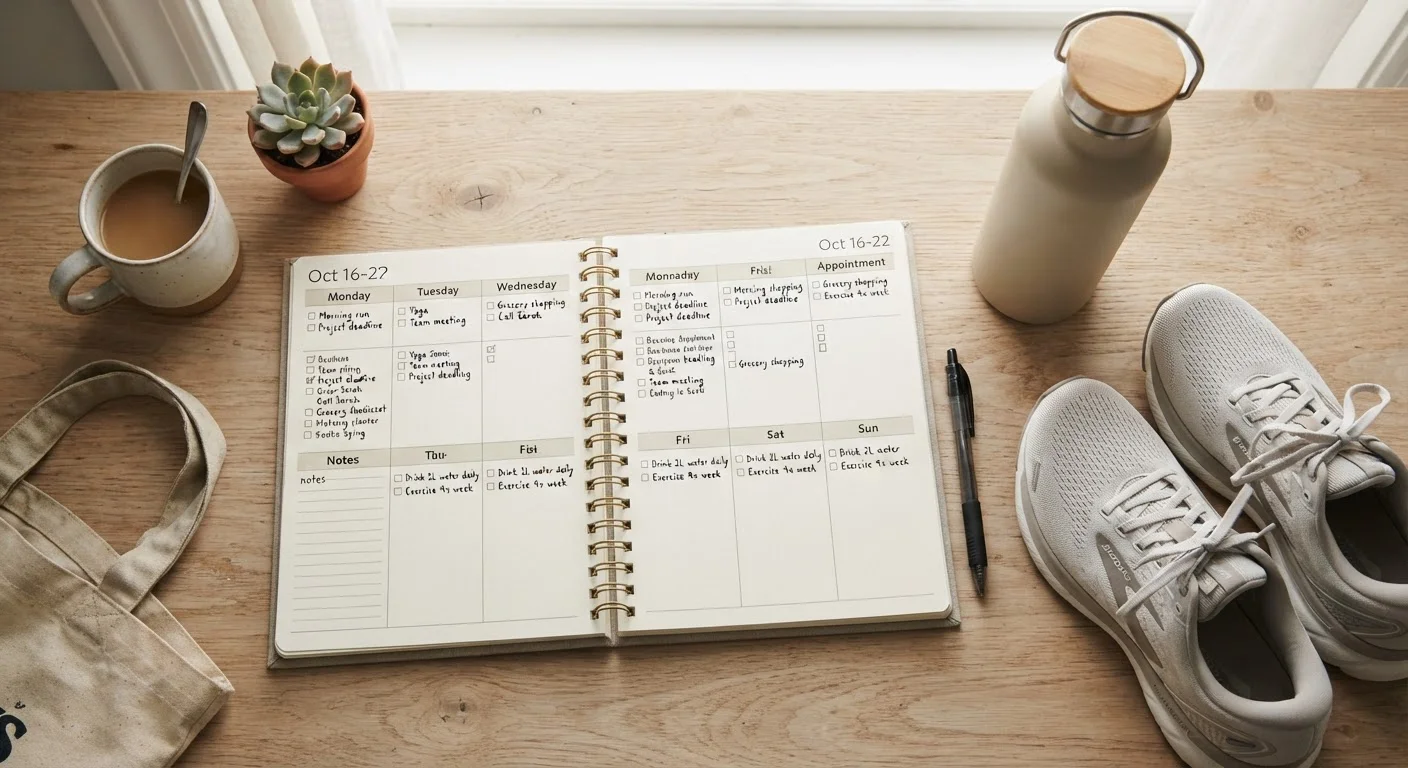
Photo credit: Wiseturt.com | Blogs Curated For You
In this article
A practical, step-by-step guide to structuring a balanced weekly workout schedule that accounts for recovery, variety, and your real-life schedule.
Key Takeaways
- A balanced weekly routine combines cardiovascular exercise, strength training, and dedicated rest days.
- Most adults benefit from 150 minutes of moderate aerobic activity and two strength sessions per week.
- Recovery days are not optional - they are when your body adapts and grows stronger.
- Start with three to four workout days and build gradually to avoid burnout or injury.
- Consistency over intensity is the key driver of long-term fitness progress.
Why Most Exercise Plans Fail - and How Structure Fixes That
The most common reason people abandon new exercise routines isn't lack of motivation - it's lack of structure. Without a clear weekly framework, workouts become reactive, inconsistent, and easy to postpone indefinitely. A planned schedule removes daily decision-making and replaces it with a repeatable system.
Research on behavior change consistently shows that people who pre-commit to when, where, and how they'll exercise are significantly more likely to follow through than those who rely on motivation alone. Structure works precisely because it reduces friction.
For those newer to fitness concepts, our evidence-based guide to long-term workout consistency lays out the core principles behind sustainable program design - a useful complement to the practical steps below.
Treat Your Schedule Like an Appointment
Blocking workout time in your calendar - and treating it with the same priority as a work meeting - is one of the most reliable behavioral strategies for long-term adherence. Research on habit formation consistently shows that implementation intentions (deciding when, where, and how in advance) dramatically improve follow-through.
What You'll Need Before You Begin
Building a weekly routine doesn't require expensive equipment or a gym membership. The fundamentals - a clear schedule, comfortable footwear, and an honest sense of your starting fitness level - are what matter most.
What you will need
Weekly Planner or Calendar App
Used to map out your workout days, rest days, and session types in advance.
Fitness Journal or Notebook
Helps track completed sessions, effort levels, and weekly progress over time.
Timer or Interval App
Useful for managing work-to-rest ratios during strength circuits or cardio intervals.
Resistance Bands or Light Dumbbells
Provides resistance for home-based strength training without requiring a gym membership.
If your routine will include any form of strength training, pay particular attention to exercise technique from the start. Poor form under fatigue is the leading cause of preventable training injuries, particularly in the first few months of a new program.
Step-by-Step: Building Your Weekly Schedule
Follow these steps in order to build a balanced, realistic weekly exercise plan from scratch. Each step builds on the last - resist the urge to skip ahead to session design before you've established your available time and a realistic target.
Consult a Professional Before Starting
This guide provides general educational information, not personalized medical or fitness advice. If you have a chronic health condition, recent injury, or have been sedentary for an extended period, speak with your healthcare provider before beginning a new exercise program. A qualified professional can help you identify any limitations and set appropriate starting points.
Audit Your Available Time Honestly
Before choosing exercises, look at your real week - not an idealized one. Identify which days and time slots you can realistically protect for movement. Even 30-minute windows count. Most adults can find three to four available slots per week when they look carefully at their schedules.
Avoid planning seven days of exercise if your life supports three. Overcommitting is the most common reason new routines collapse within two weeks.
Set a Realistic Weekly Session Target
For most beginners, three to four workout sessions per week is a sustainable and evidence-supported starting point. The U.S. Department of Health and Human Services guidelines suggest a general target of 150 minutes of moderate-intensity aerobic activity per week, plus two muscle-strengthening sessions - but how you distribute that across your week is flexible.
If you're brand new to structured exercise, start at the lower end. See our beginner's guide to what your body needs for a foundational breakdown of frequency, intensity, and form before building your schedule.
Choose Your Movement Categories
A balanced routine includes three movement types:
- Cardiovascular exercise (e.g., brisk walking, cycling, swimming) - supports heart health and endurance
- Strength training (e.g., bodyweight exercises, resistance bands, free weights) - builds and maintains muscle mass and bone density
- Flexibility and mobility work (e.g., stretching, yoga) - supports range of motion and aids recovery
You don't need to cover all three every session. A common approach is to alternate cardio and strength days, with flexibility work folded into warm-ups and cool-downs.
Build in Structured Rest and Recovery Days
Recovery days are where physiological adaptation - the actual getting fitter - takes place. Muscle tissue repairs, glycogen stores replenish, and the nervous system recovers. Plan at least two full rest days per week, and treat them as non-negotiable. Active recovery (gentle walking, light stretching) is fine; intense training is not.
Skipping rest is one of the most underestimated errors in fitness planning. Learn why recovery gets skipped and why it backfires for a deeper look at the physiology involved.
Draft Your First Weekly Template
Using your available slots and movement categories, sketch a sample week. A straightforward beginner template might look like:
- Monday: Strength training (30-40 min)
- Wednesday: Cardio - brisk walk or light jog (30 min)
- Friday: Strength training (30-40 min)
- Saturday: Active recovery - yoga or stretching (20-30 min)
- Tuesday, Thursday, Sunday: Rest
This is a template, not a rule. Swap days to fit your life. What matters is the pattern - alternating effort and recovery, covering both cardio and strength across the week.
Track Progress and Adjust After Four Weeks
After completing your first four weeks, review what actually happened versus what you planned. Which sessions did you complete? Which did you skip, and why? Use this honest audit to refine your schedule - adjust timing, duration, or session type to match your real-life patterns rather than your ideal ones.
Progress doesn't always show up on a scale. Improved stamina, lifted mood, better sleep, and increased strength are all valid markers. Track progress meaningfully without obsessing over numbers to keep data motivating rather than discouraging.
Don't Skip the Warm-Up
Jumping straight into intense exercise without a 5-10 minute warm-up significantly raises the risk of muscle strain and joint injury. Light cardio, dynamic stretches, or mobility drills prime your body for effort and improve performance. Make it a non-negotiable part of every session.
Fitting Exercise Into a Real Life
A weekly exercise routine doesn't exist in isolation - it sits alongside work, family, sleep, and nutrition. Treating it as one component of a broader wellness system, rather than an all-or-nothing challenge, makes it far more sustainable.
For a grounded look at how evidence-backed wellness habits fit around a typical working schedule, see what a realistic daily wellness routine looks like for working Americans. The same principles apply: small, consistent actions compound over time far more reliably than intense but short-lived efforts.
This article is for general informational and educational purposes only and does not constitute medical or fitness advice. Always consult a qualified healthcare provider before starting a new exercise program, particularly if you have existing health conditions, injuries, or have been physically inactive for an extended period.

Author
Health & Nutrition Editorial Team
Health & Nutrition Editorial Team is the collective byline for our editorial team and contributor network. Articles published under this byline or an editorial pen name are researched, written, and reviewed according to our editorial standards for clarity, consistency, and independence before publication.
View all articles →