
Coupon Stacking: What It Is, When It Works, and When Retailers Block It
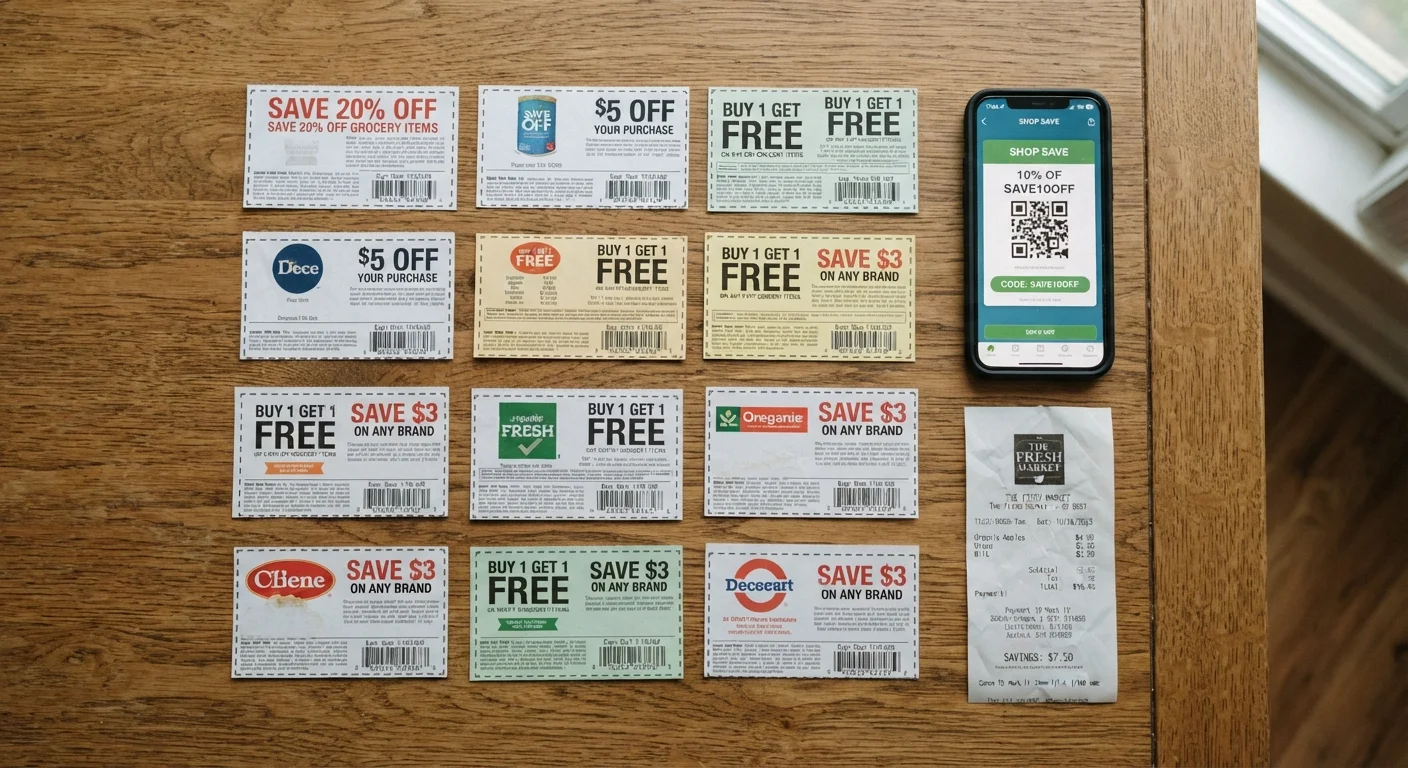
Photo credit: Wiseturt.com | Blogs Curated For You
In this article
Coupon stacking can compound savings — but stores have rules. Learn the mechanics, common limits, and legal ways to use multiple discounts.
Key Takeaways
- Coupon stacking combines two or more discounts on one item or order - but only where store policy allows it.
- Manufacturer coupons and store coupons are the classic stackable pair because they come from different issuers.
- Cashback apps and loyalty rewards generally operate outside the POS and often stack with traditional coupons.
- Retailers can - and frequently do - block stacking via their POS systems or explicit coupon terms.
- Reading the fine print on each coupon and the store's coupon policy page is the only reliable way to know what's permitted.
- Stacking on a sale price is one of the highest-value scenarios, but many stores explicitly prohibit it.
How Coupon Stacking Actually Works
At its simplest, coupon stacking means a single transaction benefits from more than one discount source. The most classic version involves two distinct types of coupons on the same product:
- Manufacturer coupon: Issued by the product's maker, redeemable at any participating store. The manufacturer later reimburses the retailer.
- Store coupon: Issued and funded by the retailer itself - a direct discount from the seller.
Because these come from different budgets, many grocery and drugstore chains allow both on the same item. One coupon satisfies the manufacturer's promotion; the other satisfies the store's. Neither technically conflicts with the other.
A third layer frequently enters the picture: loyalty program discounts applied automatically at checkout for cardholders. Some stores also permit a digital coupon loaded to your account on top of a paper coupon - effectively three reductions on one item.
Online stacking usually involves promo codes. Most e-commerce checkout fields accept only one code at a time, making stacking structurally impossible unless the retailer explicitly supports a secondary field or offers automatic cart discounts that coexist with codes.
1 per item
Typical store coupon limit per product
Most major US grocery and drugstore chains formally limit shoppers to one store-issued coupon per item per transaction, according to published coupon policy pages.
2 types
Coupon categories most commonly stackable
Manufacturer coupons and store coupons are the two most widely permitted stacking combination, as they draw from separate promotional budgets.
$0
Extra cost for reading coupon fine print
Checking exclusion language and the store's online coupon policy page before shopping is the single most reliable way to confirm whether stacking is allowed.
The Discount Layers Most Likely to Combine
Not all discount types interact the same way. Here's a practical breakdown of which combinations tend to be permitted and which are usually blocked:
| Discount Type | Typically Stackable? | Notes |
|---|---|---|
| Manufacturer coupon + store coupon | Often yes | Most common stacking scenario; check store policy |
| Store coupon + loyalty price | Usually yes | Loyalty pricing is often applied before coupons |
| Promo code + site-wide sale | Sometimes | Many codes exclude sale items explicitly |
| Cashback app + any in-store discount | Generally yes | Operates post-purchase; usually no POS conflict |
| Two manufacturer coupons on one item | Rarely | Most policies prohibit duplicate issuer coupons |
| Promo code + referral credit | Varies | Some platforms allow; check terms before checkout |
Understanding how in-store and online pricing differ helps you decide where stacking opportunities are most likely to arise in the first place.
Load Digital Coupons Before You Shop
Many grocery and pharmacy apps require you to "clip" digital coupons to your account before you reach checkout - they won't apply retroactively after a transaction. Make it a habit to browse available digital coupons and load relevant ones at the start of your shopping trip, not at the register.
Why Retailers Block Stacking - and How They Do It
Retailers restrict stacking for straightforward financial reasons: stacked discounts can push the net transaction below the margin threshold they budgeted for a promotion. Manufacturer coupon terms sometimes also require that no additional store discount apply.
Enforcement happens in two ways:
- POS system rules: The register software automatically rejects a second barcode scan or flags a duplicate discount category. The cashier may not have override ability.
- Written coupon terms: Language like "not valid with any other offer" or "one coupon per item" legally restricts combination even if the POS doesn't catch it.
Attempting to work around a clear policy restriction - such as using a coupon on an excluded category or altering terms - crosses into misuse and violates the coupon's contract. Legitimate stacking only involves discounts that the issuer and retailer both permit simultaneously.
It's also worth understanding how retailers structure promotional pricing - some "sale" prices are set high enough that a coupon on top still yields the retailer a comfortable margin, while others are not.
Finding Real Stacking Opportunities
The most reliable stacking opportunities follow a predictable pattern: a store sale price, a store-issued digital coupon, and a cashback app running simultaneously. Grocery chains with weekly ad sales and digital coupon programs are frequent candidates.
Practical steps that hold up over time:
- Read the policy page first. Most major chains publish their coupon rules online. Five minutes of reading prevents checkout problems.
- Load digital coupons before shopping. Some store apps require you to clip coupons to your account before the transaction; they won't retroactively apply.
- Check exclusions on each coupon. "Excludes clearance," "one per household," and "not valid with other offers" are the phrases that most often invalidate a planned stack.
- Use cashback apps as a final layer. Since they work post-purchase, they rarely conflict with anything at the register.
For a broader framework, consistent deal-hunting habits provide the context in which stacking works best - it's one tactic among several, not a standalone strategy.
Stacking vs. Other Discount Tools
Coupon stacking is one mechanism for reducing price, but it doesn't work in isolation. Tools like price history trackers tell you whether the "discounted" price is actually a discount - which matters before you invest time stacking coupons on an item that was recently cheaper without any promotion. See how price history trackers compare to browser coupon extensions for a practical look at complementary tools.
For grocery shoppers specifically, stacking fits into a broader set of grocery budget principles - knowing your baseline prices and buying ahead on sale items compounds any coupon savings further.
The underlying discipline connects to smart budgeting habits generally: stacking works best when you already know what something should cost and aren't buying something you don't need just to use a coupon.
“The best coupon is the one you actually use on something you were already going to buy. Complexity for its own sake - chasing stacks on items you don't need - erodes the discipline that makes savings real.”
— Smart Shopping Editorial Team, Consumer research and deal-hunting analysis
Frequently Asked Questions

Author
Smart Shopping Editorial Team
Smart Shopping Editorial Team is the collective byline for our editorial team and contributor network. Articles published under this byline or an editorial pen name are researched, written, and reviewed according to our editorial standards for clarity, consistency, and independence before publication.
View all articles →