
Built-In vs. Freestanding Appliances: Understanding the Tradeoffs Before You Renovate
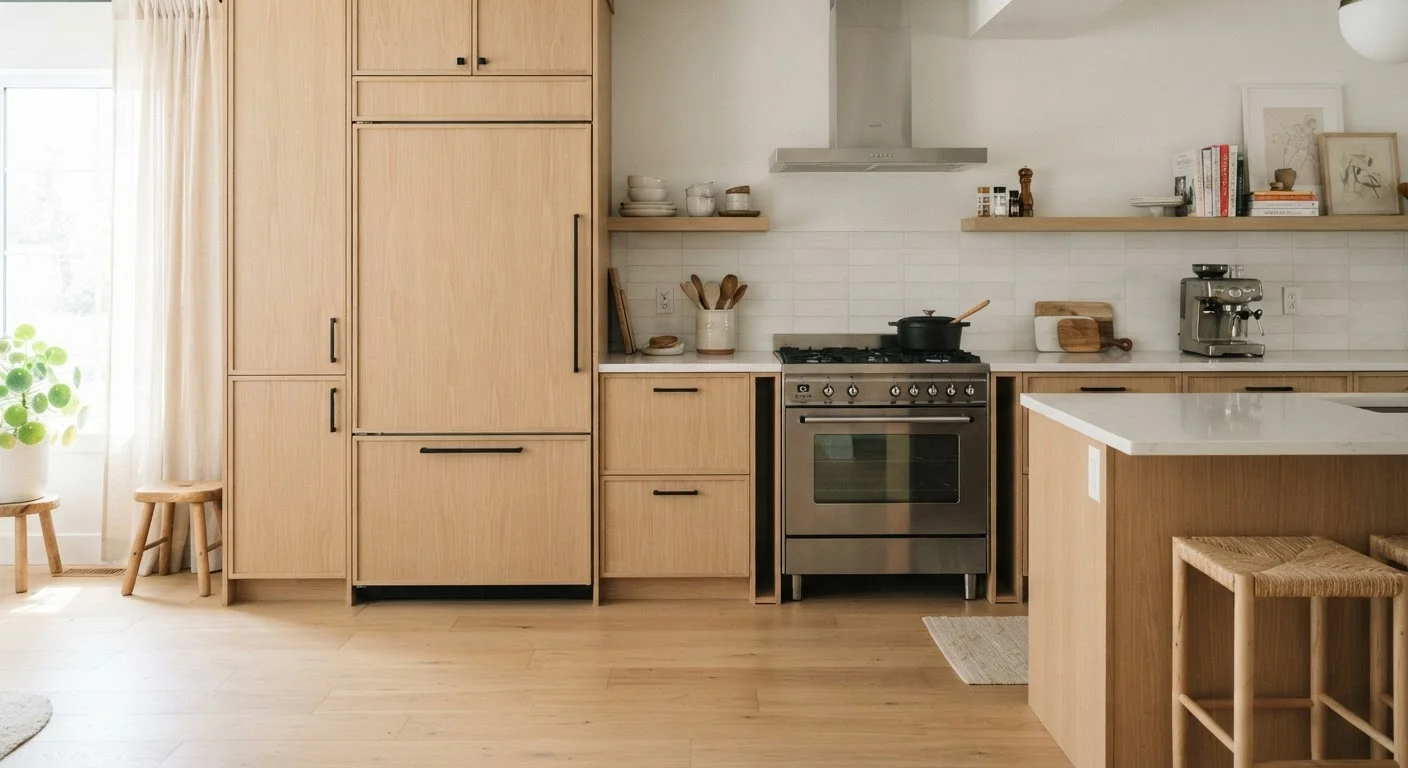
Photo credit: Wiseturt.com | Blogs Curated For You
In this article
What separates built-in appliances from freestanding ones, and how that distinction affects installation, flexibility, and longevity.
Key Takeaways
- Built-in appliances integrate flush with cabinetry but require precise measurements and professional installation.
- Freestanding appliances are easier to relocate or replace and generally cost less upfront.
- Repair access and parts availability often favor freestanding models over integrated ones.
- The right choice depends on your renovation timeline, budget, and how long you plan to stay in the home.
What the Terms Actually Mean
The labels "built-in" and "freestanding" describe how an appliance is installed, not its size or feature set. A freestanding appliance is self-contained: it has finished sides, a back panel, and legs or feet that allow it to stand independently. You can slide it into a gap between cabinets or push it against a wall, but it doesn't need to be anchored to surrounding structures. Ranges, refrigerators, and washing machines are commonly sold in freestanding configurations.
A built-in appliance - sometimes called an integrated appliance - is designed to be installed within cabinetry or a dedicated cavity. The sides and back may be unfinished since they won't be visible. Many built-in refrigerators, ovens, and dishwashers use a panel-ready design, meaning a custom cabinet panel is attached to the appliance face so it blends seamlessly with surrounding cabinetry. Some built-ins, particularly wall ovens and cooktops, require their own dedicated cutouts and electrical or gas connections at a fixed location.
For a broader look at how appliance categories differ in practice, see what countertop appliances do well and where they fall short.
Installation, Flexibility, and Renovation Scope
Freestanding appliances win on installation simplicity. Most require only a standard utility connection - a 240V outlet for an electric range, a water line for a dishwasher - and can be set in place without custom carpentry. If you later need to replace the unit, the new model simply slides into the same space, provided it's a similar size.
Built-in installations are more involved. Cabinetry must be built or modified to precise dimensions before the appliance arrives. Wall ovens require a dedicated electrical circuit and a ventilated cavity. Panel-ready refrigerators need custom panels fabricated to match your cabinetry finish. Mistakes in measurement are costly to correct. If a built-in appliance fails and an exact-size replacement is no longer manufactured, surrounding cabinetry may need to be altered - a scenario worth factoring into renovation planning.
Measure Twice Before Ordering
Built-in appliance cutout dimensions vary between manufacturers and even between model generations from the same brand. Before ordering, verify the rough-in dimensions for both the appliance and your cabinetry opening - including depth, width, and height clearances. Having your cabinetry installer and appliance supplier coordinate measurements in advance can prevent costly mismatches on delivery day.
This interdependence between appliance and structure is also why built-in configurations can complicate decisions later. As covered in our appliance repair-or-replace framework, the cost calculus changes significantly when replacement requires cabinetry work in addition to the unit itself.
Side-by-Side: Key Tradeoffs at a Glance
The table below summarizes how built-in and freestanding appliances typically compare across the criteria most consumers weigh before a renovation.
| Built-In Appliances | Freestanding Appliances | |
|---|---|---|
| Installation complexity | High - requires precise cabinetry and often permits | Low - plug-in or standard utility connection |
| Upfront cost | Generally higher, including cabinetry work | Generally lower; no custom carpentry needed |
| Aesthetic integration | Seamless, flush with cabinetry | Visible sides and gaps; less unified look |
| Flexibility to relocate | Low - tied to fixed cabinetry cavities | High - can be moved or replaced easily |
| Repair access | Can be restricted by surrounding structures | Generally straightforward to access |
| Replacement ease | Depends on matching size; may alter cabinetry | Wide model variety; simpler swap-out |
| Best for | Long-term renovations, fixed layouts | Flexible living situations, shorter timelines |
Longevity, Repair Access, and Practical Care
Neither configuration is inherently more durable - lifespan depends more on the appliance type, usage habits, and maintenance than on whether it's integrated or freestanding. A refrigerator's longevity, for example, is driven primarily by compressor design and how well coils are kept clean. For a detailed look at that, see our piece on why some refrigerators last 20 years and others quit at 8.
What does differ is repair access. Freestanding appliances can generally be pulled out from their location, giving technicians clear access to the back and sides. Built-in appliances - particularly counter-depth refrigerators and integrated dishwashers - can be harder to access without partially dismantling the surrounding installation. Some repairs on integrated units require removing cabinetry panels first, which can add time and labor cost to a service call.
Parts availability also tends to be stronger for freestanding models, which are produced in larger volumes. This doesn't mean built-in appliances are unsupportable, but it's worth verifying part availability and service network coverage before committing to an integrated configuration, particularly for less common sizes. Avoid assuming that more expensive automatically means easier to service - that's among the appliance myths that lead to wasted money.
Making the Decision: Questions Worth Asking Before You Renovate
Rather than defaulting to built-in for aesthetics or freestanding for cost, work through a few practical questions first:
- How long do you plan to stay? If you expect to sell within five years, the investment in integrated appliances may not return proportionate value - and removing a built-in refrigerator when you move can leave awkward gaps in cabinetry.
- Is your layout fixed? If the kitchen footprint is unlikely to change, built-in configurations make more sense. If you're still working out workflow, freestanding allows adjustment. Consider reviewing appliance capacity considerations before sizing decisions are locked in.
- What's in the walls? Built-in wall ovens and cooktops require dedicated circuits and, in many jurisdictions, permits and licensed electrician installation. Verify local code requirements before finalizing plans.
- What happens at first use? Regardless of type, newly installed appliances need verification checks. Our new appliance setup checklist covers what to confirm before switching anything on for the first time.
Permits and Licensed Trades Often Required
Wall oven installation, built-in cooktops, and any appliance requiring a new dedicated electrical circuit typically require a permit and must be installed by a licensed electrician in most U.S. jurisdictions. Gas line work for built-in gas cooktops carries similar requirements. Installing without permits can create problems when you sell the home and may void homeowner's insurance coverage for related incidents. Always check your local building department's requirements before work begins.

Author
Home & Appliances Editorial Team
Home & Appliances Editorial Team is the collective byline for our editorial team and contributor network. Articles published under this byline or an editorial pen name are researched, written, and reviewed according to our editorial standards for clarity, consistency, and independence before publication.
View all articles →