
Coastal vs. Inland Europe: How Your Itinerary Changes Depending on Where You Focus
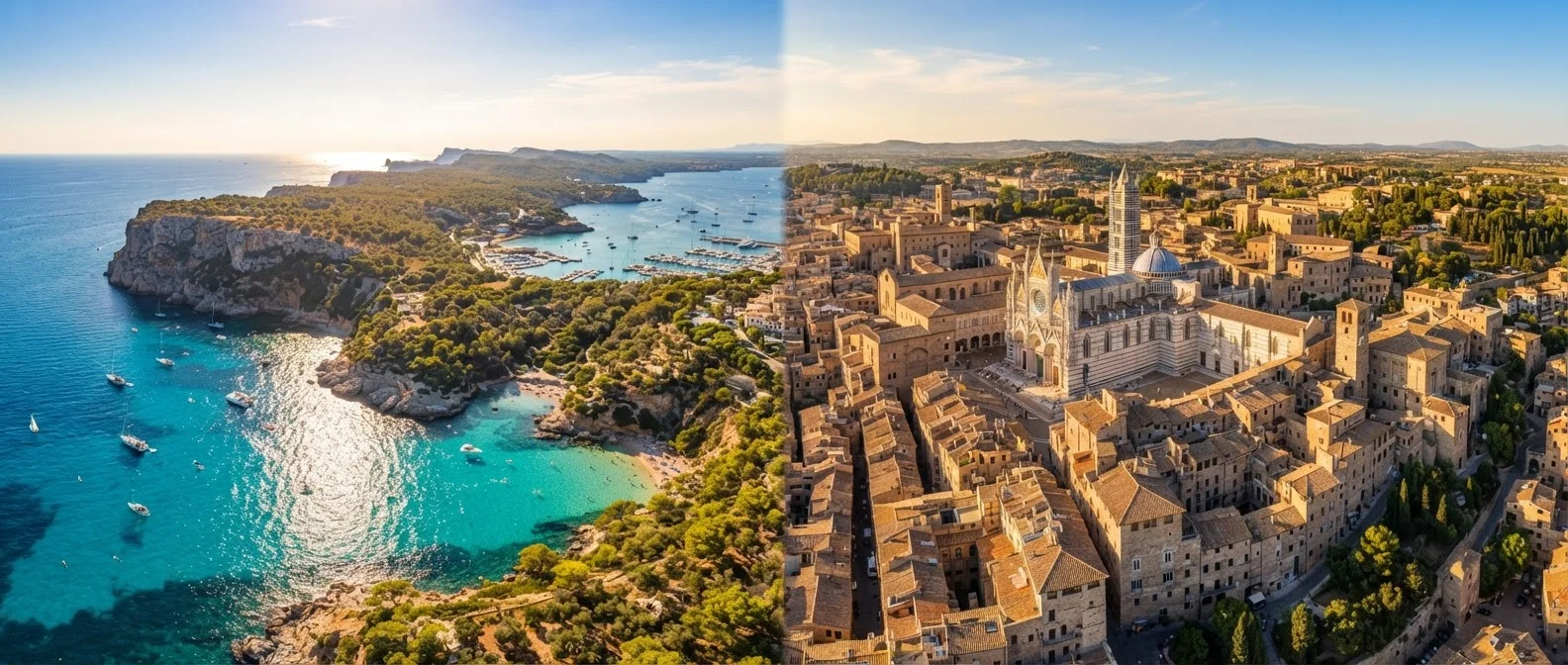
Photo credit: Wiseturt.com | Blogs Curated For You
In this article
Choosing between Mediterranean coastlines and inland cultural cities shapes your pacing, costs, and experiences in fundamentally different ways.
Key Takeaways
- Coastal itineraries favor slower pacing, water-based activities, and seasonal timing constraints.
- Inland trips pack in more cultural landmarks per day but demand more active sightseeing energy.
- Transport logistics differ significantly - coastal areas often require ferries or slow local trains.
- Shoulder season dramatically changes value and crowd levels for coastal destinations.
- Inland cities typically offer more year-round accessibility and predictable weather for planning.
- Both approaches can be combined, but mixing them requires careful transit planning.
Pacing and Daily Rhythm: Relaxed vs. Active
One of the most immediate differences between a coastal and inland European trip is how your days actually feel. Coastal itineraries - think the Amalfi Coast, the Greek islands, or Croatia's Dalmatian shoreline - tend to organize themselves naturally around the water. Mornings are slow, afternoons are for swimming or boat trips, and evenings stretch long over seafood and local wine. There's an inherent permission to do less, and that's often the point.
Inland itineraries move differently. A week split between Rome, Florence, and Bologna means early starts, queued entry times, and deliberate choices about which galleries and landmarks get your hours. That's not a downside - it's a different kind of engagement. You're absorbing centuries of architecture, art, and civic life in dense, walkable chunks. But it demands more mental and physical energy, and travelers who underestimate this often end up fatigued by day four.
If you're debating how structured to make your journey, city breaks vs. slow travel is a useful framework to read before you commit to either format.
| Criterion | Coastal Europe | Inland Europe |
|---|---|---|
| Daily pacing | Leisurely, water-centered | Active, landmark-driven |
| Peak season | July-August (very crowded) | Varies; more even year-round |
| Transport ease | Ferries, narrow roads, variable | High-speed rail, straightforward |
| Cultural depth | Local and maritime-focused | Museums, art, historic centers |
| Off-season viability | Limited; many closures | Strong year-round options |
| Multi-country potential | Possible but logistically complex | Easy via rail connections |
| Food scene character | Seafood, market-fresh, regional | Diverse, historic cuisine traditions |
Transport, Logistics, and Getting Between Places
Getting around is where coastal and inland Europe diverge most practically. Inland hubs across Western and Central Europe are connected by an extensive high-speed rail network. Traveling from Paris to Brussels takes under two hours; Vienna to Budapest is about two and a half. Schedules are predictable, baggage handling is straightforward, and you rarely need to plan more than a few days ahead for tickets.
Coastal travel introduces more variables. Ferries between Greek islands run seasonally and can be disrupted by wind. Roads along the Amalfi Coast are famously narrow and crowded in peak season. Reaching smaller Croatian islands often involves coordinating bus, ferry, and taxi legs that each carry their own timing uncertainty. This isn't insurmountable - millions of travelers manage it happily - but it requires a different planning mindset and more buffer time between stops.
80%+
Of EU high-speed rail routes connect inland cities
The European high-speed rail network is concentrated between major inland urban centers, with coastal routes typically served by slower regional services.
2-3x
Peak-season accommodation cost multiplier in coastal hotspots
Accommodation pricing in popular Mediterranean coastal destinations during July and August can be significantly higher than the same region in shoulder season, according to general travel industry observations.
For travelers who want to explore multiple types of experiences without committing fully to one approach, guided versus self-guided travel can offer useful perspective on managing logistics with or without organizational support.
Seasonality, Costs, and Planning Windows
Timing reshapes the coastal vs. inland calculation more than almost any other factor. Mediterranean coastal destinations peak hard in July and August - prices rise sharply, accommodation books out months ahead, and popular spots can feel overwhelmingly crowded. Shoulder season (May-June and September-October) often delivers the same scenery with dramatically better conditions. Many smaller coastal towns see significant closures from November through March.
Inland cities, by contrast, operate on more even footing throughout the year. Major museums, restaurants, and transport links stay consistent. While Christmas markets and summer festivals create their own demand spikes, the overall availability and pricing curve is more predictable. This makes inland-focused itineraries easier to plan on shorter timelines.
Budget-wise, neither type is categorically cheaper - it depends heavily on specific destinations and travel style. However, coastal resort areas frequently carry a premium on accommodation and dining during peak weeks that inland alternatives don't match. Planning around experiences rather than destinations can help you identify what genuinely matters to your trip before locking in dates and locations.
Whichever direction you lean, verifying current entry requirements, visa rules, and travel advisories with official government sources before booking is always essential - conditions can change.

Author
Travel & Tours Editorial Team
Travel & Tours Editorial Team is the collective byline for our editorial team and contributor network. Articles published under this byline or an editorial pen name are researched, written, and reviewed according to our editorial standards for clarity, consistency, and independence before publication.
View all articles →