
Emergency Fund Basics: How Much Is Enough and Where Should It Sit?
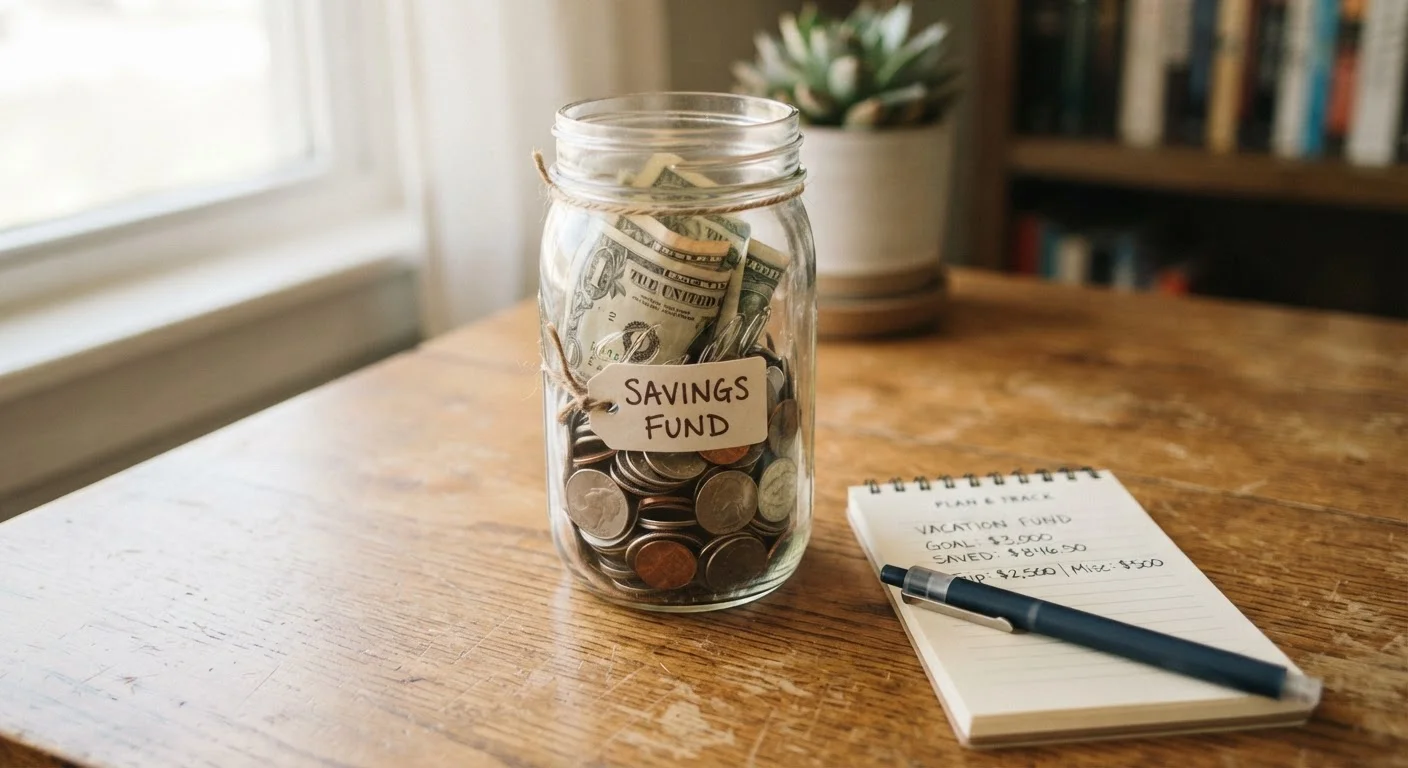
Photo credit: Wiseturt.com | Blogs Curated For You
In this article
An emergency fund is a financial safety net — but how large should it be? Learn the general principles and what account types are commonly used.
Key Takeaways
- Most financial guidance suggests saving three to six months of essential living expenses.
- Your ideal fund size depends on job stability, income sources, and household dependents.
- Emergency funds should be kept in liquid, accessible accounts - not invested in markets.
- High-yield savings accounts are a commonly used vehicle for emergency reserves.
- An emergency fund is distinct from sinking funds, which cover predictable future costs.
- Building the fund gradually through automatic transfers is a practical approach for most people.
Why an Emergency Fund Matters
Unexpected financial events aren't a question of if - they're a question of when. A sudden layoff, an unplanned medical bill, or a failed water heater can derail a household budget within days. Without a dedicated reserve, most people turn to credit cards or personal loans, which introduce debt and interest costs on top of an already stressful situation.
An emergency fund breaks that cycle. It gives you the financial breathing room to handle a crisis without making it worse. Beyond the practical protection, having a funded reserve also reduces the psychological stress that comes with financial uncertainty - a benefit that's difficult to quantify but widely recognized by personal finance researchers.
Before you consider putting money into markets, an emergency fund is the foundational step. The pre-investment financial checklist outlines why this reserve belongs at the top of your financial priority list, ahead of discretionary investing.
~57%
Americans unable to cover a $1,000 emergency
Bankrate's annual emergency savings survey has consistently found that a majority of US adults could not cover an unexpected $1,000 expense from savings alone.
3-6 months
Commonly cited emergency fund target range
Consumer financial educators and regulatory bodies such as the CFPB broadly reference three to six months of essential expenses as a general savings target.
22%
Adults with no emergency savings at all
The Federal Reserve's Report on the Economic Well-Being of US Households has documented that roughly one in five adults report having no emergency savings buffer.
How Much Is Actually Enough?
The most common general guideline - three to six months of essential living expenses - is a reasonable starting point for most households. But the right target varies based on your circumstances.
- Income stability: Salaried employees in stable industries may feel secure at three months. Freelancers, gig workers, or those in cyclical industries often benefit from targeting six months or more.
- Household structure: Single-income households carry more risk than dual-income households. More dependents generally means a larger cushion is prudent.
- Fixed obligations: If your monthly essential expenses - rent or mortgage, utilities, food, insurance, minimum debt payments - are high, a larger absolute dollar amount is needed even if the month-count target stays the same.
"Essential expenses" is the operative phrase. Your emergency fund target should be based on what you need to cover basic obligations, not your full discretionary spending. Calculating this requires an honest look at your monthly budget. The zero-based and envelope budgeting methods can help you get precise about what that number actually is.
Calculate Expenses, Not Income
When setting your emergency fund target, base the calculation on your monthly essential expenses - not your take-home pay. Include rent or mortgage, utilities, groceries, transportation, insurance premiums, and minimum debt payments. This gives you a more accurate and often more achievable savings target than multiplying your salary.
Where Should Your Emergency Fund Live?
The account you choose for your emergency fund matters. The primary criteria are liquidity (you can access the money quickly without penalty), safety (the principal is protected), and reasonable yield (your money isn't losing value unnecessarily to inflation).
Common account types used for emergency funds include:
- High-yield savings accounts (HYSAs): Offered by many online banks, these typically pay higher interest than traditional savings accounts while remaining FDIC-insured up to applicable limits. Funds are generally accessible within one to three business days.
- Money market accounts: Similar to HYSAs in many respects, money market accounts may offer check-writing or debit card access alongside competitive rates, though minimum balance requirements can vary.
- Traditional savings accounts: Universally accessible and insured, though interest rates at brick-and-mortar banks are often low. Still a valid option if immediate in-branch access is a priority.
What to avoid: investment accounts, certificates of deposit (CDs) with early withdrawal penalties, and any vehicle where your balance could shrink due to market activity. The goal is stability and access, not growth.
It's worth noting that emergency funds serve a very different purpose than sinking funds for predictable expenses. Keeping them in separate, clearly labeled accounts helps prevent accidental spending from your emergency reserve.
Building the Fund: A Practical Approach
For many people, accumulating three to six months of expenses feels like an overwhelming goal. The practical solution is to treat it as a long-term project rather than an immediate target.
“The habit of saving is itself an education; it fosters every virtue, teaches self-denial, cultivates the sense of order, trains to forethought, and so broadens the mind.”
— T.T. Munger, 19th-century American clergyman and author
Start with a more achievable milestone - $500 or $1,000 is enough to handle many minor emergencies and reduces the likelihood of reaching for credit at the first sign of trouble. From there, increase your target incrementally.
Automating contributions is one of the most effective strategies. Setting up a recurring transfer from your checking account to your dedicated emergency savings account on payday removes the reliance on willpower and makes the habit sustainable. Even modest, consistent contributions compound meaningfully over time.
Once your emergency fund is fully funded, your financial foundation is solid enough to begin thinking about longer-term goals. That might mean exploring opening your first investment account or reviewing whether your insurance coverage has gaps worth addressing.
This article is for general informational and educational purposes only and does not constitute personalized financial or investment advice. Consult a qualified, licensed financial adviser for guidance tailored to your specific situation.
Frequently Asked Questions

Author
Investment & Insurance Editorial Team
Investment & Insurance Editorial Team is the collective byline for our editorial team and contributor network. Articles published under this byline or an editorial pen name are researched, written, and reviewed according to our editorial standards for clarity, consistency, and independence before publication.
View all articles →