
Fixed vs. Variable Expenses: Understanding the Difference and Why It Matters
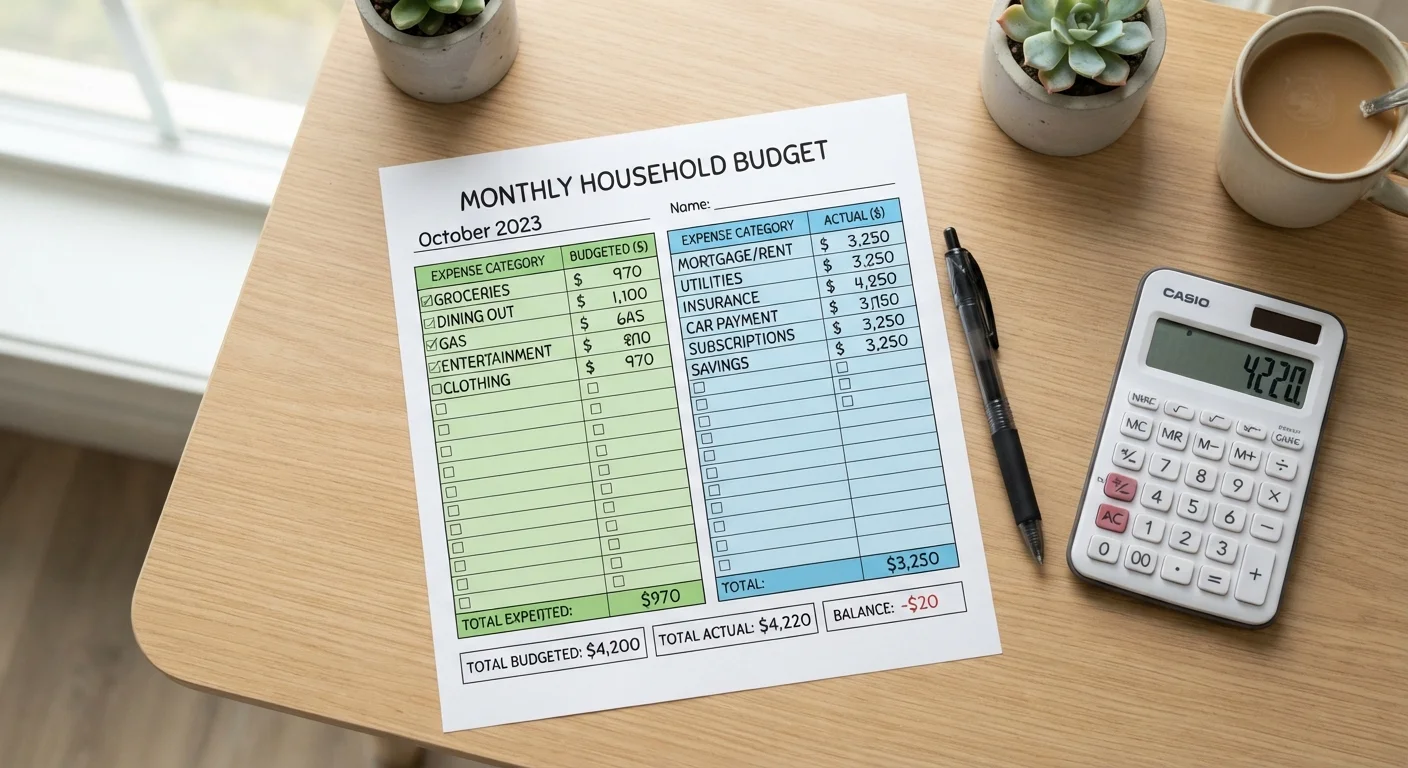
Photo credit: Wiseturt.com | Blogs Curated For You
In this article
Fixed and variable expenses behave differently in a budget. Understanding that distinction is the foundation for meaningful cost control.
Key Takeaways
- Fixed expenses stay the same each billing cycle; variable expenses change based on usage or choices.
- Knowing which category each cost falls into tells you where you actually have room to cut.
- Variable expenses are the primary lever most consumers can pull to free up savings.
- Some expenses - like utilities - are partially fixed and partially variable, requiring a hybrid approach.
- Categorizing expenses correctly is the foundation for any effective budgeting method.
What Makes an Expense Fixed or Variable?
At its simplest, a fixed expense is one that costs the same amount every billing period, regardless of how much you use it or how your circumstances shift. Your rent or mortgage payment is the classic example - the amount due on the first of the month does not change because you cooked more meals at home or took an extra vacation day. Other common fixed expenses include car loan payments, insurance premiums, and subscription services billed at a flat monthly rate.
A variable expense, by contrast, fluctuates from month to month based on consumption, behavior, or external conditions. Groceries, gas, dining out, clothing, and utilities like electricity all fall into this category. Spend a week out of town? Your grocery bill drops. Run the air conditioning through a heat wave? Your electric bill climbs.
It is worth noting that some costs sit in between. Utilities, for example, often carry a fixed base charge plus a variable usage component. Financial educators sometimes call these semi-variable or mixed expenses. For budgeting purposes, it helps to estimate a typical monthly floor for these and treat anything above that as variable. For a deeper look at how to structure spending around both categories, see how treating fixed and variable expenses differently strengthens any budget.
| Criterion | Fixed Expenses | Variable Expenses |
|---|---|---|
| Monthly amount | Stays the same | Changes each month |
| Examples | Rent, loan payments, insurance | Groceries, gas, dining out |
| Consumer control | Low - often contractual | High - driven by choices |
| Budget role | Sets your monthly floor | Determines your spending margin |
| Savings opportunity | Occasional (renegotiate, refinance) | Ongoing - adjustable anytime |
| Predictability | High | Low to moderate |
Why the Distinction Matters for Real Budgeting
Most people underestimate variable spending not because they are careless, but because variable costs are diffuse - spread across dozens of small transactions that are easy to overlook individually. The aggregate, however, adds up quickly. Research by the U.S. Bureau of Labor Statistics consistently shows that food, transportation fuel, and personal care make up a substantial share of average household spending, and those are almost entirely variable.
~33%
Average share of spending on housing
The U.S. Bureau of Labor Statistics Consumer Expenditure Survey consistently finds housing represents roughly one-third of average household expenditures - predominantly a fixed cost.
~15%
Share of spending on food
Food - one of the most controllable variable expenses - accounts for approximately 12-17% of average US household spending, according to BLS Consumer Expenditure data.
~17%
Share of spending on transportation
Transportation costs, which include a mix of fixed (loan/lease) and variable (fuel, maintenance) components, represent roughly 15-18% of average household budgets per BLS data.
Fixed expenses matter for a different reason: they define your non-negotiable monthly obligation. Before you can make any meaningful financial decision - whether to save more, pay down debt, or invest - you need to know this floor. Once you do, the gap between your take-home income and your fixed costs tells you what you actually have to work with.
This is especially important for households with uneven income. Freelancers, contractors, and gig workers benefit from knowing exactly how little they can earn in a slow month before the bills cannot be met. That calculation only works if you have clearly identified every fixed commitment. For a more detailed exploration of this dynamic, read about the pros and cons of strict budgeting with variable income.
Variable expenses, meanwhile, are where most households have genuine leverage. Unlike rent, you can decide to cook at home this week, postpone a clothing purchase, or switch to a less expensive phone plan. That flexibility is not a minor detail - it is where the actionable part of any budget lives.
Periodic Expenses Need Special Handling
Some costs are fixed in amount but do not recur monthly - annual insurance renewals, semi-annual car registrations, or quarterly tax payments are common examples. These are easy to forget in a monthly budget. A practical workaround is to divide the annual total by 12 and set aside that amount each month in a dedicated savings buffer, so the payment never catches you off guard.
Once you understand fixed versus variable, the next natural question is how to structure a budget around them. Two widely used frameworks - zero-based and envelope budgeting - take meaningfully different approaches to allocating both types of costs. Explore how those methods compare to find a structure that matches your habits.
This article is for general informational and educational purposes only and does not constitute personalized financial or investment advice. For guidance specific to your financial situation, consult a qualified financial professional.

Author
Investment & Insurance Editorial Team
Investment & Insurance Editorial Team is the collective byline for our editorial team and contributor network. Articles published under this byline or an editorial pen name are researched, written, and reviewed according to our editorial standards for clarity, consistency, and independence before publication.
View all articles →