
What Actually Happens When You File an Insurance Claim
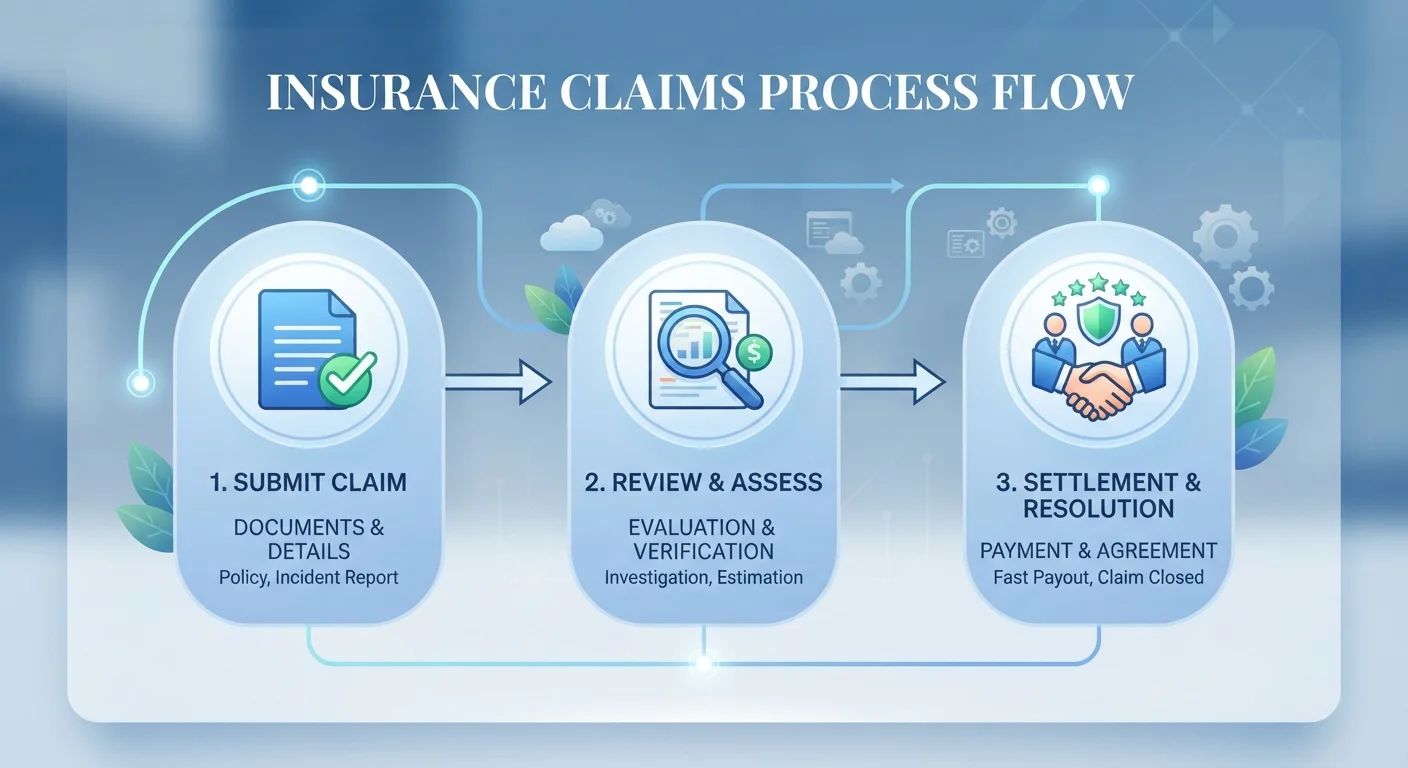
Photo credit: Wiseturt.com | Blogs Curated For You
In this article
From first notice of loss to final settlement, here's a clear walkthrough of how the claims process works and what to expect at each stage.
Key Takeaways
- Filing a claim starts with a formal notice to your insurer, often called First Notice of Loss.
- An adjuster investigates the claim to verify coverage and estimate the value of the loss.
- Your deductible is subtracted from the settlement before any payment is issued.
- Claims can be denied if the loss falls under a policy exclusion or condition is not met.
- Keeping thorough documentation strengthens your position throughout the process.
- Settlement terms and timelines vary by policy type, insurer, and the complexity of the loss.
Step One: Reporting the Loss
The claims process begins the moment you notify your insurer that something covered has gone wrong. This first step is formally called the First Notice of Loss (FNOL). You can typically report by phone, online portal, or through a mobile app, depending on your insurer.
What you report matters. Provide clear, factual details: the date and location of the incident, a description of what happened, and a preliminary account of what was damaged or lost. Avoid speculating about fault or overstating damage - accuracy protects you throughout the process.
Most policies include a prompt reporting requirement, meaning you must notify your insurer within a reasonable timeframe after the loss. Waiting too long can give the insurer grounds to complicate or deny your claim. If you're unsure what your policy requires, our guide on reading an insurance policy explains how to locate the conditions section where these obligations appear.
Document Everything Before You Call
Before filing, gather photos or video of the damage, relevant receipts, a timeline of events, and any third-party reports (police, fire department, medical). Strong documentation from the start reduces back-and-forth with the adjuster and helps prevent disputes over the value of your loss.
Step Two: Assignment and Investigation
Once you file, your insurer assigns a claims adjuster to your case. The adjuster's job is to investigate the claim on behalf of the insurer - verifying that the loss occurred, that your policy covers it, and determining the dollar value of the damage or loss.
Depending on the type of claim, investigation can involve an in-person inspection of damaged property, a review of medical records, police reports, photos, or repair estimates. For auto claims, the adjuster may examine the vehicle directly or use a third-party appraisal service.
During this phase, cooperation is both required and strategic. Most policies include a cooperation clause obligating you to assist the investigation. This means providing documentation, answering questions honestly, and making damaged property available for inspection.
~40%
Homeowners who have never filed a claim
According to Insurance Research Council data, a significant share of policyholders go years without a claim - making the process unfamiliar when a loss finally occurs.
15-30 days
Typical state-mandated claim acknowledgment window
Most U.S. states require insurers to acknowledge receipt of a claim and begin investigation within 10-30 days, though resolution timelines vary considerably.
1 in 20
Homeowners filing a claim each year
The Insurance Information Institute estimates roughly 5-6% of insured homeowners file a claim in any given year, with weather-related losses being the most common trigger.
Step Three: Coverage Determination
After gathering facts, the adjuster determines whether the loss is covered under your policy. This is where the policy language - your insuring agreement, exclusions, and conditions - becomes critically important.
A loss can be partially or fully excluded even when the cause seems obvious. For instance, standard homeowners policies often exclude flood damage even if the event was clearly weather-related. Understanding what your policy does not cover before you need to file is one of the most valuable things you can do as a policyholder. See our overview of common policy exclusions for a detailed breakdown.
If coverage is confirmed, the adjuster calculates the claim value. If denied, you'll receive a written explanation citing the specific policy language. You have the right to appeal, and your state's department of insurance provides a formal mechanism for disputes.
Your State's Insurance Regulator Is a Resource
Every U.S. state has a department of insurance that oversees insurer conduct and policyholder rights. If your claim is denied and you believe the denial is improper, you can file a complaint with your state regulator at no cost. Regulators also publish consumer guides on the claims process specific to your state.
Step Four: Settlement and Payment
When coverage is confirmed and the value is established, your insurer will issue a settlement offer. Before the payout reaches you, your deductible - the amount you agreed to pay out of pocket when you purchased the policy - is subtracted from the settlement total.
Payment methods vary: some insurers issue a check directly to you, others pay vendors (such as repair shops or hospitals) directly, and in some cases - particularly with mortgage-involved home claims - checks may be co-payable to both you and your lender.
If you believe the settlement undervalues your loss, you are not obligated to accept the first offer. You can provide additional documentation, request a re-inspection, or invoke the appraisal clause many policies include, which allows both sides to bring in independent appraisers to resolve a valuation dispute.
For context on how different types of policies handle claims differently, our overview of the major types of insurance walks through how health, auto, home, and life policies each operate.
“The claims process is where the insurance contract is truly tested. Policyholders who understand their rights - and their obligations - are far better positioned to reach a fair outcome.”
— J. Robert Hunter, Former Insurance Commissioner and Director of Insurance, Consumer Federation of America
This article is for general informational purposes only and does not constitute personalized insurance, financial, or legal advice. Coverage terms, processes, and timelines vary by insurer, policy type, and state. Consult a licensed insurance professional or your state's department of insurance for guidance specific to your situation.
Frequently Asked Questions

Author
Investment & Insurance Editorial Team
Investment & Insurance Editorial Team is the collective byline for our editorial team and contributor network. Articles published under this byline or an editorial pen name are researched, written, and reviewed according to our editorial standards for clarity, consistency, and independence before publication.
View all articles →