
Why Your Insurance Quote Can Vary So Much Between Providers
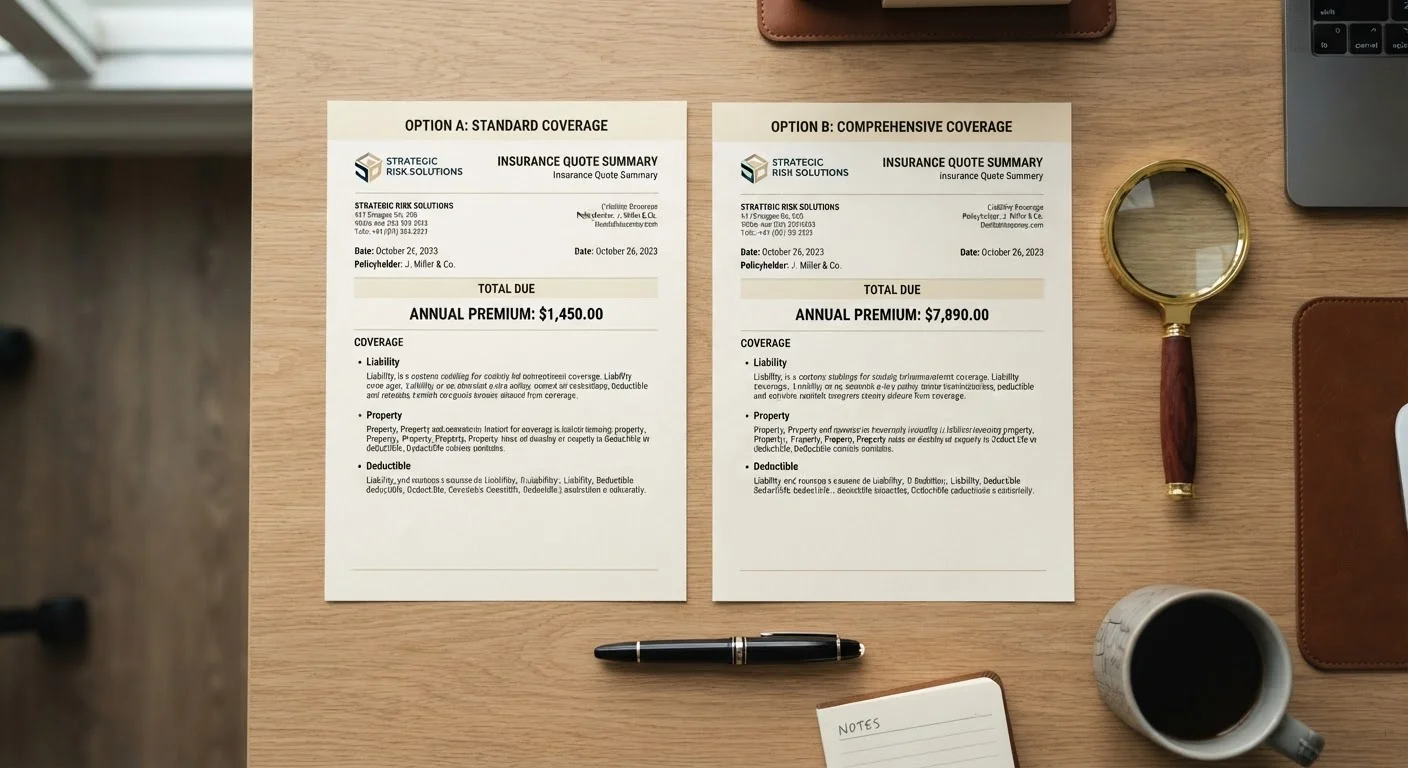
Photo credit: Wiseturt.com | Blogs Curated For You
In this article
Two insurers can price the same coverage very differently. This explainer breaks down the rating factors and underwriting logic behind the gap.
Key Takeaways
- Every insurer uses its own proprietary formula to calculate premiums, so quotes for identical coverage can vary significantly.
- Your personal risk profile - driving history, credit-based insurance score, location, and claims history - is weighed differently by each carrier.
- Comparing at least three quotes is a standard recommendation, but the coverage terms must match for the comparison to be meaningful.
- Lower premiums can sometimes mean narrower coverage - always read what is and isn't covered before deciding.
- State regulators approve rating methods, but they don't standardize them across insurers.
Each Insurer Uses Its Own Pricing Formula
When you request quotes from multiple insurance companies, you're essentially submitting your risk profile to several separate actuarial models at once. Each model was built by a different team of statisticians, trained on different historical claims data, and calibrated to serve a specific segment of the market. The result is that two carriers can look at the same applicant and arrive at premiums that differ by 30%, 50%, or more.
This isn't an error or a trick - it's the structural reality of how insurance is priced. Insurers file their rating methods with state regulators, who review them for legality and fairness, but regulators don't require every carrier to use the same formula. Proprietary pricing models are a core part of how insurers compete. Before exploring any quote, it helps to understand what type of coverage you actually need - because the factors that drive price vary by product line.
~$500+
Typical annual premium range between high and low auto quotes
Industry analyses consistently show that shopping multiple carriers can produce premium differences of several hundred dollars annually for identical auto coverage, according to research cited by the National Association of Insurance Commissioners.
45
U.S. states permitting credit-based insurance scoring
The majority of U.S. states allow insurers to use credit-based insurance scores as a rating factor for auto or home insurance, though restrictions vary by state law.
3+
Quotes recommended for meaningful comparison shopping
Consumer advocacy groups and state insurance departments broadly recommend obtaining at least three quotes to understand the market range available for your risk profile.
The Key Factors That Drive Quote Differences
While every insurer's formula is proprietary, the underlying data inputs are broadly consistent across the industry. What differs is the weight each company assigns to each factor.
- Credit-based insurance score: Most states allow carriers to use a version of your credit history adapted for underwriting. One insurer may weigh this heavily; another may treat it as a minor input.
- Claims history: Past claims signal future risk to underwriters. But carriers define how far back they look and how much each claim type counts differently.
- Geographic location: Zip-code-level data on theft rates, accident frequency, weather events, and local repair costs all influence pricing - and each carrier interprets that data through its own lens.
- Coverage limits and deductibles: Higher limits cost more; higher deductibles usually cost less. The relationship between these two is worth understanding. See our explainer on how deductibles and premiums interact.
- Underwriting appetite: Some carriers actively target low-risk profiles and price aggressively for them. Others specialize in higher-risk applicants and price accordingly. If your profile is a strong fit for a carrier's target market, your quote will reflect that.
Make Sure You're Comparing Apples to Apples
Before deciding a quote is 'cheaper,' confirm that the deductible, coverage limits, and included riders are identical across all quotes you're evaluating. A lower premium tied to a much higher deductible or lower liability limit is a different product - not a better deal.
What Quote Variation Tells You - and What It Doesn't
A large gap between two quotes doesn't automatically mean one insurer is cutting corners on coverage. It can mean you're a lower-risk profile than average for that carrier, that the carrier has a more efficient claims operation, or simply that its model weights certain factors differently. Conversely, a low quote can also reflect narrower coverage - higher deductibles, lower limits, or more exclusions buried in the policy language.
This is why comparing quotes requires comparing identical coverage terms. A $900 annual premium with a $2,500 deductible and $100,000 in liability coverage is a fundamentally different product from a $1,200 premium with a $500 deductible and $300,000 in coverage. The dollar difference is misleading without that context. It's also worth reviewing what your policy won't cover - common exclusions across policy types can be just as important as the premium figure.
“Insurance pricing is not arbitrary - it reflects each company's own statistical view of risk. Two quotes for the same coverage can differ because each insurer is essentially making a different prediction about you.”
— Robert Hunter, Former Director of Insurance, Consumer Federation of America
How to Use This Knowledge When Shopping
Knowing why quotes vary helps you shop more deliberately rather than just chasing the lowest number. A few practical principles:
- Standardize your request: Use identical coverage limits, deductibles, and add-ons across every quote you collect. This is the only way the comparison becomes valid.
- Request at least three quotes: With only two data points, you can't tell whether a higher quote is an outlier or the lower one is. Three or more gives you a clearer sense of market range.
- Check coverage terms, not just price: Read the declarations page and any summary of coverage before deciding. Misconceptions about what's included are a leading cause of coverage gaps - a point explored further in our piece on persistent insurance myths.
- Ask about discount eligibility: Bundling policies, maintaining a clean claims record, or completing safety courses can affect your final premium - but the availability and value of these vary by insurer.
This article is for general informational purposes only and does not constitute personalized insurance, financial, or legal advice. Coverage terms, rating factors, and regulations vary by state and provider. Consult a licensed insurance agent or adviser for guidance specific to your situation.
Frequently Asked Questions

Author
Investment & Insurance Editorial Team
Investment & Insurance Editorial Team is the collective byline for our editorial team and contributor network. Articles published under this byline or an editorial pen name are researched, written, and reviewed according to our editorial standards for clarity, consistency, and independence before publication.
View all articles →