
Job Boards vs. Direct Applications: Where Your Time Is Better Spent
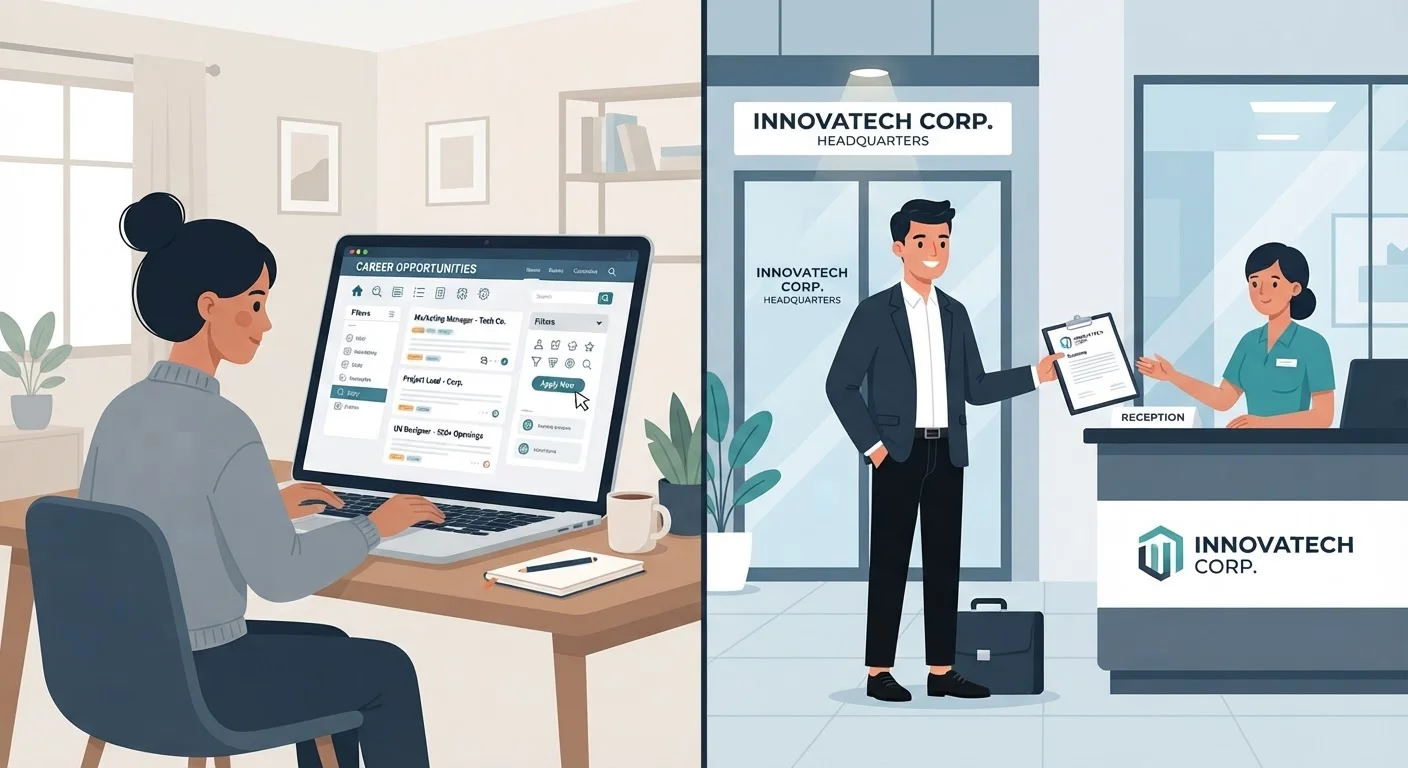
Photo credit: Wiseturt.com | Blogs Curated For You
In this article
A clear-eyed look at when job boards help and when they hurt, so you can allocate your search effort more strategically.
Key Takeaways
- Job boards surface volume but also attract the most competition for every listed role.
- Direct applications to company career pages often reach hiring managers with less noise.
- A significant share of jobs are filled before or without ever being publicly posted.
- Mixing both strategies based on your career stage and target industry is generally more effective than picking one.
- Tailoring each application - board or direct - matters more than the channel itself.
What Each Channel Actually Does for You
Job boards - platforms that aggregate listings from multiple employers - make the job market visible. They let you search by keyword, location, salary range, and job type across thousands of employers simultaneously. That convenience is real. But it comes with a structural problem: so can everyone else.
Direct applications mean submitting your materials through a company's own careers portal, or reaching out to a hiring manager through a professional network contact. This path requires more research and initiative, but it removes at least one layer of mass-market competition. It also lets you target companies based on culture, mission, or growth trajectory - not just whatever happens to be posted today.
Understanding how the modern hiring process actually works - from ATS filters to recruiter timelines - helps clarify why the channel you choose affects more than just where you click.
| Criterion | Job Boards | Direct Applications |
|---|---|---|
| Volume of opportunities | High - aggregates many employers | Lower - targeted to specific companies |
| Competition level | Very high - open to all applicants | Lower - fewer competing applicants |
| ATS filtering risk | High - automated screening common | Moderate - varies by company size |
| Access to unlisted roles | None - only publicly posted jobs | Possible - via referrals and outreach |
| Time investment per application | Lower - search and apply quickly | Higher - requires research and tailoring |
| Employer relationship signal | Weak - anonymous submission | Stronger - shows deliberate interest |
| Best career stage | Early career, broad search | Mid/senior career, targeted search |
The Real Cost of Relying on Boards Alone
Job boards are designed for discovery, not conversion. Applying to dozens of board listings without tailoring your materials or building any employer relationship is one of the most common ways a search quietly stalls. Our related piece on where applications quietly fail covers this in detail, but the short version is this: high volume with low relevance produces poor results.
Many boards also carry stale listings. Roles can remain posted weeks after a candidate has been selected, meaning a meaningful share of applications go nowhere simply because the opportunity had already closed. There's also the ATS (Applicant Tracking System) layer - most large employers filter board applications automatically before a recruiter reviews them, making keyword alignment in your resume essential.
70%
Jobs never publicly advertised
LinkedIn and workforce researchers have commonly cited estimates suggesting the majority of positions are filled through networks and internal referrals rather than public postings, though exact figures vary by industry and role level.
2-5%
Average board application response rate
Career coaches and recruiting professionals frequently cite single-digit response rates for unsolicited board applications, particularly at large employers using automated screening.
~4x
Referral hiring advantage
Research from the National Bureau of Economic Research has found that referred candidates are significantly more likely to be hired than non-referred applicants at the same firm.
That said, boards are not ineffective - they are simply overused as a sole strategy. Pairing board applications with direct outreach typically produces better outcomes than either approach alone.
When Direct Applications Have the Edge
Applying directly through a company's careers page signals intentionality. You've sought out that employer specifically, which is something recruiters can read. More importantly, if you have a contact inside the organization who can submit a referral, research consistently shows that referred candidates advance further in hiring processes than anonymous board applicants.
Direct applications also matter for roles that are never broadly posted. Leadership positions, specialized technical roles, and positions at smaller companies often circulate through professional networks before - or instead of - appearing on a public board. This is part of what's sometimes called the "hidden job market," though the term can be overstated. It's not a secret network; it's simply how hiring works at many organizations when they have strong internal networks.
Consider building professional connections proactively - even modest relationship-building can open doors that board applications can't reach. And when evaluating a specific listing, knowing how to read a posting critically helps you avoid wasting effort on roles that are vague, already filled, or a poor fit.
A Note on the 'Hidden Job Market'
The idea that most jobs are hidden is partially true but sometimes overstated. Many roles do circulate through networks before being posted publicly - but this doesn't mean boards are useless or that you need an insider to access most opportunities. It means relationship-building and direct outreach are valuable complements to your board activity, not replacements for it. For roles at small and mid-size companies especially, a direct email expressing genuine interest in working there can be surprisingly well received.
Building a Smarter Search Strategy
Rather than debating boards versus direct, experienced job seekers tend to treat them as different tools for different purposes. A practical allocation for an active search might look like this: use boards for market intelligence and to identify employers you weren't aware of, then shift to direct applications - and relationship-building - for your highest-priority targets.
Quality of application matters more than quantity in either channel. A tailored, well-researched application submitted directly to a target employer's portal will generally outperform five generic board submissions. This is especially true for roles where you don't meet every requirement - a direct connection or strong cover letter can offset gaps that an ATS would simply filter out.
Finally, consider where your search sits on the active-to-passive spectrum. If you're open to opportunities but not urgently searching, passive visibility tactics like profile optimization and strategic LinkedIn use can complement both board activity and direct outreach without requiring the same daily effort.

Author
Jobs & Careers Editorial Team
Jobs & Careers Editorial Team is the collective byline for our editorial team and contributor network. Articles published under this byline or an editorial pen name are researched, written, and reviewed according to our editorial standards for clarity, consistency, and independence before publication.
View all articles →