
Common Myths About Online Ratings That Shape How We Shop
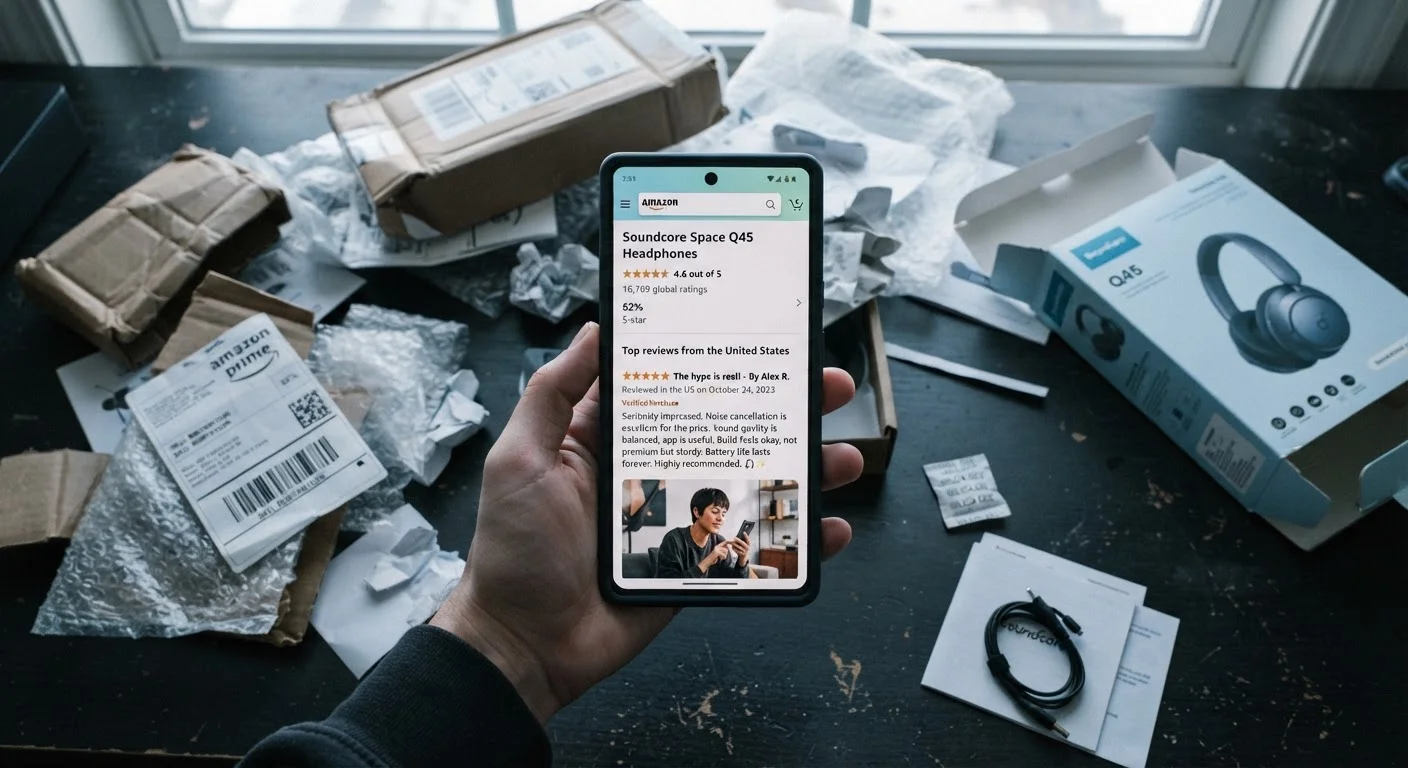
Photo credit: Wiseturt.com | Blogs Curated For You
Does a higher price signal better quality? Are verified purchases always genuine? We separate widely held beliefs from the evidence.
Key Takeaways
- A higher star average does not automatically indicate a better or more reliable product.
- Verified purchase badges confirm a transaction occurred, not that the review is honest or unbiased.
- Review counts and star distributions often reveal more than a simple average score.
- Price is not a reliable proxy for quality - many mid-range products outperform expensive alternatives.
- Aggregate ratings can suppress meaningful minority opinions that matter for specific use cases.
Why Online Ratings Feel More Reliable Than They Are
Star ratings have become one of the most trusted signals in consumer decision-making. Research consistently finds that a significant share of shoppers check ratings before buying, even for low-cost items. That trust is understandable - ratings seem democratic, data-driven, and objective. The problem is that the systems generating those numbers have structural weaknesses that are rarely visible from the product page.
Understanding what ratings actually measure - and what they don't - is the foundation of smarter shopping. The myths below are among the most widely held, and correcting them takes only a few minutes but can meaningfully change how you evaluate what you find online. For a broader framework, see our complete guide to evaluating any product with confidence.
Myth
A product with a 4.8-star average is meaningfully better than one with a 4.3-star average.
Fact
Small differences in aggregate star scores are rarely statistically meaningful and can reflect review dynamics more than actual product quality.
When thousands of opinions collapse into a single decimal, the number smooths over context that matters. A product with 4.8 stars from 40 reviews and one with 4.3 stars from 4,000 reviews are not easily comparable - sample size, reviewer demographics, and review age all affect the figure. Our article on what aggregate review scores miss explores this in depth. Treat small gaps between ratings as noise rather than signal.
Myth
"Verified Purchase" badges guarantee that a review is honest and unbiased.
Fact
Verified purchase status confirms that an account made a purchase - it does not screen for incentivized, coached, or otherwise biased reviews.
Sellers can legally send follow-up emails encouraging positive reviews, offer rebates after a purchase that creates goodwill, or enroll in programs where products are given away in exchange for reviews - all while technically qualifying for verified purchase status. Platforms have rules against explicit review-for-compensation schemes, but enforcement is imperfect. See what separates genuine reviews from paid placements for patterns worth looking for in review text itself.
Myth
A higher price signals better quality.
Fact
Price and quality correlate only in certain product categories and conditions; in many consumer goods categories, the relationship is weak or absent.
Pricing reflects brand positioning, marketing spend, retailer margins, and perceived prestige as much as manufacturing quality. Consumer testing data from independent labs frequently finds that mid-range products match or outperform premium-priced alternatives on objective measures. This is especially common in commodity categories like basic electronics accessories, cookware, and household goods. Checking specifications and independent test results is more reliable than using price as a quality proxy.
Myth
A product with thousands of reviews has been thoroughly vetted by real customers.
Fact
High review counts can reflect aggressive review solicitation, review importing across product variations, or marketplace manipulation - not just organic customer experience.
Some sellers import reviews from related or previous product listings, inflating counts for a newly launched item. Others use automated post-purchase review request sequences that disproportionately catch satisfied customers, since dissatisfied buyers are less likely to respond to prompts. A large review count is worth noting, but it should prompt a look at the distribution and recency of reviews rather than automatic confidence. Listing warning signs like sudden review spikes or identical phrasing across multiple reviews are worth pausing on.
Myth
Negative reviews mean a product is bad; you should avoid anything below four stars.
Fact
Negative reviews often reveal specific failure modes - some of which may not apply to your use case - while very few negative reviews can indicate suppression rather than universal satisfaction.
A product with a 3.7-star average may be excellent for your specific needs if the negative reviews cluster around complaints irrelevant to how you'll use it. Conversely, a product with only five-star reviews and no criticism at all warrants skepticism - genuine customer populations almost always include some dissatisfied buyers. Reading one-star reviews critically, rather than treating any negative review as disqualifying, is a more productive approach. Independent editorial coverage can provide a more balanced picture in categories with obvious review manipulation.
Reading Ratings More Critically
Once you recognize that star averages are incomplete signals, a few practical habits make a real difference. First, check the rating distribution histogram, not just the average. A product with 60% five-star reviews and 25% one-star reviews is telling a very different story from one with a smooth bell curve centered at four stars. That bimodal pattern often indicates a split between two distinct user experiences - worth investigating in the written reviews.
Second, sort reviews by most recent rather than most helpful. "Most helpful" rankings are themselves popularity contests, and older reviews may not reflect current product versions or manufacturing batches. Third, look for reviewers who describe a use case similar to yours. A kitchen knife rated four stars by home cooks may have different strengths than one rated four stars by professional chefs. Written reviews and star scores serve different purposes - learning to use both is worth the effort.
Watch for Review Flooding After a Product Launch
A product that accumulates hundreds of reviews within weeks of launching should prompt extra scrutiny. Organic review accumulation typically follows a slower curve. Rapid early review counts often correlate with seller incentive campaigns or review clubs - patterns that platforms attempt to police but don't always catch quickly. If you spot this, look for corroborating information from sources outside the retail listing before deciding.
Finally, cross-reference beyond the platform where you're buying. Independent testing organizations, enthusiast forums, and editorial coverage that discloses its methodology offer perspectives that aren't filtered through a retailer's algorithm. Our guide on first-party vs. third-party reviews explains how these different sources operate and whose interests they serve.
82%
Shoppers who read reviews before buying
According to a consumer survey by PowerReviews, the vast majority of online shoppers consult reviews before making a purchase decision.
30-40%
Estimated fake or incentivized reviews on major platforms
Research published by the Transparency Company and similar review-integrity firms has estimated that a substantial share of reviews on large retail platforms may be unreliable.

Author
Smart Shopping Editorial Team
Smart Shopping Editorial Team is the collective byline for our editorial team and contributor network. Articles published under this byline or an editorial pen name are researched, written, and reviewed according to our editorial standards for clarity, consistency, and independence before publication.
View all articles →