
Cash Budgeting vs. Digital Tracking Apps: What Each Method Does Better
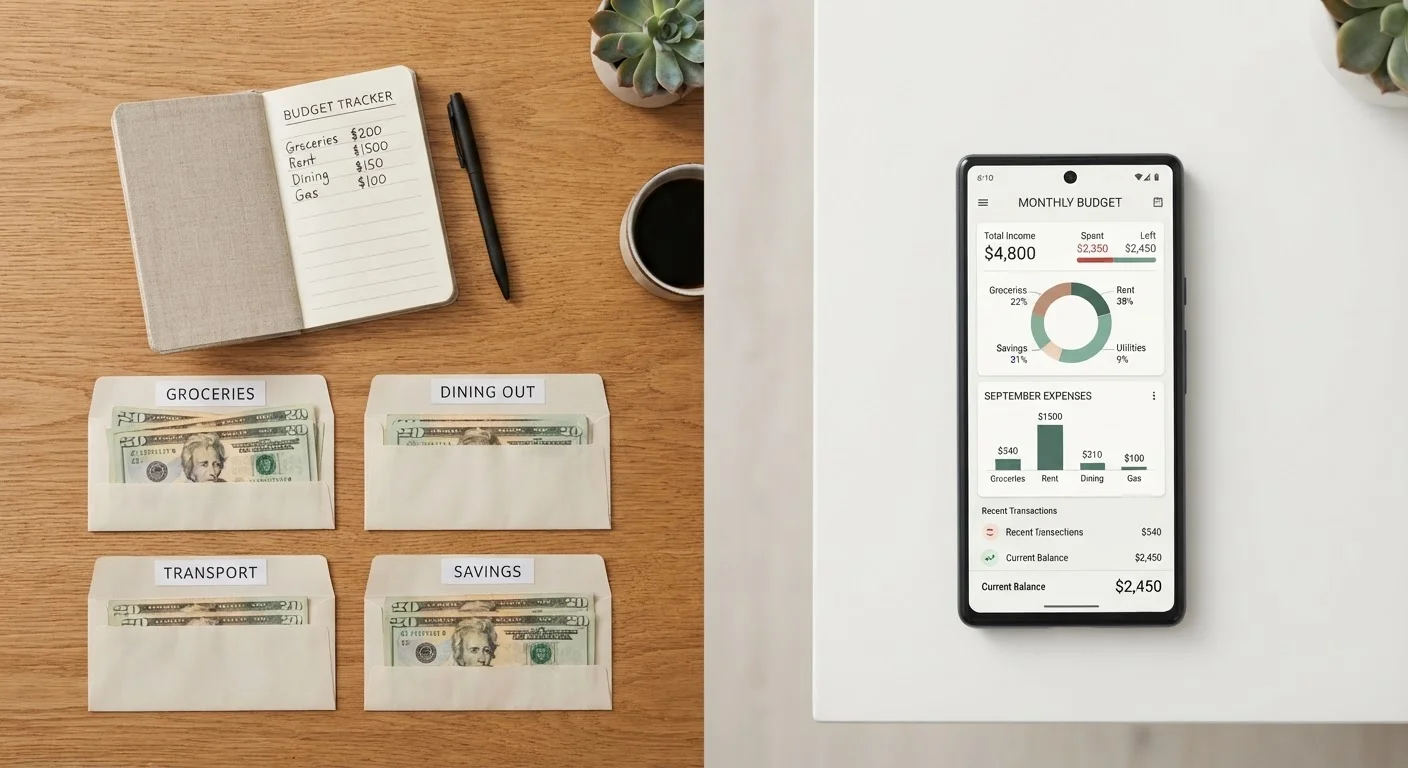
Photo credit: Wiseturt.com | Blogs Curated For You
In this article
Physical cash and digital tools offer very different budgeting experiences. A clear-eyed look at the real trade-offs between each approach.
Key Takeaways
- Cash budgeting creates physical friction that can curb impulsive spending in ways digital tools cannot replicate.
- Digital apps provide real-time, multi-account visibility that cash systems are structurally unable to offer.
- Neither method is universally superior - effectiveness depends heavily on individual spending patterns and habits.
- A hybrid approach - cash for discretionary categories, apps for fixed expenses - works well for many households.
- Privacy and data security are legitimate concerns when connecting bank accounts to third-party budgeting apps.
- Starting with a clear picture of income and fixed costs helps regardless of which method you choose.
How Each Method Actually Works
Cash budgeting - most commonly practiced as envelope budgeting - involves withdrawing physical cash and dividing it into labeled categories: groceries, gas, dining out, and so on. Once a category's envelope is empty, spending in that category stops until the next budgeting period. The system is entirely manual, low-tech, and requires no software. For a deeper look at how envelope budgeting compares to zero-based approaches, see Zero-Based Budgeting vs. Envelope Budgeting.
Digital tracking apps connect to your bank accounts, credit cards, and sometimes investment accounts through secure data-sharing protocols. Transactions are imported automatically and sorted into spending categories. Most apps display dashboards, trend charts, and alerts when you approach a spending limit. Some require manual input; others are nearly fully automated.
If you're starting from zero and haven't yet mapped your income and expenses, Building a Household Budget From Scratch is a practical first step before committing to either method.
| Criterion | Cash Budgeting | Digital Tracking Apps |
|---|---|---|
| Spending friction | High - physical limit is hard stop | Low - digital payments feel abstract |
| Setup effort | Moderate - manual cash allocation | Low to moderate - account linking required |
| Multi-account visibility | None - cash only | Strong - aggregates all linked accounts |
| Online purchases | Incompatible without workaround | Fully compatible |
| Historical data & trends | Manual records only | Automatic, searchable, visual |
| Privacy & data exposure | None - no accounts linked | Moderate - third-party data sharing |
| Best for fixed expenses | Awkward fit | Natural fit |
| Best for discretionary spending | Strong behavioral control | Depends on user engagement |
Where Cash Budgeting Has a Real Edge
The core advantage of cash is behavioral, not logistical. Research in consumer psychology consistently shows that paying with physical currency increases the psychological cost of a purchase - commonly described as the "pain of paying." When you hand over a $20 bill, the loss feels concrete. Swiping a card or approving a digital transaction doesn't trigger the same response for most people.
This friction is especially useful for discretionary spending categories - dining, entertainment, clothing - where willpower tends to erode. The hard limit of an empty envelope removes the need for willpower entirely. You cannot overspend what isn't there.
Cash systems are also completely private. No bank credentials are shared with third-party software, no transaction data is stored on remote servers, and there's no exposure if an app experiences a data breach. For households with serious privacy concerns, this matters.
~83%
US adults using cashless payments regularly
According to Pew Research Center survey data, the vast majority of Americans now make some purchases without cash, making a pure cash system harder to sustain.
~33%
Adults who track spending with an app
A Federal Reserve consumer survey found roughly one-third of US adults use some form of financial management app, though active engagement rates are lower.
The main drawbacks are real: cash is inconvenient for online purchases, doesn't work seamlessly for recurring bills or subscriptions, and provides no historical data beyond what you record manually. Losing cash means losing money with no recourse.
Where Digital Apps Provide Genuine Value
Digital tracking apps solve a problem cash cannot: consolidated visibility across multiple financial accounts. If your household has a checking account, two credit cards, and a savings account, understanding your full financial picture in real time requires either manual reconciliation or software. Apps handle this automatically.
The historical data that apps generate is also genuinely useful. After three months of tracked spending, you can see exactly which categories consumed more than planned, identify subscription creep, and notice seasonal patterns - insights that a cash system only provides if you keep meticulous written records.
Apps also handle fixed and recurring expenses more naturally. Rent, utilities, insurance premiums, and loan payments don't fit well into a physical envelope model, but they're easily tracked as recurring line items in digital tools. Understanding how fixed costs interact with your variable spending is central to making any budget work - see Fixed vs. Variable Expenses for more on that distinction.
The trade-offs are meaningful: apps require connecting sensitive financial accounts to third-party platforms. Security practices vary by provider, and data-sharing agreements with advertisers are not always transparent. Automation can also create passive monitoring rather than active engagement - some users check dashboards but don't change behavior.
Combining Both Methods Strategically
Many households find that a hybrid approach captures the strengths of each system. A practical structure: use cash envelopes for high-discretionary, high-temptation categories (groceries, dining, personal spending) while using an app to track fixed expenses, savings contributions, and any card-based spending that's genuinely difficult to handle in cash.
This approach preserves the behavioral friction of cash where it matters most while allowing digital tools to handle the complexity of multi-account management. It also reduces the security exposure of apps, since fewer accounts need to be linked when cash covers a meaningful share of spending.
Whatever combination you choose, the underlying discipline is the same: categorize spending before the month begins, review actual versus planned at the end, and adjust the following month. The tool is secondary to the habit. For readers exploring structured methods, Zero-Based vs. Envelope Budgeting examines how those frameworks can complement either tracking method.
Before Linking Accounts to Any App
Most budgeting apps connect to your bank through read-only data aggregators, meaning they can view transactions but not move money. However, you're still sharing login credentials or permitting data access to a third party. Before connecting accounts, review the app's privacy policy and understand how transaction data may be used or shared with advertisers. Using a dedicated email address and enabling two-factor authentication on your bank account adds a practical layer of protection.
This article is for general informational purposes only and does not constitute financial advice. Readers should consult a qualified financial professional for guidance tailored to their personal circumstances.

Author
Smart Shopping Editorial Team
Smart Shopping Editorial Team is the collective byline for our editorial team and contributor network. Articles published under this byline or an editorial pen name are researched, written, and reviewed according to our editorial standards for clarity, consistency, and independence before publication.
View all articles →