
Paris vs. Rome: Deciding Which European Capital Fits Your Travel Style
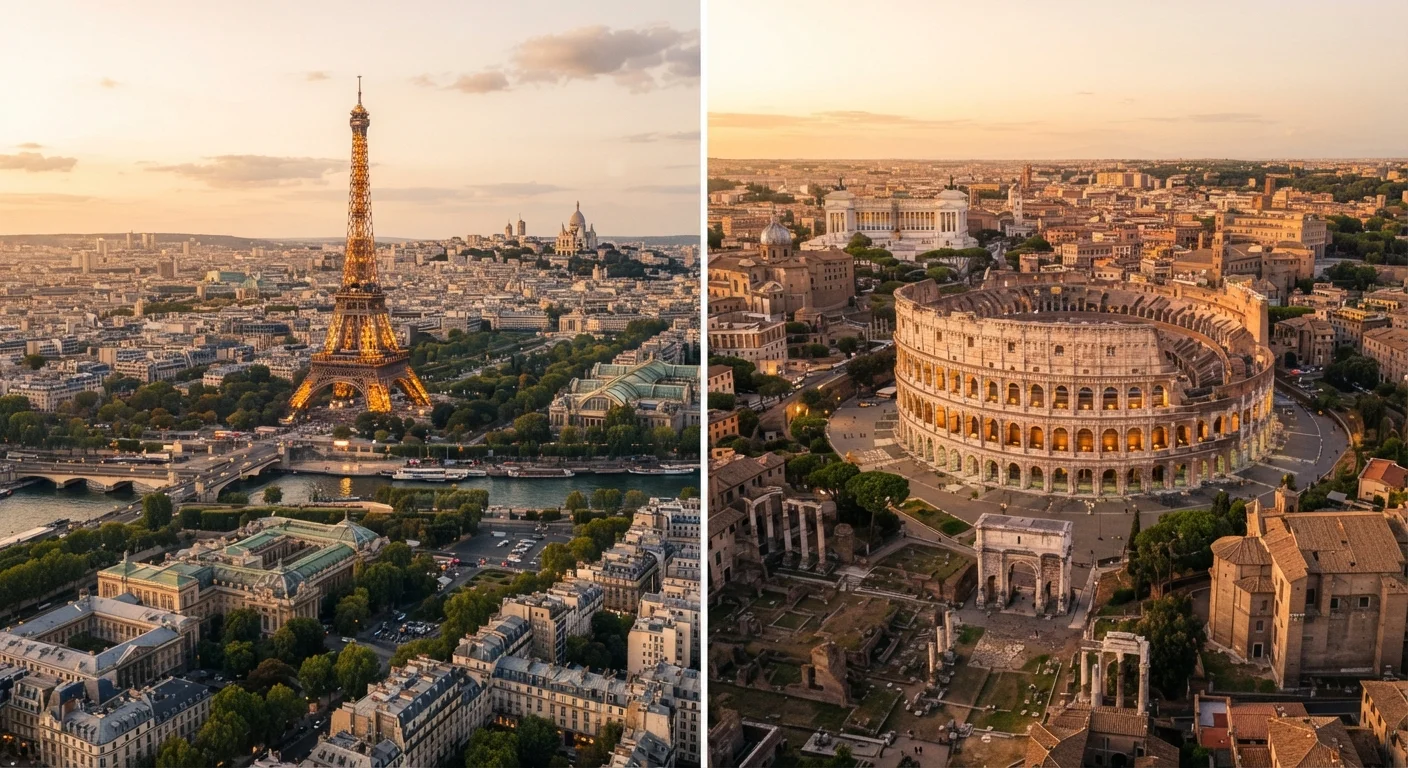
Photo credit: Wiseturt.com | Blogs Curated For You
In this article
Art, food, history, and logistics — a side-by-side look at two iconic cities to help you choose where to go first.
Key Takeaways
- Paris suits art lovers and those who prefer a more ordered, walkable city layout.
- Rome rewards history enthusiasts with unmatched ancient sites scattered throughout the city.
- Both cities offer exceptional food, but the culinary styles and dining rhythms differ significantly.
- Paris tends to run slightly higher on accommodation costs; Rome offers more budget flexibility.
- Rome's summer heat and crowds can be intense - spring and fall are generally more comfortable.
- Your travel style and priorities matter more than which city is objectively 'better.'
The Vibe: What Each City Actually Feels Like on the Ground
Paris operates at a composed, deliberate pace. Its Haussmann-era boulevards are designed to impress - wide, symmetrical, and lined with uniform stone buildings that give the city a cohesive elegance you notice immediately. There's a certain intentionality to Parisian life: cafés invite lingering, gardens demand a slow stroll, and the city rewards those who pay attention to detail.
Rome, by contrast, feels gloriously chaotic in the best possible way. Ancient aqueducts sit next to Renaissance churches, which open onto cobblestone lanes filled with motor scooters and street vendors. The city wasn't planned - it accumulated over millennia - and that layered, unself-conscious energy is a large part of its charm. You turn a corner in Trastevere and stumble into a piazza that feels entirely unchanged from a century ago.
If you're weighing how much structure you want in your itinerary, the experience-first approach to travel planning can help you figure out which city's energy actually matches how you like to explore.
| Criterion | Paris | Rome |
|---|---|---|
| City layout | Structured, grid-like boulevards | Organic, layered historic streets |
| Primary draw | Art museums, café culture | Ancient ruins, piazza life |
| Public transit | Excellent metro network | Functional but less consistent |
| General cost level | Higher, especially central hotels | More mid-range flexibility |
| Best travel season | Spring and early fall | Spring and fall (summer is very hot) |
| Food culture | Refined, ritual-driven dining | Convivial, neighborhood-centered |
| First-timer friendliness | Very high - well-signposted | High - compact historic center |
History, Art, and Culture: Where Each City Shines
Rome wins decisively on ancient history. The Colosseum, the Roman Forum, the Palatine Hill, the Pantheon - these aren't just museums, they're living remnants of a civilization that shaped the Western world. Walking through Rome can feel like moving through a very active archaeology site, and that's not an exaggeration. Construction projects across the city regularly pause because workers hit another layer of antiquity underground.
Paris counters with one of the world's great collections of fine art and decorative arts. The Louvre alone requires multiple visits to experience meaningfully. But Paris also offers the Musée d'Orsay's Impressionist masterworks, the Centre Pompidou's modern and contemporary collection, and dozens of smaller institutions dedicated to everything from fashion to non-Western art.
For travelers who are still deciding how to structure time across a city, comparing day tours and multi-day itineraries can help you figure out the right depth for either destination.
15M+
Annual visitors to the Louvre
The Louvre consistently ranks among the world's most visited museums, according to annual museum attendance reports.
2,000+
Years of continuous habitation in Rome
Rome has been continuously inhabited for over two millennia, giving it one of the densest concentrations of historical monuments of any city on Earth.
300+
Fountains across Rome
Rome's historic water infrastructure, originally built by ancient Romans, still feeds hundreds of public fountains throughout the city today.
Food, Cost, and Practical Logistics
Both cities are food destinations in their own right, but the experiences differ. Parisian cuisine operates around ritual - the formality of a brasserie, the perfection of a croissant, the seriousness of a cheese course. Roman food is more immediate and convivial: a plate of cacio e pepe at a neighborhood trattoria, a supplì (fried rice ball) from a street counter, gelato from a gelateria that's been run by the same family for decades.
On cost, Rome generally offers more flexibility at the mid-range and budget levels. Accommodation in central Paris tends to run higher, and tourist-facing restaurants near major sights can be expensive. Rome has similar tourist-trap pitfalls near the Colosseum and Trevi Fountain, but its residential neighborhoods offer genuinely affordable eating and lodging options.
Logistics-wise, Paris's Métro is one of the most efficient urban transit systems in Europe - clean, frequent, and easy to navigate with a basic map. Rome's public transit is functional but less consistent; many visitors find that the city's historic center is walkable enough that taxis or ride-share apps fill the gaps comfortably.
If you're still working through the foundational steps of planning either trip, the first-timer's travel planning roadmap covers everything from choosing dates to confirming bookings.
Visa and Entry: Check Before You Book
US passport holders can visit both France and Italy without a visa for short stays under 90 days within the Schengen Area. However, entry requirements, health documentation, and travel advisories can change. Always verify current requirements through official government sources - such as the US Department of State and the embassy of your destination country - well before your departure date.

Author
Travel & Tours Editorial Team
Travel & Tours Editorial Team is the collective byline for our editorial team and contributor network. Articles published under this byline or an editorial pen name are researched, written, and reviewed according to our editorial standards for clarity, consistency, and independence before publication.
View all articles →