
Synthetic vs. Conventional Motor Oil
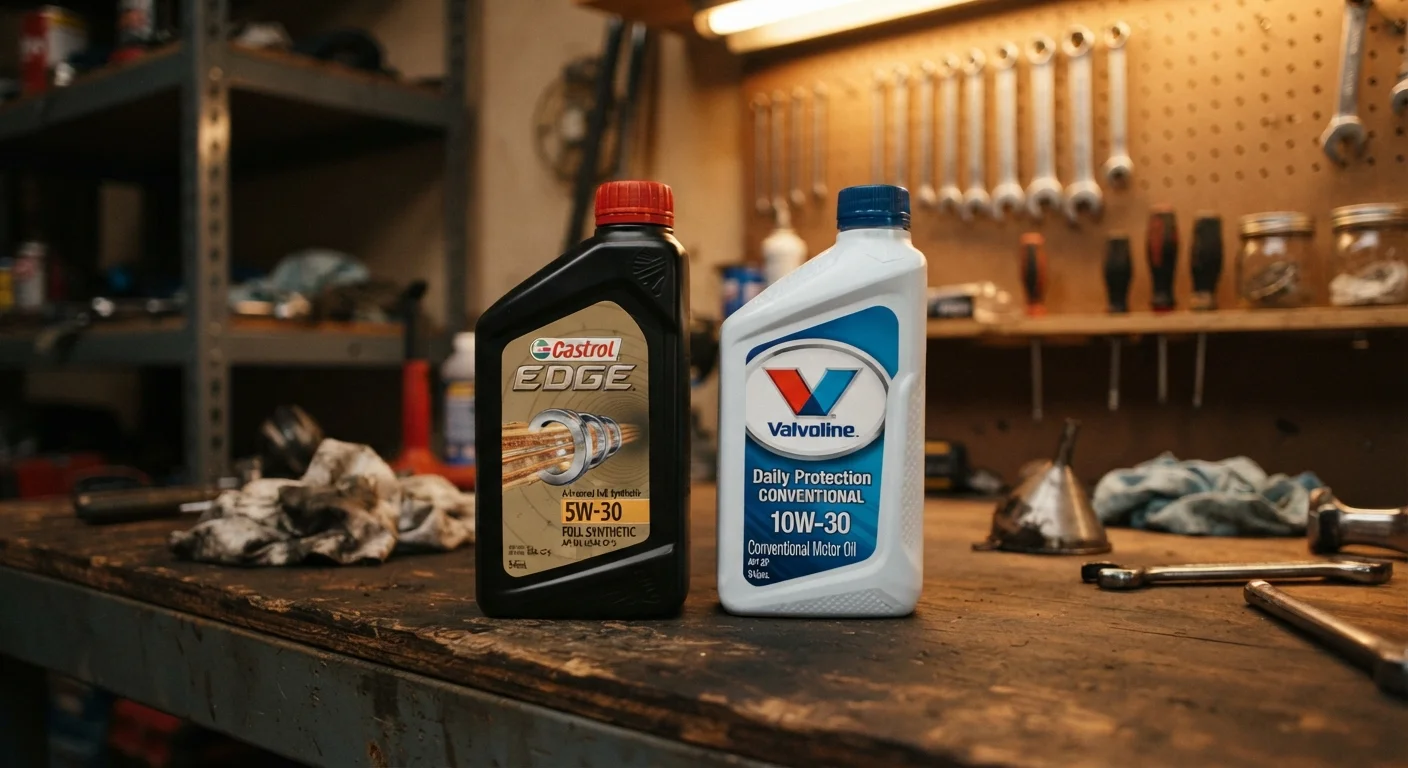
Photo credit: Wiseturt.com | Blogs Curated For You
In this article
A clear side-by-side look at synthetic and conventional motor oils—how they differ, and which situations each is suited for.
Key Takeaways
- Synthetic oil is chemically engineered for more consistent molecule size, offering better protection under heat and cold.
- Conventional oil is refined directly from crude oil and costs less per quart, but typically requires more frequent changes.
- Your vehicle's owner's manual is the most reliable guide for which oil type and viscosity grade to use.
- Switching between oil types is generally safe, but always match the viscosity grade your manufacturer specifies.
- Synthetic oil's higher upfront cost can be offset by longer recommended change intervals in many vehicles.
Where Each Oil Comes From
The core difference between synthetic and conventional motor oil starts with how each is made. Conventional motor oil is refined from crude oil pumped from the ground. The refining process removes many impurities, but crude oil is a natural substance with molecules of varying sizes and shapes - some of which are less effective at lubricating engine parts.
Synthetic motor oil, by contrast, is built in a lab. Chemists start with a base stock - often also derived from crude oil or natural gas - and restructure the molecules into uniform chains. The result is a lubricant with more predictable performance characteristics. Think of it as the difference between rough-cut lumber and engineered wood: both start from trees, but one is more precisely controlled.
A third category, synthetic blend oil, mixes both types. It offers some of synthetic's advantages at a price point closer to conventional. For many everyday drivers, blends represent a practical middle ground - though your owner's manual should still be your primary guide.
Performance Differences That Matter in Practice
For most drivers, the performance gap between oil types shows up in specific conditions rather than everyday commuting.
| Criterion | Synthetic Motor Oil | Conventional Motor Oil |
|---|---|---|
| Origin | Chemically engineered base stock | Refined from crude oil |
| Typical change interval | 7,500-10,000+ miles | 3,000-5,000 miles |
| Cold-weather performance | Flows readily at low temps | Thickens more in cold |
| Heat resistance | Higher thermal stability | Breaks down sooner under heat |
| Cost per quart | Higher upfront cost | Lower upfront cost |
| Availability | Widely available | Widely available |
| Best engine fit | Modern, turbocharged, high-performance | Older or simpler engine designs |
Temperature extremes are where synthetic oil earns its reputation. In very cold weather, conventional oil thickens more than synthetic, which means your engine runs a few seconds with less lubrication at startup - a period known as cold-start wear. Synthetic oil flows more readily in the cold, reducing that exposure. In high heat, synthetic resists breaking down longer, which matters for towing, stop-and-go traffic in summer, or high-performance engines that run hot.
Change intervals differ significantly. Conventional oil is typically changed every 3,000-5,000 miles, though many modern vehicles with conventional oil can go longer - always confirm with your manual. Full synthetic oil is commonly rated for 7,500-10,000 miles or more between changes, depending on the vehicle and oil brand. For a fuller look at how change intervals work and why they matter, see our guide to oil changes.
Cost: Upfront Price vs. Long-Term Value
Conventional motor oil generally costs less per quart than synthetic - often significantly so. However, the math is not always straightforward. If synthetic oil allows you to go twice as many miles between changes, the per-mile cost gap narrows considerably. You also factor in any labor costs if you have changes done professionally.
A Note on High-Mileage Oil Formulas
If your vehicle has accumulated significant mileage - typically above 75,000 miles - you may see 'high-mileage' versions of both synthetic and conventional oil on shelves. These include additives intended to help condition rubber seals that can dry and shrink over time. They are not a substitute for needed repairs, but they can be a reasonable option for older engines. Check your owner's manual or consult a mechanic before switching formulas.
That said, cost-per-mile calculations depend heavily on your actual driving habits. A driver who puts on 15,000 miles a year sees more benefit from extended synthetic intervals than someone who drives 5,000 miles annually and changes oil by the calendar regardless. Neither is a wrong approach - but knowing your own patterns helps you make a more informed decision.
It's worth noting that using the wrong oil type will not immediately destroy an engine, but consistently using an oil that doesn't meet your manufacturer's specifications can reduce protection over time. This is general guidance - your vehicle's owner's manual and a trusted mechanic are your best resources for your specific situation.
Which Oil Is Right for Your Vehicle?
The most reliable answer to this question is in your glove box. Your owner's manual lists the oil type and viscosity grade (for example, 5W-30 or 0W-20) recommended by the engineers who designed your engine. That specification accounts for your engine's clearances, operating temperatures, and materials.
~75%
Share of new US vehicles specifying synthetic oil
Industry estimates suggest the majority of new passenger vehicles sold in the US now leave the factory specifying full synthetic or synthetic-blend oil.
5-10 seconds
Cold-start lubrication gap with thick oil
Engine wear studies have noted that a meaningful share of engine wear occurs in the first seconds after a cold start, when oil has not yet circulated fully.
A few practical guidelines worth knowing:
- Newer vehicles (roughly 2010 and later) often require or recommend full synthetic oil from the factory.
- High-mileage vehicles (generally over 75,000 miles) may benefit from high-mileage formulas, which include additives designed to condition aging seals.
- Switching oil types mid-life is generally fine, but always match the viscosity grade your manufacturer specifies, not just the type.
- Turbocharged engines typically run hotter and benefit more noticeably from synthetic oil's thermal stability.
If you're weighing other long-term vehicle decisions - like whether to lease or buy - our leasing vs. buying comparison covers the trade-offs in similar plain-language detail.

Author
Auto Editorial Team
Auto Editorial Team is the collective byline for our editorial team and contributor network. Articles published under this byline or an editorial pen name are researched, written, and reviewed according to our editorial standards for clarity, consistency, and independence before publication.
View all articles →