
Movement Patterns Every Fitness Routine Should Cover
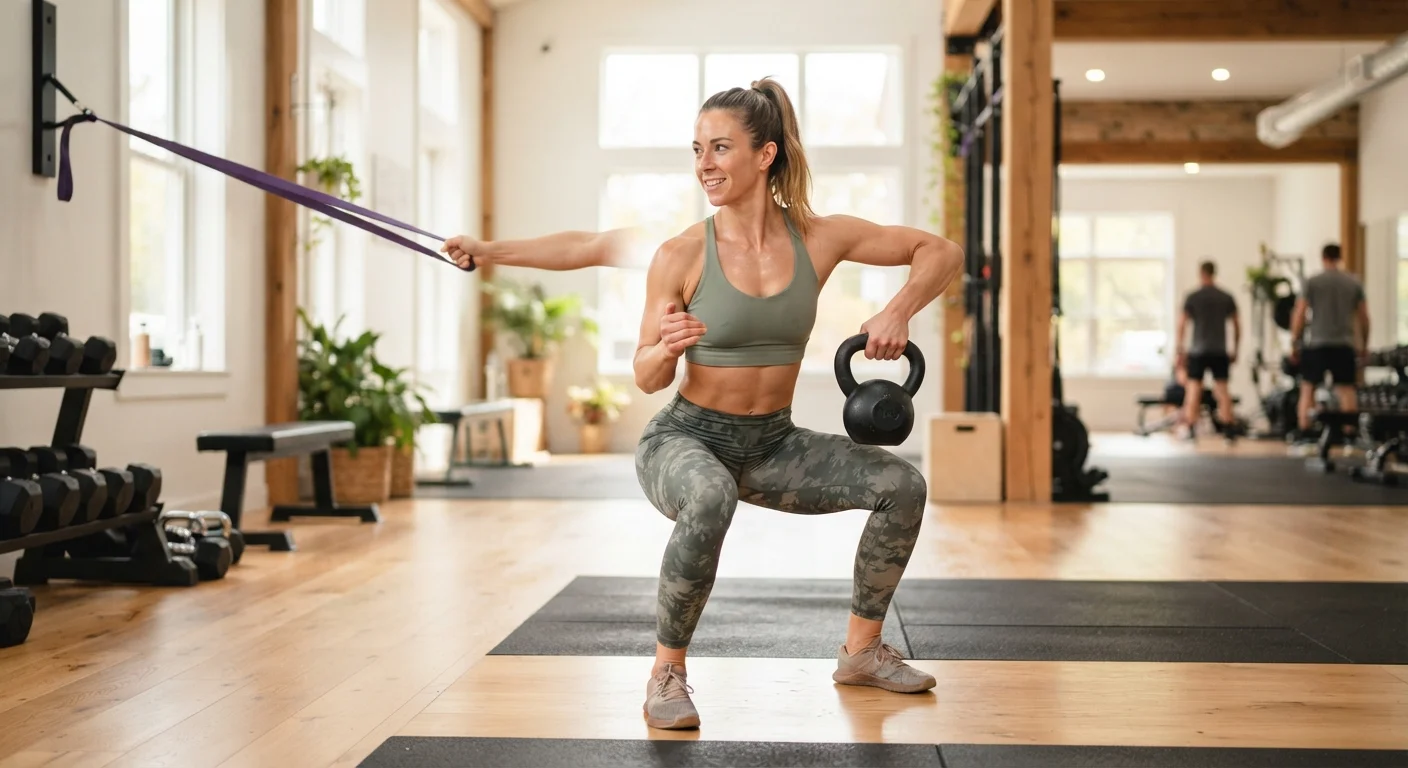
Photo credit: Wiseturt.com | Blogs Curated For You
Push, pull, hinge, squat, carry — discover the seven foundational movement patterns and why training them helps create balanced, functional fitness.
Key Takeaways
- Seven foundational movement patterns - push, pull, hinge, squat, lunge, rotate, and carry - form the basis of functional fitness.
- Training all seven patterns helps prevent muscle imbalances and reduces the risk of common overuse injuries.
- You don't need specialized equipment to cover every pattern; bodyweight versions exist for each.
- Beginners should prioritize movement quality and control before adding load or complexity.
- A well-rounded routine balances opposing patterns, such as push and pull, equally.
Why Movement Patterns Matter More Than Muscle Groups
Most gym programs are built around body parts - chest day, leg day, arm day. But exercise science points to a more functional framework: training by movement patterns rather than isolated muscles. This approach reflects how the body actually works, using coordinated chains of muscles to perform everyday actions like lifting groceries, climbing stairs, or reaching overhead.
When you organize a routine around movement patterns, you naturally train multiple muscle groups together, build real-world strength, and reduce the risk of the imbalances that lead to injury. It's the framework used by physical therapists, strength coaches, and athletic trainers alike - and it translates just as well to everyday fitness.
If you're new to structured exercise, the beginner's guide to what your body needs first is a smart starting point before diving into pattern-based training.
Push
Pushing movements involve pressing force away from your body, either horizontally (think a push-up or bench press) or vertically (an overhead press). These exercises primarily train the chest, shoulders, and triceps, but also engage the core for stability. Push patterns mirror real-life actions like opening a heavy door or lifting something onto a shelf above your head.
Beginners can start with wall push-ups or incline push-ups and gradually progress to floor push-ups and loaded variations.
Pushing movements mirror everyday actions like lifting objects overhead or pressing open a door.
Pull
The counterpart to pushing, pull movements draw resistance toward you - rows and pull-ups are the classic examples. They target the back muscles (particularly the latissimus dorsi and rhomboids), biceps, and rear shoulders. Because many people push far more than they pull in daily life, this pattern is commonly underdeveloped, which can contribute to rounded posture and shoulder problems.
Resistance bands make pull patterns accessible for beginners and can be used for banded rows or assisted pull-up variations.
Pull movements are the most commonly neglected pattern and a key defense against poor posture.
Hinge
The hinge is defined by a sharp bend at the hips while keeping the spine neutral - the deadlift is its most recognized form, along with kettlebell swings and Romanian deadlifts. This pattern powers the posterior chain: the glutes, hamstrings, and lower back. It's also the movement behind picking anything up from the floor safely, making it one of the most practically important patterns to train and one of the most important to learn with proper form first.
The hip hinge is the movement pattern behind safely picking anything up from the floor.
Squat
Squatting means bending at both the hips and knees simultaneously to lower and raise the body - bodyweight squats, goblet squats, and barbell back squats all fit this category. The pattern builds quad, glute, and hamstring strength while also challenging core stability and ankle mobility. It reflects the fundamental human action of sitting down and standing up, which means everyone, at every fitness level, benefits from training it.
The squat mirrors sitting and standing - one of the most essential movements in human daily life.
Lunge
Where squats are bilateral (both legs working together), lunge patterns are unilateral - each leg works independently. Forward lunges, reverse lunges, split squats, and step-ups all qualify. Unilateral training exposes and corrects strength asymmetries between sides, challenges balance, and mimics the single-leg demands of walking, climbing stairs, and getting up from the floor. Most people are stronger on one side than the other, and lunge patterns bring that to light.
Lunge patterns expose side-to-side strength differences that bilateral squats can easily hide.
Rotate
Rotational movements involve twisting through the torso - think a cable woodchop, a medicine ball rotational throw, or even a simple standing trunk rotation. The core's job isn't just to flex forward; it's to control and produce rotation, which is central to throwing, swinging, and virtually every sport. Training rotation also builds anti-rotation strength - the ability to resist unwanted twisting - which protects the lumbar spine during lifting.
Rotational training builds the core strength needed to both produce and resist twisting forces safely.
Carry
The carry is sometimes called the most underrated movement pattern in fitness. It involves picking up a load and walking with it - farmer's carries, suitcase carries, and overhead carries are common forms. Carries develop grip strength, core stability, shoulder integrity, and total-body coordination all at once. They also translate directly to real life: carrying bags, moving furniture, or lugging sports equipment all demand exactly this kind of full-body functional strength.
Carries build grip, core, and shoulder strength simultaneously - and translate directly to real life.
Putting the Patterns Together
No single pattern is more important than another - the goal is balance across all seven. A routine that only pushes and never pulls, or squats without hinging, will eventually create compensations that limit performance or invite injury.
Balance Opposing Patterns Each Week
For every pushing session, aim to include an equal volume of pulling work. Similarly, balance hinge-dominant sessions with squat or lunge training. This symmetry is the most straightforward way to prevent the postural imbalances that accumulate when certain patterns are consistently favored over others. You don't have to train every pattern in every session - spreading them across the week is equally effective.
A practical approach is to ensure your weekly sessions collectively hit each pattern at least once, pairing complementary movements - push with pull, squat with hinge - to keep training symmetrical. As your consistency builds, you can explore progressive overload principles to keep each pattern challenging over time.
For help turning these concepts into an actual schedule, see the guide to building a weekly exercise routine from scratch. And if you've encountered conflicting advice about how to train, separating fitness myths from the evidence can help clarify what actually works.
This article is for general informational and educational purposes only and is not a substitute for personalized advice from a qualified fitness professional or healthcare provider. Consult a professional before beginning any new exercise program, especially if you have existing health conditions or injuries.

Author
Health & Nutrition Editorial Team
Health & Nutrition Editorial Team is the collective byline for our editorial team and contributor network. Articles published under this byline or an editorial pen name are researched, written, and reviewed according to our editorial standards for clarity, consistency, and independence before publication.
View all articles →