
Small Kitchen Appliances: What They Do Well and Where They Fall Short
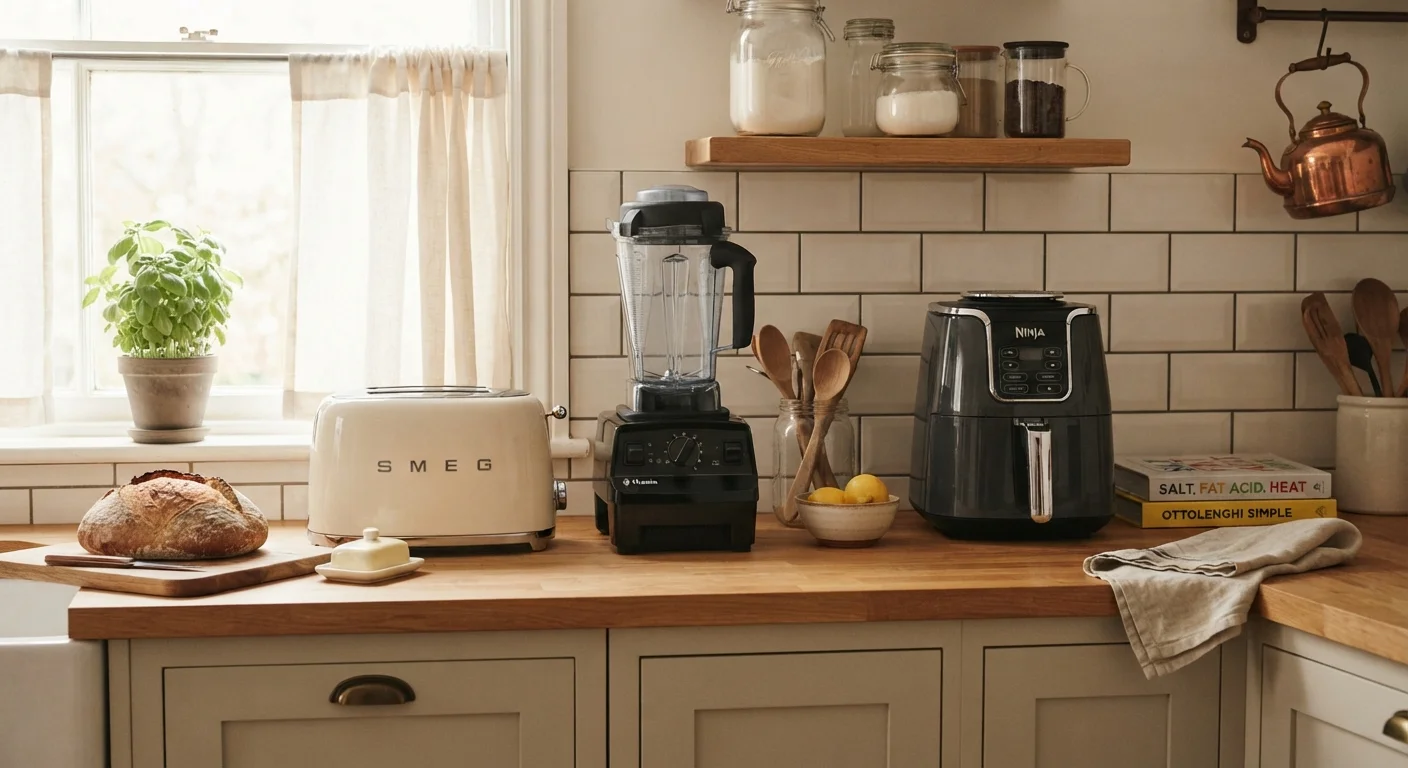
Photo credit: Wiseturt.com | Blogs Curated For You
In this article
A balanced look at the practical value of common countertop appliances—what tasks they handle well and the trade-offs they involve.
Key Takeaways
- Small appliances excel at specific tasks but rarely replace the versatility of full-size equipment.
- Countertop space, cleaning demands, and limited lifespan are the most common practical drawbacks.
- Matching an appliance to how often and how consistently you cook determines its real-world value.
- Many small appliances can extend the life of your diet variety without major kitchen renovations.
- Proper care and realistic use expectations are key to getting full value from any countertop appliance.
Fast, efficient performance for specific tasks
Purpose-built appliances often outperform general cookware for their intended use - a toaster oven reheats food faster and more evenly than a full oven for small portions.
Reduces active monitoring while cooking
Appliances like rice cookers and slow cookers handle temperature and timing automatically, freeing attention for other meal components.
Makes specialized techniques accessible at home
Tools like food processors and air fryers bring professional-style results within reach without requiring culinary training or commercial equipment.
Lower energy use for small-batch cooking
Running a compact appliance for a single serving typically draws less power than heating a full-size oven or stovetop burner to the same end.
Expands meal variety without major kitchen investment
A single appliance can introduce entirely new cooking methods - steaming, slow cooking, cold brewing - that a standard stovetop-and-oven setup doesn't easily support.
Limited versatility outside intended use case
Single-function appliances don't adapt well to other tasks, meaning they occupy space full-time in exchange for periodic, narrow utility.
Cleaning can be time-consuming or awkward
Irregular shapes, fixed components, and electronics near water make many appliances harder to clean thoroughly than basic cookware - discouraging regular use.
Shorter lifespan than major appliances
Plastic housings, small motors, and budget heating elements often mean countertop appliances last five to ten years under regular use, with repair rarely being practical.
Countertop and storage space demands add up
Each appliance requires a dedicated footprint; households with limited kitchen space often find that accumulating several creates more clutter than convenience.
Marketed benefits don't always match real-world use
Some devices require more prep, cleanup, or monitoring than expected, narrowing the time-saving advantage they're assumed to provide.
What Small Appliances Actually Do Well
Small kitchen appliances are purpose-built tools. That specificity is their core strength. A countertop toaster oven, for example, preheats faster than a full range oven and uses less energy for small-batch cooking. An immersion blender handles sauces and soups directly in the pot, reducing both effort and dishes. A rice cooker produces consistent results without monitoring - something stovetop cooking requires constant attention to achieve.
The practical benefit isn't just speed; it's cognitive offloading. When a device handles one task reliably, it frees attention for other parts of a meal. For households that cook the same categories of food regularly - smoothies, toasted sandwiches, slow-cooked stews - these appliances reduce friction in ways that add up over time.
Small appliances also make certain techniques accessible that would otherwise require skill or expensive full-size equipment. A food processor breaks down vegetables at a speed that would take considerable knife work to match. An air fryer circulates hot air to produce a crisped texture that approximates deep-frying using far less oil. These aren't just convenient - they genuinely expand what a home cook can accomplish.
Fast, efficient performance for specific tasks
Purpose-built appliances often outperform general cookware for their intended use - a toaster oven reheats food faster and more evenly than a full oven for small portions.
Reduces active monitoring while cooking
Appliances like rice cookers and slow cookers handle temperature and timing automatically, freeing attention for other meal components.
Makes specialized techniques accessible at home
Tools like food processors and air fryers bring professional-style results within reach without requiring culinary training or commercial equipment.
Lower energy use for small-batch cooking
Running a compact appliance for a single serving typically draws less power than heating a full-size oven or stovetop burner to the same end.
Expands meal variety without major kitchen investment
A single appliance can introduce entirely new cooking methods - steaming, slow cooking, cold brewing - that a standard stovetop-and-oven setup doesn't easily support.
If you're thinking about how appliances fit into a broader home setup, the guide to setting up appliances in a new home covers useful first-use checks that apply to countertop models too.
Where Small Appliances Fall Short
The same specialization that makes small appliances effective also limits them. A dedicated panini press does one thing well; it doesn't replace a skillet for everything else. Many households accumulate appliances over time and find that several go unused for months - occupying counter space or cabinet room without contributing to daily cooking.
Cleaning is a recurring friction point. Many appliances have awkward shapes, non-removable parts, or components that can't be fully submerged. If an appliance is harder to clean than using a basic pan, it may get used less often - and that directly erodes its value.
Durability is another honest concern. Small appliances are generally not built to the same mechanical standard as major appliances. Motors, heating elements, and plastic housings on countertop devices tend to have shorter service lives. When something fails, repair is rarely cost-effective - parts may be unavailable or labor costs exceed the appliance's value. The repair-or-replace decision framework is useful here, even for modest countertop equipment.
Limited versatility outside intended use case
Single-function appliances don't adapt well to other tasks, meaning they occupy space full-time in exchange for periodic, narrow utility.
Cleaning can be time-consuming or awkward
Irregular shapes, fixed components, and electronics near water make many appliances harder to clean thoroughly than basic cookware - discouraging regular use.
Shorter lifespan than major appliances
Plastic housings, small motors, and budget heating elements often mean countertop appliances last five to ten years under regular use, with repair rarely being practical.
Countertop and storage space demands add up
Each appliance requires a dedicated footprint; households with limited kitchen space often find that accumulating several creates more clutter than convenience.
Marketed benefits don't always match real-world use
Some devices require more prep, cleanup, or monitoring than expected, narrowing the time-saving advantage they're assumed to provide.
It's also worth noting that some appliances marketed as time-savers require more prep and cleanup than the cooking method they replace. Honest use-case evaluation before purchasing helps avoid this mismatch.
Matching Appliances to Your Actual Cooking Habits
The most reliable way to assess whether a small appliance earns its place is to estimate how frequently you'd use it - not how often you intend to, but how often your current cooking routine would actually call for it. An appliance used fewer than once or twice a week rarely justifies the space it occupies.
Multi-Function vs. Single-Purpose Appliances
Multi-function devices like multi-cookers or countertop convection ovens can consolidate the roles of several single-purpose appliances. This often makes sense for space-limited kitchens. However, their performance in any one mode may not match a dedicated tool - a multi-cooker's slow-cook function, for example, may differ from a true slow cooker's heat distribution. Evaluate based on which functions you'll actually use most.
It's also worth considering the trade-offs between built-in and freestanding equipment if you're thinking about kitchen design more broadly - the countertop appliance question is part of a larger picture of how you use your kitchen space.
~50%
Countertop appliances used fewer than weekly
Consumer surveys consistently indicate roughly half of purchased small kitchen appliances are used infrequently - often stored away after initial enthusiasm fades.
5-10 years
Typical small appliance service life
Industry estimates suggest most countertop appliances have a practical lifespan of five to ten years under regular use, significantly shorter than major kitchen appliances.
Appliances that serve multiple functions - a multi-cooker that pressure cooks, slow cooks, and sautés - tend to offer better return on both space and investment than single-use devices. That said, multi-function appliances can come with their own learning curve and may underperform dedicated tools in any one mode. For a deeper look at how ratings and capacity claims can be misleading, the guide on appliance load capacity offers a grounded perspective that applies to smaller devices too.
Finally, routine care extends the usable life of any countertop appliance. Descaling coffee equipment, cleaning blender seals, and avoiding overfilling are small habits that prevent premature failure - and they're covered in more detail in our look at common appliance myths that lead to unnecessary repairs.

Author
Home & Appliances Editorial Team
Home & Appliances Editorial Team is the collective byline for our editorial team and contributor network. Articles published under this byline or an editorial pen name are researched, written, and reviewed according to our editorial standards for clarity, consistency, and independence before publication.
View all articles →