
Fixed-Rate vs. Adjustable-Rate Mortgages: What the Difference Means for You
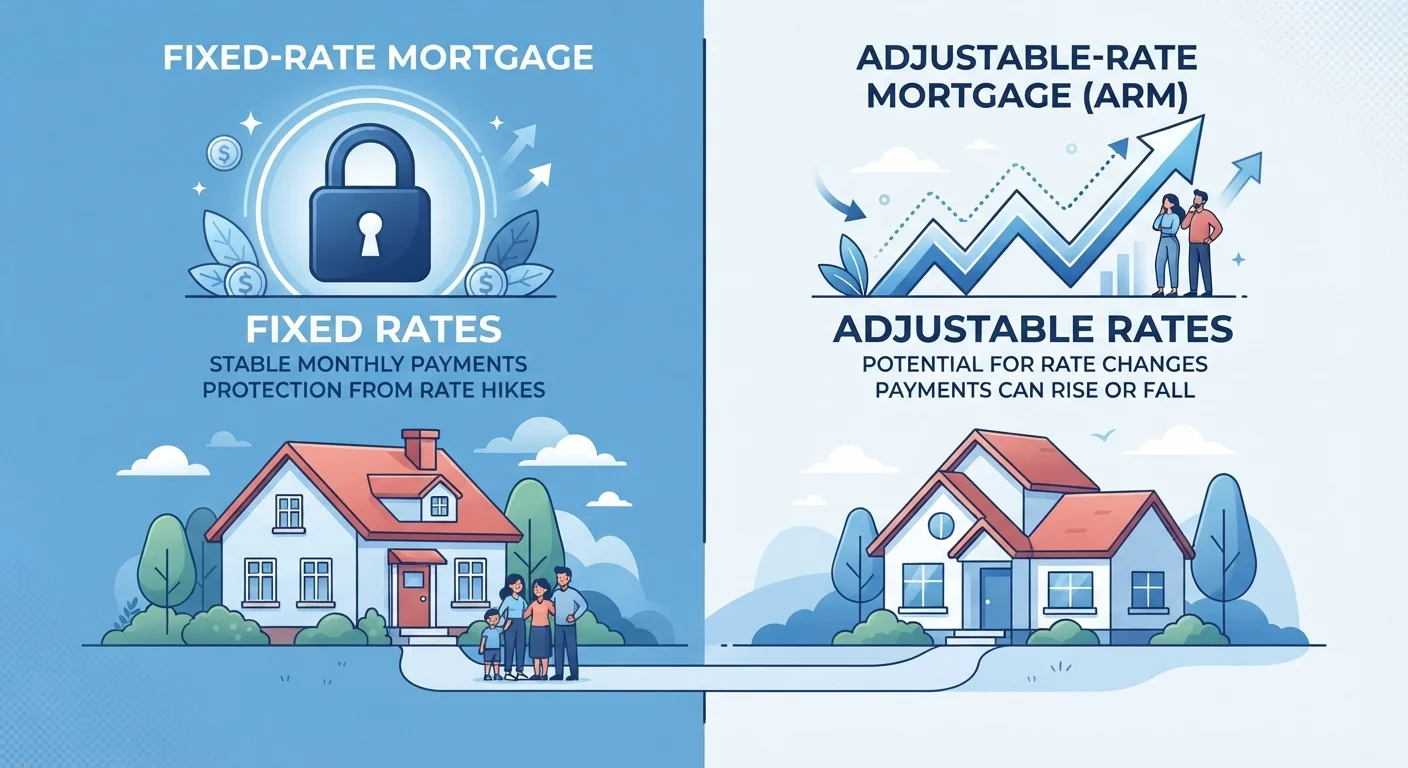
Photo credit: Wiseturt.com | Blogs Curated For You
In this article
How fixed and adjustable mortgages are structured, when each tends to make financial sense, and what risks to weigh before choosing.
Key Takeaways
- Fixed-rate mortgages lock in the same interest rate and monthly principal-and-interest payment for the entire loan term.
- Adjustable-rate mortgages (ARMs) start with a fixed introductory period, then adjust periodically based on a market index.
- ARMs typically offer lower initial rates but carry the risk of higher payments if interest rates rise.
- Your planned ownership timeline is one of the most important factors in choosing between these two structures.
- Both loan types involve significant financial commitment - consult a licensed mortgage professional before deciding.
How Each Mortgage Type Is Structured
A fixed-rate mortgage sets your interest rate on the day you close the loan, and that rate never changes. Whether you borrow over 15 or 30 years, the principal-and-interest portion of your monthly payment stays identical from the first payment to the last. Taxes and insurance costs held in escrow may shift over time, but the core mortgage payment is locked.
An adjustable-rate mortgage (ARM) works differently. It begins with an introductory fixed period - commonly 5, 7, or 10 years - during which the rate mirrors what a fixed product would offer, but typically at a lower starting point. After that initial window closes, the rate adjusts on a set schedule (often annually) based on a published market index, such as the Secured Overnight Financing Rate (SOFR), plus a lender margin. ARM loans include caps that limit how much the rate can rise per adjustment period and over the life of the loan, but the payment can still increase meaningfully.
For a fuller picture of how these payment obligations fit into your overall spending plan, see our guide to fixed vs. variable expenses.
| Criterion | Fixed-Rate Mortgage | Adjustable-Rate Mortgage (ARM) |
|---|---|---|
| Interest rate | Locked at closing, never changes | Fixed initially, then adjusts periodically |
| Initial rate level | Typically higher than ARM intro rate | Usually lower during introductory period |
| Payment predictability | Completely stable principal & interest | Stable during intro period, variable after |
| Rate-change risk | None - lender absorbs the risk | Borrower exposed after fixed period ends |
| Rate adjustment caps | Not applicable | Per-period and lifetime caps apply |
| Best ownership horizon | Long-term (10+ years) | Shorter-term (within fixed intro window) |
| Complexity | Simple structure, easy to understand | More complex; index, margin, caps to review |
The Real Cost Difference Over Time
The upfront rate advantage of an ARM is real but time-limited. During the introductory fixed period, a borrower typically pays less in interest each month than they would on a comparable fixed-rate loan. Over a 5- or 7-year initial window, that difference can add up to thousands of dollars. The risk is what comes next: once the rate begins adjusting, the trajectory depends entirely on market conditions that no lender - or borrower - can predict with certainty.
Fixed-rate loans, by contrast, cost slightly more in interest during early years but deliver certainty over the long run. A borrower who keeps their loan for 20-30 years effectively transfers all interest-rate risk to the lender at the moment of origination. That insurance against rising rates carries a cost reflected in the slightly higher starting rate.
30 years
Most common fixed-rate term in the U.S.
The 30-year fixed-rate mortgage has historically been the dominant loan structure for U.S. homebuyers, according to Federal Reserve housing data.
5/1 ARM
Most widely issued ARM structure
A 5/1 ARM holds a fixed rate for five years, then adjusts annually - a common structure tracked by Freddie Mac's Primary Mortgage Market Survey.
2%
Typical per-adjustment rate cap on ARMs
Most ARM contracts limit each annual adjustment to no more than 2 percentage points, with a common lifetime cap of 5-6 points above the initial rate.
When comparing total cost, it helps to model multiple scenarios: what your ARM payment would look like at the cap ceiling, and whether that figure still fits comfortably within your budget. If it does not, a fixed-rate loan may be the more appropriate structure regardless of where rates stand today.
These considerations connect directly to the broader question of whether buying makes sense for your situation in the first place.
Key Factors to Weigh Before You Choose
How long will you stay? This is frequently the deciding variable. If you are confident you will sell or refinance before the ARM's fixed period ends, the initial rate savings may be straightforward to capture. If your timeline is uncertain - job changes, family growth, or local market conditions could all shift your plans - the safety of a fixed rate becomes more valuable.
Where are rates in their cycle? When prevailing rates are historically low, locking in a fixed rate is often attractive because there is relatively little upside in waiting for adjustments to work in your favor. When rates are elevated, an ARM could allow you to benefit if rates decline, though this involves predicting market movement that remains genuinely uncertain.
Can your budget absorb a higher payment? ARM caps limit worst-case increases, but a loan that adjusts from 6% to 9% over several years represents a material monthly change. Stress-test your budget against the maximum allowable rate before committing.
Understanding ARM Terminology Before You Sign
ARM loan disclosures use shorthand like '5/1' or '7/6' to describe structure. The first number is the initial fixed period in years; the second is how often the rate adjusts afterward (in years or months). A 7/6 ARM, for example, holds its rate for seven years, then adjusts every six months. Always ask your lender to walk through the adjustment index, margin, and all applicable caps so there are no surprises after the introductory period ends.
Your credit profile and loan size also matter. Lenders may price fixed and adjustable products differently depending on your credit score, loan-to-value ratio, and the conforming or jumbo status of the loan. Getting quotes for both structures from multiple lenders gives you real numbers to compare rather than general estimates.
This article provides general educational information about mortgage structures and is not personalized financial or mortgage advice. Consult a licensed mortgage professional or financial adviser before making decisions about your specific situation.

Author
Home & Appliances Editorial Team
Home & Appliances Editorial Team is the collective byline for our editorial team and contributor network. Articles published under this byline or an editorial pen name are researched, written, and reviewed according to our editorial standards for clarity, consistency, and independence before publication.
View all articles →