
Decoding Product Claims: What Marketing Language Actually Means
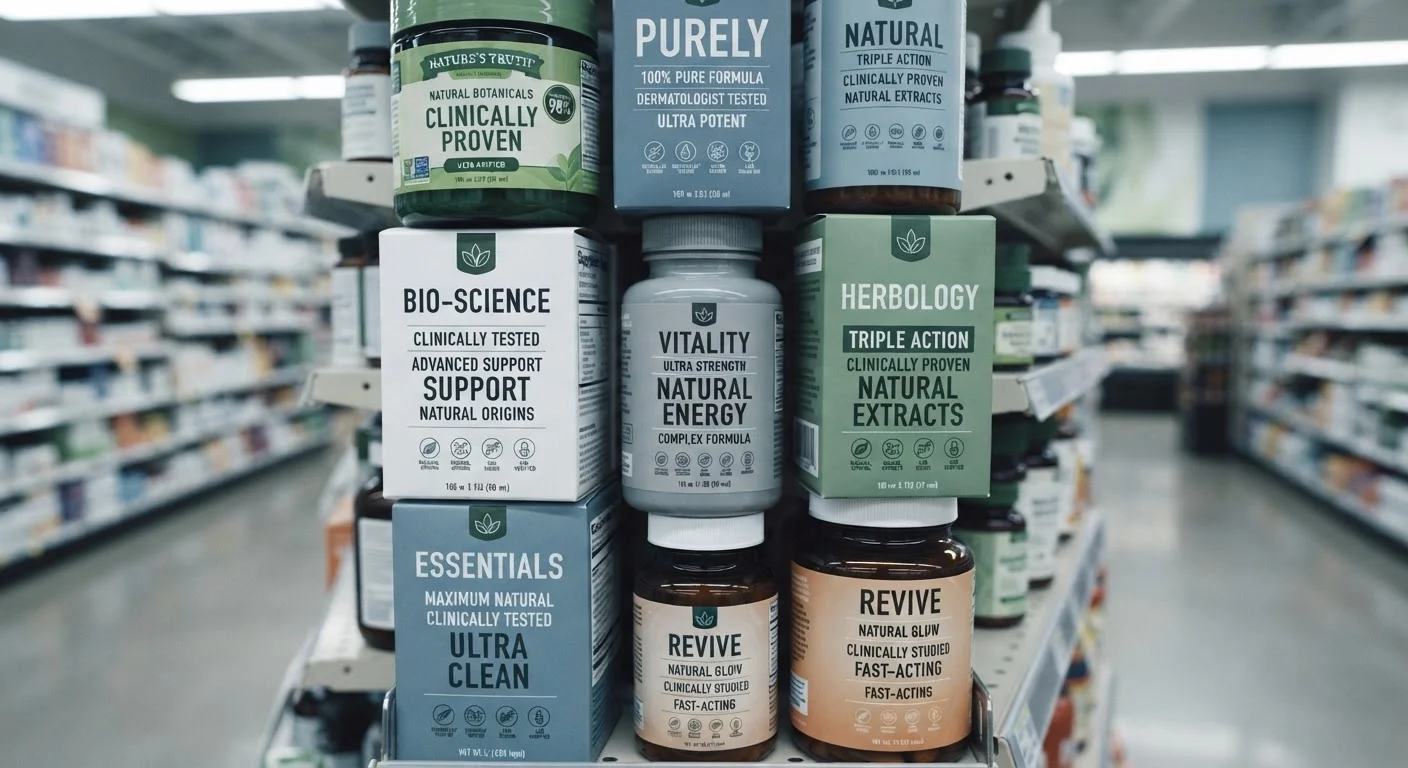
Photo credit: Wiseturt.com | Blogs Curated For You
In this article
"Natural," "clinically tested," "up to" — learn what these common product claims really mean and how to read past the spin.
Key Takeaways
- Many marketing terms like 'natural' and 'pure' have no legally enforced definition for most product categories.
- 'Up to' figures represent best-case scenarios, not typical results you should expect.
- 'Clinically tested' does not mean a product was clinically proven effective - testing and proving are different things.
- Third-party certifications carry more weight than self-made claims on packaging.
- Reading ingredient lists and spec sheets gives more reliable information than front-of-package language.
Why Marketing Language Is Designed to Impress, Not Inform
When a product says it's "ultra-purified," "dermatologist-tested," or "packed with antioxidants," those phrases are crafted to create a positive impression - not necessarily to convey precise, verifiable information. This is not always deceptive, but it is strategic. Understanding the gap between what a claim implies and what it actually guarantees is one of the most practical skills a shopper can develop.
The core problem: most general marketing language operates in a largely unregulated space. Without a shared definition, the same word can mean very different things across competing products. That makes it easy for vague language to set expectations a product cannot reliably meet.
Regulation Varies by Product Category
The same term can carry different regulatory weight depending on what type of product it appears on. 'Organic' on a food label is regulated by USDA with specific standards; on a cosmetic, it may not be. When a claim matters to your decision, it's worth checking whether a regulatory body has defined it for that specific product category.
For a broader framework on evaluating product information critically, see The Complete Guide to Evaluating Any Product With Confidence.
Common Claims Decoded
Here's how to read the phrases that appear most often on product packaging and listings:
- "Natural" - Has no enforced federal definition for most product categories outside of certain food contexts. It signals an ingredient orientation or brand positioning, not a safety or purity guarantee. Always check the ingredient list. For food-specific nuances, Where Nutrition Labels Quietly Mislead Everyday Shoppers covers this in depth.
- "Clinically tested" - Means a study was conducted, not that the product was found effective. The claim is technically true even if the study was small, industry-funded, or showed minimal results.
- "Up to " - Represents an upper bound under optimal conditions. Battery life rated at "up to 20 hours" may realistically deliver 12-14 under normal use. Treat these as ceilings, not averages.
- "Free from " - Often meaningful, but verify: "no added X" is weaker than "X-free." A product can contain a naturally occurring substance while truthfully claiming no added version of it.
- "Dermatologist-tested" / "Vet-recommended" - Implies professional endorsement but gives no detail about sample size, methodology, or whether compensation was involved. One dermatologist testing a product qualifies for this label.
- "New and improved" - Signals a reformulation or update, but doesn't specify what changed, by how much, or compared to what baseline.
No legal definition
For 'natural' on most non-food US products
The FTC and FDA have limited formal definitions for 'natural' outside of specific food and drug contexts, leaving the term largely self-defined by manufacturers.
1 person
Minimum to qualify as 'dermatologist-tested'
There is no regulatory minimum on the number of professionals or subjects required for a product to use the phrase 'dermatologist-tested' on its label.
Varies widely
Actual vs. advertised 'up to' performance
Consumer product testing organizations routinely find real-world battery life, range, and coverage figures fall 20-40% below manufacturer 'up to' claims under typical use conditions.
Claims That Carry More Weight - and Why
Not all product language is equally hollow. Some markers do reflect meaningful, verifiable standards:
- Third-party certifications - Organizations like NSF International, UL (Underwriters Laboratories), and USDA Organic operate under defined standards and conduct independent verification. These carry more weight than self-declared claims because a neutral party has audited them.
- Specific, quantified performance data - "Filters 99.97% of particles 0.3 microns or larger" is verifiable. "Advanced filtration" is not. Specific numbers tied to a named test standard are a better signal than adjective-heavy descriptions.
- Regulatory compliance statements - Claims like "FDA-cleared" or "EPA-registered" indicate the product met a specific regulatory threshold. These are different from self-reported claims and can typically be cross-checked through the relevant agency's public database.
For help making sense of the numbers behind such performance claims, Specifications Demystified breaks down how to interpret product spec sheets without a technical background.
Cross-Check Certification Claims Directly
If a product claims to hold a certification from an organization like NSF, UL, or USDA, most of these bodies maintain public databases where you can verify the specific product and what the certification covers. A two-minute check can confirm whether the mark on the label reflects current, active certification - or is outdated.
A Practical Approach at the Point of Purchase
Apply a simple filter when you encounter compelling packaging language: Who defined this term, and who verified it? If the answer is the manufacturer alone, treat the claim as a starting point for your own research, not a conclusion.
Useful habits:
- Flip to the ingredient or specification panel instead of relying on front-of-package claims.
- Search the certification mark before trusting it - a quick look at the certifying body's website tells you what the standard actually requires.
- For performance figures with "up to" language, look for independent reviews or user reports that reflect real-world use.
- Compare listings side by side using the underlying specs, not the headline claims. The Key Terms Every Shopper Needs When Comparing Products glossary is a useful reference for this process.
Marketing language will always aim to persuade. The goal isn't to become cynical about every product, but to know which phrases deserve scrutiny and which signals actually reflect verified quality. That distinction - between impression and evidence - is where informed purchasing decisions are made.
“The first step in being a savvy consumer is recognizing that the words on a package are written by a marketing team, not a standards body. Verification - not impression - should drive purchase decisions.”
— Consumer Research Advisory, General guidance from consumer advocacy education materials
Frequently Asked Questions

Author
Smart Shopping Editorial Team
Smart Shopping Editorial Team is the collective byline for our editorial team and contributor network. Articles published under this byline or an editorial pen name are researched, written, and reviewed according to our editorial standards for clarity, consistency, and independence before publication.
View all articles →