
Specifications Demystified: Reading a Product Spec Sheet Without a Technical Background
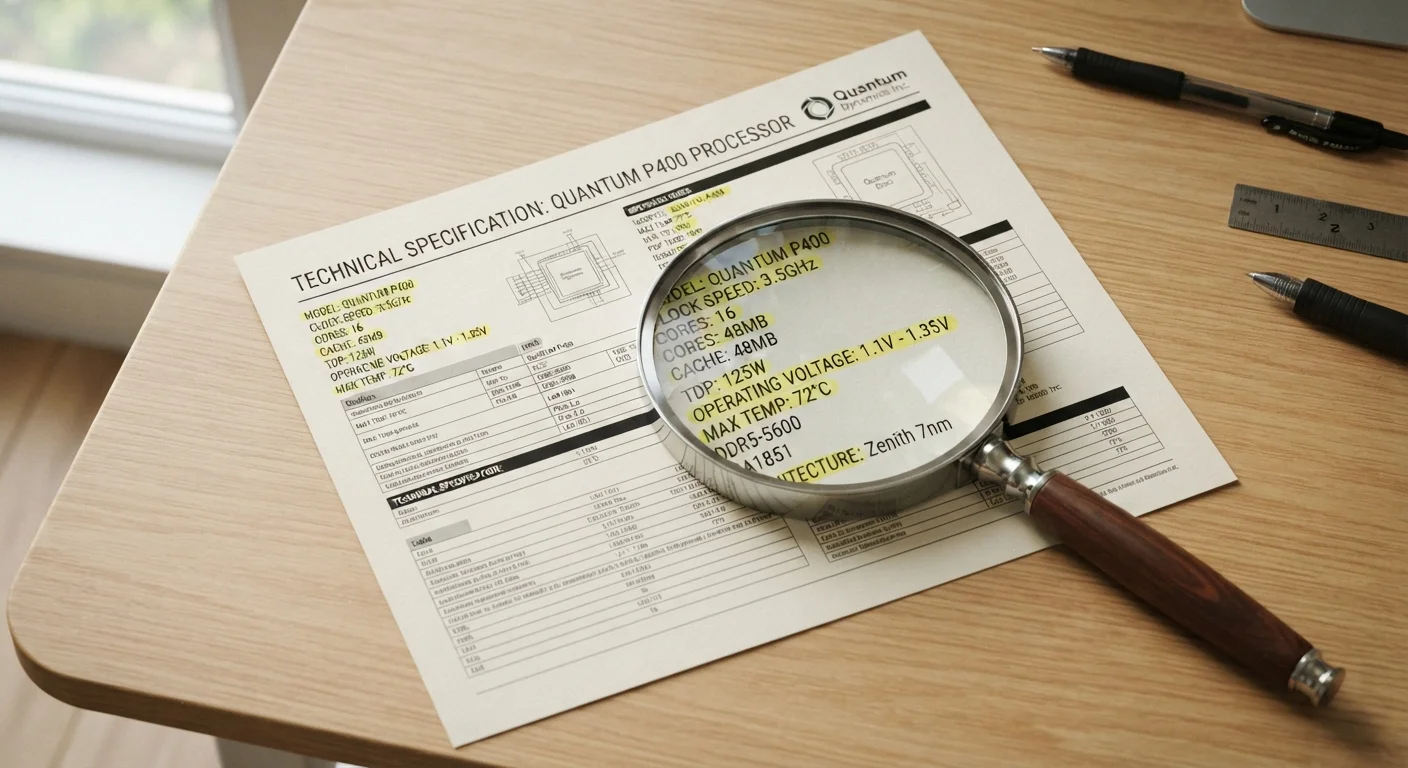
Photo credit: Wiseturt.com | Blogs Curated For You
In this article
Watts, lumens, thread counts, and MHz — a plain-language guide to interpreting the numbers that actually affect your experience.
Key Takeaways
- Spec sheets describe measurable product attributes, but numbers without context can still mislead.
- Focus on specs that affect your use case rather than the longest or most impressive list.
- Understanding units of measurement prevents you from comparing incompatible figures.
- A single spec rarely tells the full story - look for relationships between multiple figures.
- Independent testing sources help you validate what a spec actually means in real use.
Why Spec Sheets Can Confuse Rather Than Clarify
A product specification sheet is, in principle, a straightforward document: it lists measurable attributes in standardized units. In practice, it can feel more like a foreign language - rows of numbers without explanation, acronyms stacked next to each other, and figures that sound impressive but mean nothing without context.
Part of the confusion is structural. Spec sheets are written for procurement professionals, engineers, and retailers - not for consumers making a one-time purchase. The other part is intentional: manufacturers choose which specs to publish and how to describe them. As our guide to decoding product claims explains, the line between factual specification and marketing spin is thinner than it looks.
The good news is that you do not need an engineering background to read a spec sheet effectively. You need a framework: know your use case, understand the units, read specs in pairs, and verify with independent data. The steps below walk through exactly that process.
Specs Are Measured Under Ideal Conditions
Manufacturers test products in controlled lab environments. Battery life, brightness, range, and efficiency figures on a spec sheet often reflect best-case scenarios, not typical real-world use. Always look for independent third-party test results to calibrate expectations before purchasing.
Tools and Preparation
Getting the most from a spec sheet requires a small amount of upfront preparation. Gather the documents and resources listed below before you start comparing products.
What you will need
Manufacturer's Spec Sheet
Primary source of technical figures - the baseline document you will learn to read and cross-reference.
Independent Testing Database or Publication
Provides real-world test results to validate or adjust the manufacturer's stated figures.
Unit Conversion Reference (e.g., a search engine or reference site)
Helps you convert unfamiliar units so comparisons are apples-to-apples.
Comparison Spreadsheet
Records specs side by side across multiple products so trade-offs are visible at a glance.
If this is your first time researching a product category in depth, the consumer introduction to product research provides a useful foundation for the broader process of which spec-reading is one part.
Step-by-Step: Reading a Spec Sheet
Follow these steps in order. The earlier steps shape how you interpret everything that comes after them - skipping straight to the numbers without anchoring to your use case is the most common mistake consumers make.
Identify your use-case requirements before reading any specs
Before opening a spec sheet, write down two or three things the product must do well for you specifically. A laptop purchased for video editing has entirely different critical specs than one purchased for email and web browsing. Without this anchor, you will be swayed by impressive-sounding numbers that are irrelevant to how you actually use the product.
Learn the unit of measurement for each category
Specs are only comparable when they share the same unit. Common units you will encounter include:
- Watts (W): Power consumption or output - relevant for appliances, speakers, and chargers.
- Lumens (lm): Light output - relevant for bulbs, projectors, and flashlights. More lumens means more light.
- Megahertz / Gigahertz (MHz / GHz): Processing speed or wireless frequency - relevant for processors and routers.
- Thread count: Yarn density in textiles - higher counts matter only up to a point; fiber quality is equally important.
- Milliamp-hours (mAh): Battery capacity - a higher number generally means longer battery life, but actual runtime also depends on device power draw.
If you encounter an unfamiliar unit, look it up before forming any judgment.
Read pairs of specs together, not in isolation
Single figures can be misleading. A television with a high resolution still delivers a poor image if its refresh rate, contrast ratio, and panel type are weak. A washing machine with a large drum capacity may use water inefficiently if its energy rating is low. Look for specs that describe the same aspect of performance from multiple angles, then evaluate them as a set.
Note what is missing from the spec sheet
Omissions are as informative as inclusions. If a speaker's spec sheet lists frequency response but not total harmonic distortion (THD), that omission may indicate the distortion figure is unflattering. If a mattress spec sheet lists foam density but not independently measured firmness ILD scores, the firmness descriptors ("medium," "firm") are subjective marketing terms. When a spec that commonly appears in a product category is absent, search for it in third-party reviews or ask the retailer directly.
Cross-reference at least one independent test result
Manufacturer figures are self-reported and measured under optimal lab conditions. Independent publications and consumer testing organizations measure products under standardized real-world conditions and publish their findings. Look for sources that describe their methodology - this tells you the result is reproducible, not arbitrary. Use these figures to calibrate the manufacturer's claims rather than to replace them entirely; both sources together give you the most complete picture.
Record your findings in a side-by-side comparison
Once you have gathered specs and independent data for each product you are considering, place the relevant figures in a table with one row per spec and one column per product. This format reveals trade-offs clearly: Product A may lead on battery capacity while Product B leads on processing speed. You can then decide which trade-off aligns with your use-case requirements from Step 1.
Build a Comparison Column, Not a Wishlist
When comparing two products, list only the specs relevant to your use and place them side by side. This forces you to evaluate trade-offs rather than be distracted by whichever sheet looks more impressive overall. A simple spreadsheet or even a handwritten table works well for this.
For a broader vocabulary reference as you work through spec sheets across different product categories, the key terms every shopper needs glossary defines certification marks, warranty language, and other terms that frequently appear alongside technical specifications.
Common Pitfalls and How to Avoid Them
Even readers who follow the steps above encounter recurring traps worth naming explicitly.
More Specs Does Not Mean Better Product
A longer specification list is a marketing choice, not a quality signal. Manufacturers selectively publish numbers that flatter their products and omit figures where competitors have an edge. Treat any spec sheet as a partial picture, not a complete evaluation.
- Comparing maximum to typical figures: One brand may list peak output while another lists sustained output. These are not equivalent. Look for how the figure was measured, not just its value.
- Treating round numbers as precise: A stated battery life of "up to 10 hours" is a ceiling, not an average. Independent reviews typically report median figures under realistic workloads.
- Prioritizing the spec you understand over the one that matters: Thread count is easy to grasp, so shoppers over-index on it when purchasing bedding - even though fiber type often has a larger effect on feel and durability.
The process of reading specs well is also the process of learning which specs matter in a given category. Over time, that knowledge compounds - each product category you research makes the next one faster.

Author
Smart Shopping Editorial Team
Smart Shopping Editorial Team is the collective byline for our editorial team and contributor network. Articles published under this byline or an editorial pen name are researched, written, and reviewed according to our editorial standards for clarity, consistency, and independence before publication.
View all articles →