
Red Flags in Product Listings That Serious Shoppers Learn to Spot
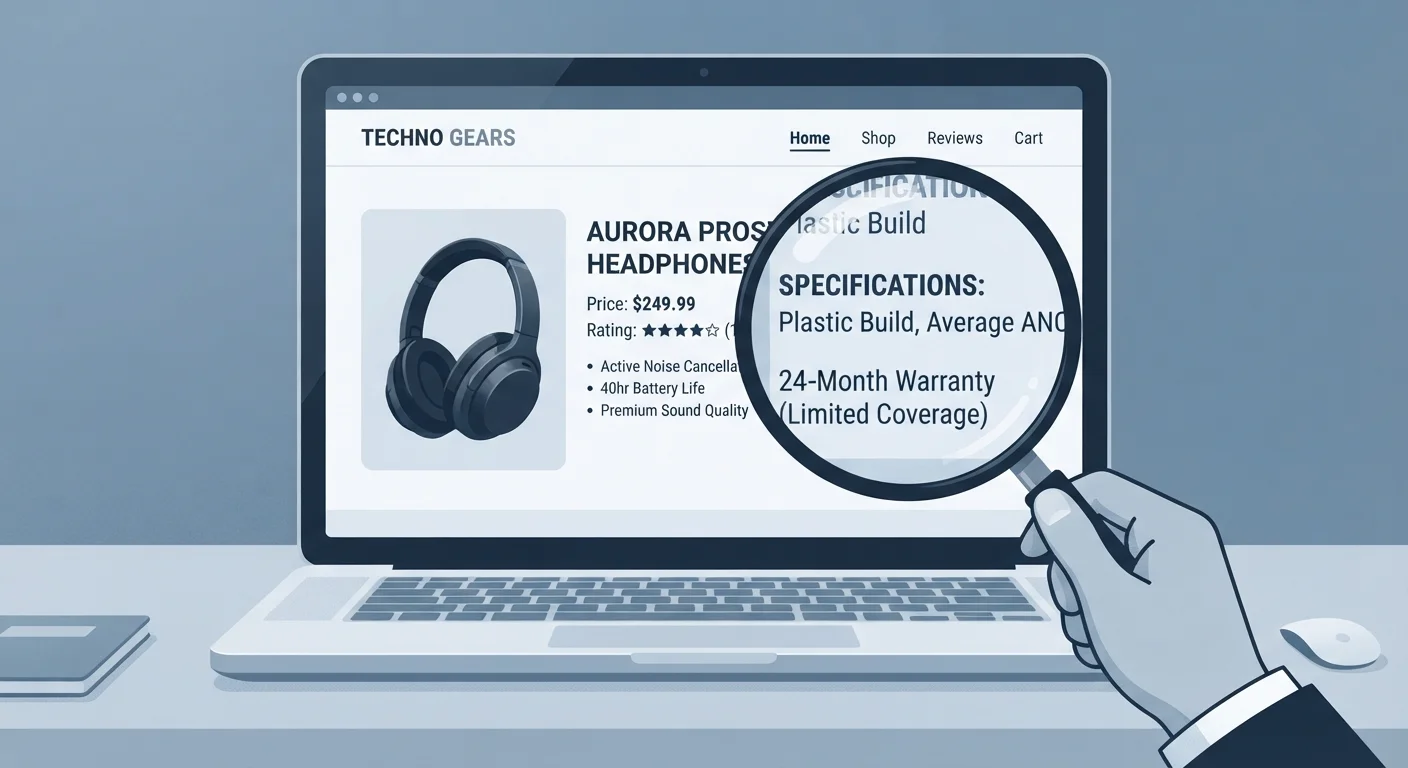
Photo credit: Wiseturt.com | Blogs Curated For You
Vague specs, suspiciously low prices, missing certifications — a rundown of listing warning signs worth pausing on.
Key Takeaways
- Vague or missing specifications are one of the most reliable warning signs in any product listing.
- Prices dramatically below market rate often signal counterfeit goods, missing components, or bait-and-switch tactics.
- Review patterns matter as much as review scores - look for authenticity signals, not just star counts.
- Missing safety certifications on regulated products (electronics, children's items, safety gear) warrant serious caution.
- Seller return and refund policies reveal how much confidence a vendor actually has in their product.
Why Listing Literacy Is a Real Skill
Online product listings are marketing documents first and information sources second. Every element - the title, the photos, the bullet points, the pricing - is chosen to prompt a purchase, not necessarily to inform one. Sellers who understand this dynamic craft listings that feel complete while leaving out details that might give a careful shopper pause.
Learning to read listings critically isn't about cynicism. It's about knowing where the gaps tend to appear and what those gaps usually mean. The warning signs below are consistent enough across categories that spotting even one or two should slow you down before you click through. If you're also checking whether a deal's price is actually a deal, our deal verification checklist is a useful companion to this guide.
Specifications that are missing or impossibly vague
A product listing that omits key specs - dimensions, materials, wattage, weight capacity, compatibility - is leaving out information the manufacturer certainly knows. Vague language like "high quality," "premium grade," or "professional standard" fills space without conveying anything measurable. Legitimate sellers of well-made goods generally have no reason to hide the numbers. When specs are absent, assume either they're not flattering or the seller doesn't actually know them - neither is reassuring.
When specs are absent, assume either they're not flattering or the seller doesn't actually know them.
Prices that sit far below any comparable listing
A price that's 40-60% below every other listing for the same or similar item is a signal, not a windfall. Common explanations include counterfeit or grey-market goods, missing accessories or components, bait-and-switch fulfillment, or products that don't match the listing photos. Genuine discounts tend to be modest and explainable. If you can't account for why this particular listing is so much cheaper than comparable ones, that's worth pausing on. The manufactured urgency tactics that often accompany suspiciously low prices are a separate but related concern.
Genuine discounts tend to be modest and explainable - if you can't account for the price gap, pause.
Photos that don't match the written description
Reverse-image searching product photos takes under a minute and frequently reveals whether images are sourced from a different product, a manufacturer's catalog for an unrelated item, or recycled across multiple unrelated listings. Watch for photos that show a different color, size, or configuration than the title describes, or images so generic they could apply to any product in the category. Stock-photo-heavy listings with no actual product shots are a consistent pattern among lower-quality sellers.
Reverse-image searching a listing's photos takes under a minute and often reveals the full picture.
Review patterns that don't add up
A listing's star average is far less useful than its review distribution and content. Watch for: a large spike of five-star reviews clustered in a short time window; reviews that use near-identical phrasing; five-star text that doesn't match the product ("great shoes!" on a listing for a kitchen tool); and a complete absence of three- or two-star reviews on a product with hundreds of ratings. None of these patterns are impossible to fake, but they're hard to sustain across detailed, specific reviews. Prioritize reviews that describe actual use experience over those that simply affirm quality. For more on this, see common myths about online ratings.
A review distribution with no middle-ground ratings is statistically unusual and worth questioning.
Missing or unverifiable safety certifications
For regulated product categories - children's toys, electrical appliances, safety helmets, food-contact materials, medical devices - certifications from bodies like UL, CPSC, or FDA aren't optional formalities. They indicate a product has been tested to defined standards. A listing that mentions certifications without providing a verifiable mark, documentation, or traceable lot information is not the same as a certified product. If a listing in a regulated category makes no mention of compliance at all, that absence is itself informative. When in doubt, verify certification claims through the relevant regulatory agency's public database rather than relying solely on the listing.
Mentioning a certification and actually holding one are not the same thing - verify where possible.
Refund and return policies buried or absent
A seller confident in their product generally makes their return policy easy to find and clear to read. Policies that are absent from the listing, hidden in dense fine print, or restricted to exchanges only are a signal about what happens when something goes wrong. Pay particular attention to who bears return shipping costs, whether the return window is realistic for discovering a defect, and whether "refund" means cash back or only store credit. The presence of a generous, straightforward return policy doesn't guarantee product quality - but its absence often correlates with sellers who have learned their products generate complaints.
A seller confident in their product generally makes their return policy easy to find and clear to read.
Listing descriptions with broken or machine-translated language
Awkward syntax, inconsistent terminology, or phrases that read as literal translations are common in listings where the product description has been run through automated translation without editorial review. This doesn't guarantee a bad product, but it does suggest limited seller investment in the customer relationship and often correlates with listings where post-purchase support is minimal or non-existent. It also makes it harder to trust that the translated specs accurately reflect the actual product - a meaningful concern when technical details matter.
Machine-translated listings often signal limited seller accountability and unreliable technical details.
Putting It Together Before You Buy
No single red flag is necessarily disqualifying on its own. A small seller might have fewer reviews simply because they're new. A low price might reflect a genuine clearance. But when multiple warning signs appear in the same listing, the cumulative picture is worth taking seriously.
The same critical reading skills apply well beyond consumer products. If you've ever been misled by tour operator descriptions or job postings that obscure the real details, the pattern is familiar - omission and vagueness as a substitute for transparency. See how similar signals show up in tour operator listings and in job postings as well.
Check the seller's full storefront, not just the listing
A single listing can be polished even when the broader seller history is inconsistent. Most platforms allow you to view a seller's other active listings, feedback history, and account age. A seller with a mix of wildly unrelated product categories, a very recent account creation date, and limited transaction history warrants more scrutiny than one with a stable, focused storefront and years of consistent feedback.
And while product listings are the focus here, the same habits apply to ratings themselves. Our piece on myths about online ratings explains why a high star count isn't always what it appears to be.

Author
Smart Shopping Editorial Team
Smart Shopping Editorial Team is the collective byline for our editorial team and contributor network. Articles published under this byline or an editorial pen name are researched, written, and reviewed according to our editorial standards for clarity, consistency, and independence before publication.
View all articles →