
Guided Tours vs. Self-Guided Exploration: What Changes About Your Trip
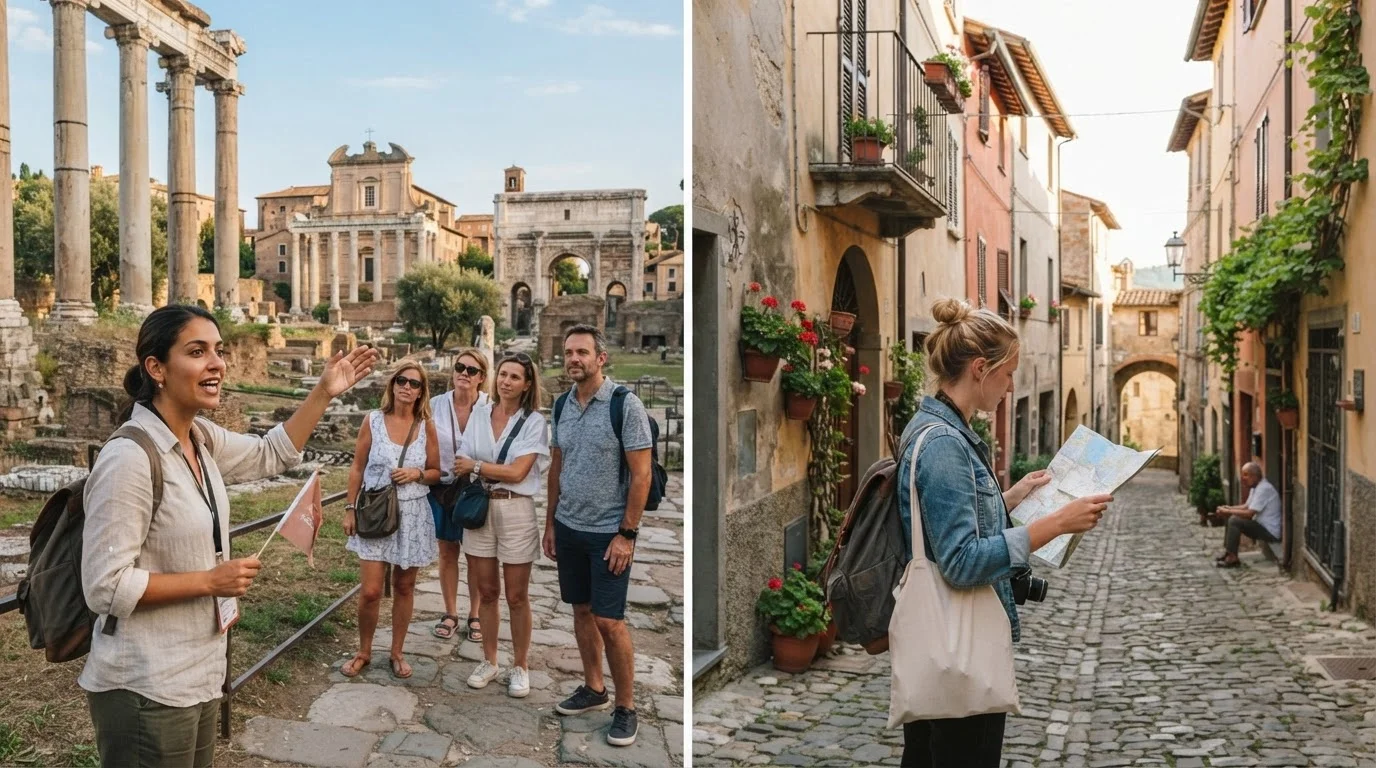
Photo credit: Wiseturt.com | Blogs Curated For You
In this article
Understand the real trade-offs between guided tours and independent travel so you can plan trips that match your style and comfort level.
Key Takeaways
- Guided tours trade flexibility for structured access, expert context, and logistical simplicity.
- Self-guided travel rewards curiosity and spontaneity but demands more research and planning upfront.
- Neither approach is universally superior - the right choice depends on destination, travel style, and comfort level.
- Many experienced travelers combine both formats within a single trip for a balanced experience.
- Group size, destination complexity, and language barriers all influence which approach works better.
The Core Difference: Who Holds the Map
The most fundamental distinction between guided tours and self-guided exploration isn't cost or comfort - it's agency. On a guided tour, a knowledgeable leader shapes your experience: the sequence of stops, the depth of information, the pace, and often the access. In self-guided travel, those decisions rest entirely with you.
That shift in control cascades into nearly every aspect of your trip - from how you spend your mornings to how you recover from an unexpected delay. Neither approach is inherently superior; they just optimize for different things. Guided tours prioritize curated depth and ease. Self-guided exploration prioritizes freedom and personal discovery.
Understanding this trade-off clearly - rather than assuming one mode is always better - is what lets you build a trip that actually fits your travel personality. For a broader look at when guided formats genuinely deliver, see our full guide to guided tours.
| Criterion | Guided Tours | Self-Guided Exploration |
|---|---|---|
| Planning burden | Low - operator handles logistics | High - traveler manages all details |
| Flexibility | Limited by fixed itinerary | Full control over pace and stops |
| Cultural context | Expert interpretation included | Self-sourced via research |
| Site access | Often includes priority or exclusive entry | Standard public access only |
| Language support | Guide bridges language gaps | Traveler navigates independently |
| Cost predictability | Fixed upfront cost, fewer surprises | Variable; depends on choices made |
| Spontaneity | Rare - schedule-driven | Core feature of the experience |
| Best for unfamiliar destinations | Strong advantage | Steeper learning curve |
What You Gain and Give Up on Each Path
On a guided tour, you gain immediate context. A skilled guide translates not just language but history, local custom, and cultural nuance in ways that take independent travelers months of reading to replicate. You also gain access - many heritage sites, private collections, and local communities open doors more readily to organized groups with vetted operators. And you gain simplicity: transportation, entry tickets, and timing are handled for you.
What you give up is flexibility. If a street market catches your eye, you may not be able to stop. If a particular museum section fascinates you, the group moves on. The itinerary is the itinerary. This matters more in some destinations than others - read about how group size shapes your flexibility within guided formats.
In self-guided travel, you gain time sovereignty. You wake up and decide. That café that smells incredible? You can sit there for an hour. The neighborhood that wasn't in any itinerary? You can follow it wherever it leads. This is how many of the most memorable travel stories are made - through going beyond the obvious highlights.
What you give up is a safety net. Booking errors, language confusion, missed entry windows, and unexpected closures land entirely on you. The research burden is real, and underestimating it is one of the most common independent travel mistakes.
72%
Travelers who mix guided and independent formats
A 2023 survey by Skift Research found that most international travelers combine at least one guided experience with independent exploration on the same trip.
3-5 hrs
Typical guided tour duration at major sites
Most half-day guided experiences at heritage or cultural sites run between three and five hours, covering highlights a self-guided visitor might spend a full day navigating.
Planning Demands: An Honest Comparison
Guided tours front-load the work for operators and dramatically reduce what travelers need to manage on the ground. Once you've booked - and understanding how pricing structures work can help you evaluate that choice, see how tour pricing works - your logistical to-do list shrinks considerably.
Self-guided travel inverts this. The pre-trip planning phase is substantial: researching transport links, booking accommodation in the right neighborhoods, understanding local transit systems, confirming opening hours, and identifying entry requirements. For complex multi-country itineraries, this can be a serious time investment. The Trip Planning Tips hub is a solid starting point for building that foundation systematically.
One increasingly popular middle path: use guided experiences surgically. Book a local walking tour for your first morning in a new city to get oriented, then explore independently for the rest of your stay. This hybrid approach preserves discovery while reducing the disorientation that can derail early independent days in unfamiliar places. Planning around experiences rather than destinations explains how that mindset shift changes itinerary design entirely.
Verify Entry Requirements Before You Travel
Whether you book a guided tour or explore independently, always verify visa requirements, health entry rules, and local safety advisories through official government sources before your trip. Conditions can change between when you plan and when you travel. Tour operators may provide general guidance, but the responsibility for confirming personal entry eligibility rests with the traveler.
Choosing the Approach That Fits Your Trip
Destination complexity is a reliable deciding factor. In cities with well-developed tourism infrastructure and widely spoken English - think major Western European capitals - self-guided travel is genuinely accessible to most visitors. In destinations with limited English signage, restricted-access sites, or politically sensitive contexts, a guided format can transform a frustrating trip into a profound one.
Cultural considerations also matter. If you're traveling somewhere with specific local customs, sacred sites, or community-sensitive areas, going in without guidance carries a real risk of inadvertent disrespect. Cultural sensitivity on guided tours covers the etiquette dimension in detail - worth reading regardless of which format you choose.
Finally, consider your travel companions. Solo travelers often find self-guided exploration easier to execute (no group consensus required) but may prefer guided formats for safety in unfamiliar terrain. Traveling with others introduces coordination dynamics that solo vs. group travel planning addresses directly. Whatever you choose, the goal is the same: a trip that feels like yours.

Author
Travel & Tours Editorial Team
Travel & Tours Editorial Team is the collective byline for our editorial team and contributor network. Articles published under this byline or an editorial pen name are researched, written, and reviewed according to our editorial standards for clarity, consistency, and independence before publication.
View all articles →