
Decoding the Window Sticker: What Every Line on an MSRP Label Actually Means
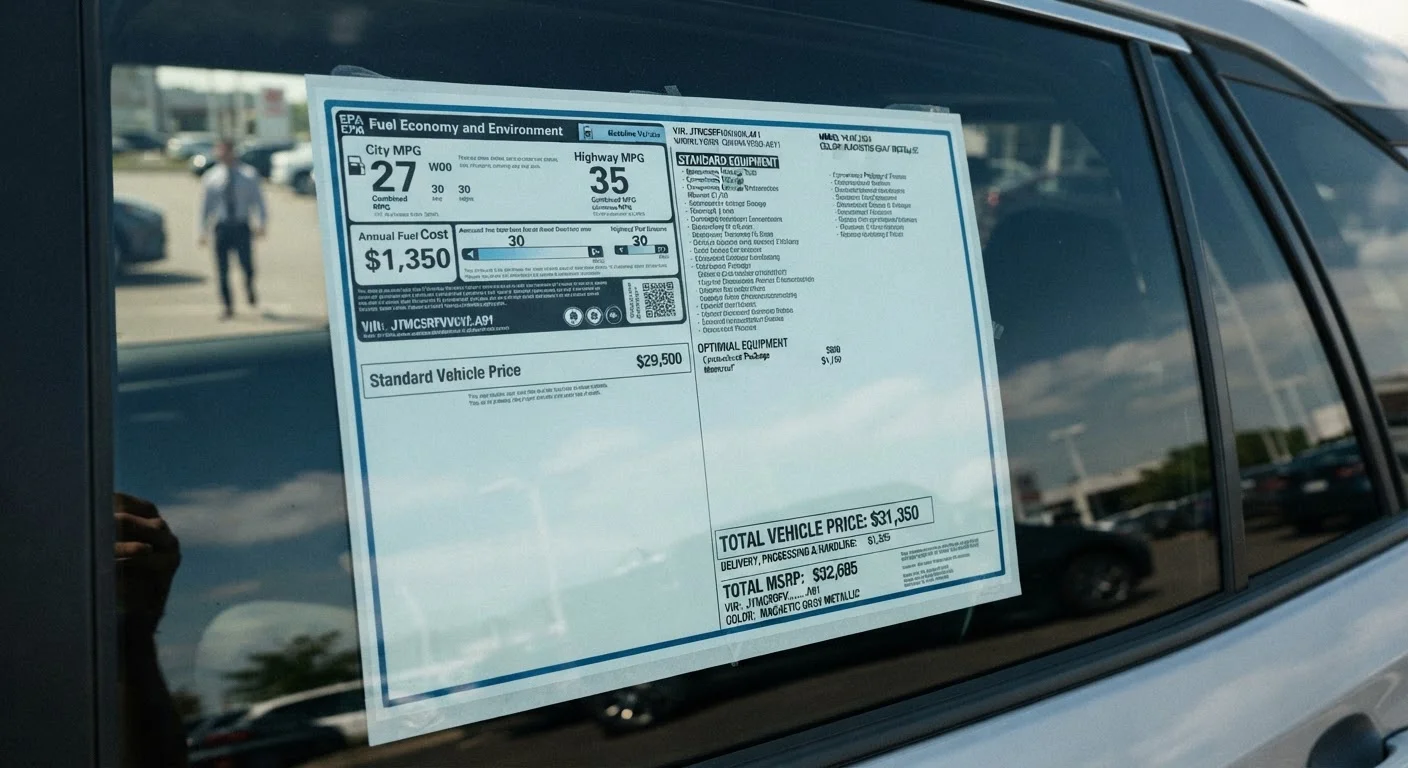
Photo credit: Wiseturt.com | Blogs Curated For You
In this article
Window stickers are packed with numbers and acronyms. Here's what each section tells you — and what to pay attention to.
Key Takeaways
- MSRP is a suggested price, not what you must pay - the final transaction price is negotiable.
- The sticker separates base price, optional packages, and destination charges into distinct line items.
- Fuel economy estimates come from EPA testing and reflect controlled conditions, not guaranteed real-world mileage.
- Safety ratings shown on the sticker come from federal testing programs, but not all vehicles display a full rating set.
- Dealer-added accessories listed separately from the Monroney are negotiable or removable.
- Understanding each line helps you compare vehicles accurately and spot inflated charges.
The Top Section: Make, Model, and Base Price
The upper portion of the Monroney label identifies the vehicle by year, make, model, trim level, and a unique Vehicle Identification Number (VIN). The VIN is a 17-character code that functions like a fingerprint - no two vehicles share one. You can use it to pull a vehicle history report or verify that the car matches its documentation.
Below the vehicle identification is the base MSRP - the manufacturer's price for the vehicle in its most basic configuration at that trim level, before any optional equipment is added. Think of this as the floor price the manufacturer assigns. The final sticker total will always be at or above this figure.
For a broader look at everything the Monroney label covers, see what the window sticker on a new car is actually telling you.
Options, Packages, and How They Add Up
The middle section of the sticker is where prices climb. Each factory-installed option or package is listed individually with its own price. A "package" bundles several features - say, a sunroof, heated seats, and premium audio - under one line item, which can make it harder to judge whether you're paying a fair premium for the features you actually want.
It's worth separating features you need from those that just came along for the ride. If a package costs $2,000 but only two of its five features matter to you, that's worth noting before you compare it to another trim or vehicle.
~$48,000
Average transaction price for a new vehicle in the U.S.
According to Kelley Blue Book market data, average new vehicle transaction prices have remained near this level in recent model years, often above MSRP during periods of constrained inventory.
3-8%
Typical gap between invoice price and MSRP
Industry observers generally estimate that the manufacturer's invoice price - what the dealer nominally paid - tends to run 3-8% below MSRP, though dealer incentives and holdbacks affect the real margin.
Options are priced by the manufacturer and are consistent across dealerships - you won't find a lower price on a factory option by shopping around. What you can negotiate is whether you pay the full sticker price for a vehicle that happens to have options loaded onto it.
Destination Charge and the Total Sticker Price
Near the bottom of the options list, you'll find the destination and delivery charge - also called freight. This covers the cost of transporting the vehicle from the factory to the dealership and is set by the manufacturer. It's non-negotiable and applies equally to every buyer of that model, regardless of where the dealership is located.
The final line on the Monroney adds base MSRP + options + destination = total suggested retail price. This is the number most people think of as "the sticker price." Keep in mind it excludes taxes, title, registration, and any dealer-added items.
Check for a Second Sticker
Many dealerships attach a supplemental sticker next to the Monroney label listing dealer-installed accessories, paint protection, or market adjustments. These are separate from the manufacturer's required disclosure and are almost always negotiable. Before accepting the total, confirm which sticker you're looking at and ask for an itemized breakdown of any dealer additions.
If you want a plain-language breakdown of the other financial terms you'll encounter once negotiations begin, the car deal glossary covers everything from invoice price to dealer reserve.
Fuel Economy, Safety Ratings, and the Fine Print
The lower portion of the Monroney sticker carries EPA fuel economy estimates expressed in miles per gallon (MPG) for city driving, highway driving, and a combined average. These figures come from standardized EPA laboratory tests. They're useful for comparing models side by side, but your actual mileage will vary depending on how and where you drive.
Safety information may also appear here. If the vehicle has been tested by the National Highway Traffic Safety Administration (NHTSA), star ratings for frontal crash, side crash, and rollover resistance may be displayed. Not every vehicle on sale has been tested yet - a blank or partial rating section doesn't mean the car is unsafe, just that the data isn't available yet.
Some stickers also include a country of origin disclosure, showing where major components were manufactured and where the vehicle was assembled. This is required under federal law and can matter to buyers who prioritize domestic content.
This article is for general informational purposes only. Vehicle pricing, availability, and features vary by region, dealership, and model year. Verify all details directly with the manufacturer or dealer before making any purchase decision.
Frequently Asked Questions

Author
Auto Editorial Team
Auto Editorial Team is the collective byline for our editorial team and contributor network. Articles published under this byline or an editorial pen name are researched, written, and reviewed according to our editorial standards for clarity, consistency, and independence before publication.
View all articles →