
What the Window Sticker on a New Car Is Actually Telling You
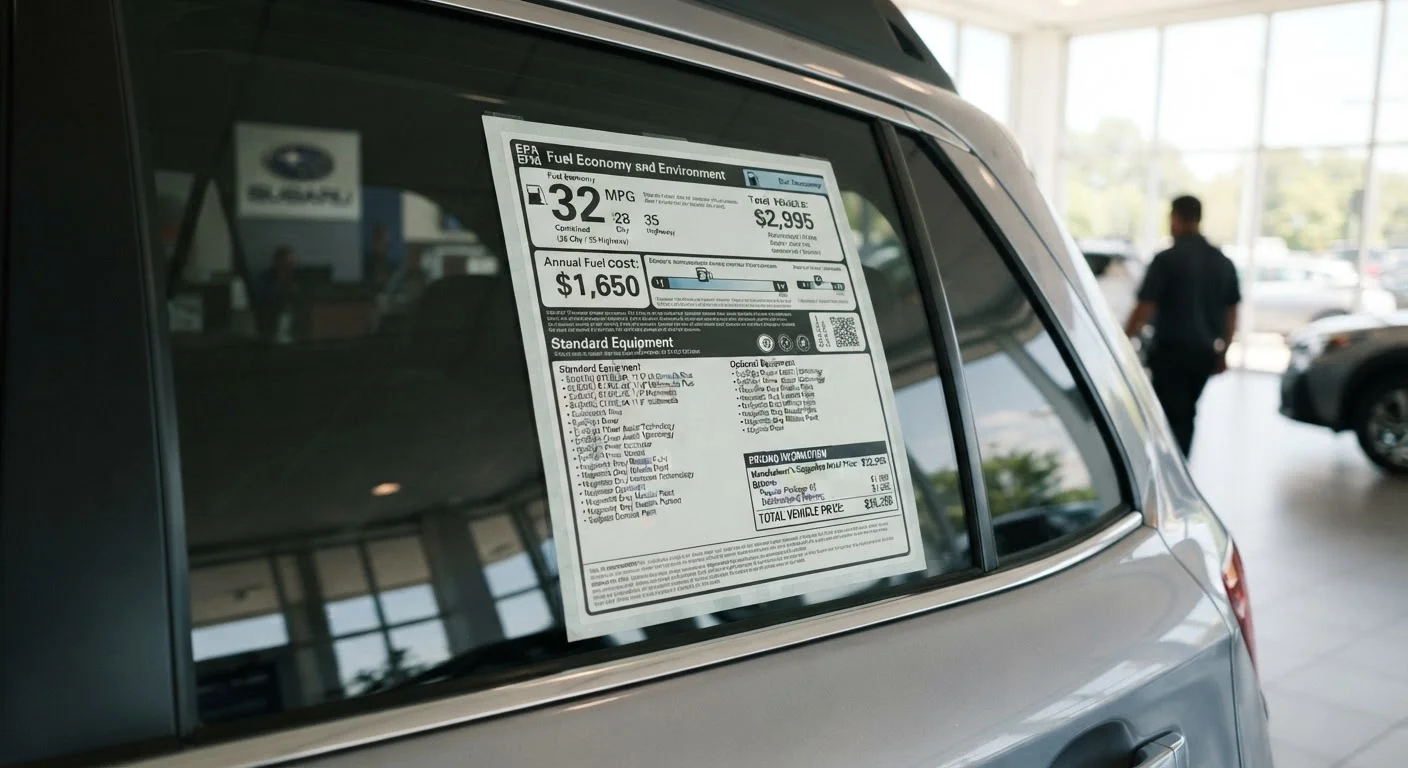
Photo credit: Wiseturt.com | Blogs Curated For You
In this article
The Monroney label contains more than a price. Here's how to read every section—fuel economy, safety ratings, origin, and standard equipment.
Key Takeaways
- The Monroney label is federally mandated and must stay on the car until you buy it.
- MSRP is a starting point for negotiation, not a fixed price you must pay.
- Fuel economy estimates come from standardized EPA tests and reflect average driving conditions.
- Safety ratings on some stickers come from government crash tests, not the manufacturer.
- The country-of-origin section reveals where major components were built, not just final assembly.
What the Monroney Label Actually Is
That printed sheet taped to the window of every new car has an official name: the Monroney label, named after the senator who sponsored the Automobile Information Disclosure Act of 1958. Federal law requires dealers to display it on every new vehicle and prohibits removing it before the sale - that's why you'll see "Do not remove before delivery to purchaser" printed on it.
The label isn't marketing copy. It's a standardized disclosure document, which means every section follows a format set by federal agencies. Once you know what each section contains, you can compare any two vehicles on a lot using the same framework. Think of it the way you'd approach a Nutrition Facts panel - structured data once you know how to read it. For a parallel walkthrough of another common label, see our plain-language guide to Nutrition Facts labels.
You Can Access Labels Without Visiting a Dealer
Many manufacturers publish digital versions of window stickers on their websites using a vehicle's 17-character VIN (Vehicle Identification Number). If you're researching a specific car before visiting the lot, look up the VIN on the manufacturer's site to pull the full Monroney label in advance.
Section by Section: What Each Part Tells You
Here's a breakdown of the major sections you'll find on a standard Monroney label:
Vehicle Description and Base Price
At the top, you'll find the make, model, trim level, and model year. Below that sits the Manufacturer's Suggested Retail Price (MSRP) - the base price before options. "Suggested" is the operative word. Dealers are not legally required to sell at MSRP; the actual transaction price is negotiable. For definitions of terms like MSRP, invoice price, and dealer markup, see our plain-language car-buying glossary.
Optional Equipment and Packages
This section lists every factory-installed option and its individual price - things like a sunroof, upgraded audio, or a towing package. Each line item has a cost. Add them to the base MSRP and you get the total vehicle price before destination charges.
Destination and Delivery Charge
This is a fixed fee charged by the manufacturer to ship the car from the factory to the dealership. It's non-negotiable and is the same for every buyer of that model, regardless of which dealer they use.
Fuel Economy
The EPA fuel economy section shows city, highway, and combined miles-per-gallon (or MPGe for electric and plug-in hybrid vehicles). These figures come from standardized laboratory tests. Real-world results vary based on driving habits, terrain, weather, and vehicle load - the label itself notes this. The section also includes an estimated annual fuel cost based on average miles driven and a national average fuel price, which gives you a rough comparison tool rather than a guaranteed figure.
Safety Ratings
Newer Monroney labels may include crash test ratings from the National Highway Traffic Safety Administration (NHTSA) and sometimes the Insurance Institute for Highway Safety (IIHS). These are independent assessments - not manufacturer claims. If no rating appears, the vehicle may not have been tested yet at time of production.
Country of Origin
Required under the American Automobile Labeling Act, this section lists the percentage of parts content by country and where the engine and transmission were made. A car can carry a domestic brand name while containing a significant share of foreign-made components - or vice versa. This section gives you the factual breakdown.
Dealer Addendum Stickers Are Not the Monroney
Dealers sometimes place a second sticker next to the Monroney listing extras like paint protection film, window tinting, or security systems - often at significant markup. These additions are not federally mandated disclosures and their prices are negotiable. Review both stickers separately so you know exactly what each charge is for before entering any discussion about price.
What the Sticker Doesn't Tell You - and Next Steps
The Monroney label covers factory content only. Any dealer-added accessories - paint sealant, fabric protection, nitrogen-filled tires - may appear on a separate dealer addendum sticker placed alongside the Monroney. Those charges are negotiable and are not part of the federal disclosure. Be sure to distinguish between the two sheets.
The sticker also doesn't reflect financing costs, trade-in values, or tax and title fees - all of which affect your total out-of-pocket cost. For a deeper comparison of what changes when you move from a new car to a used one (where no Monroney exists), see our overview of new vs. used car differences.
Reading the label carefully before you walk into a negotiation puts real numbers in your hands. You'll know exactly what you're being charged for - and which charges have room to move.

Author
Auto Editorial Team
Auto Editorial Team is the collective byline for our editorial team and contributor network. Articles published under this byline or an editorial pen name are researched, written, and reviewed according to our editorial standards for clarity, consistency, and independence before publication.
View all articles →