
Key Terms in Every Car Deal: A Plain-Language Glossary
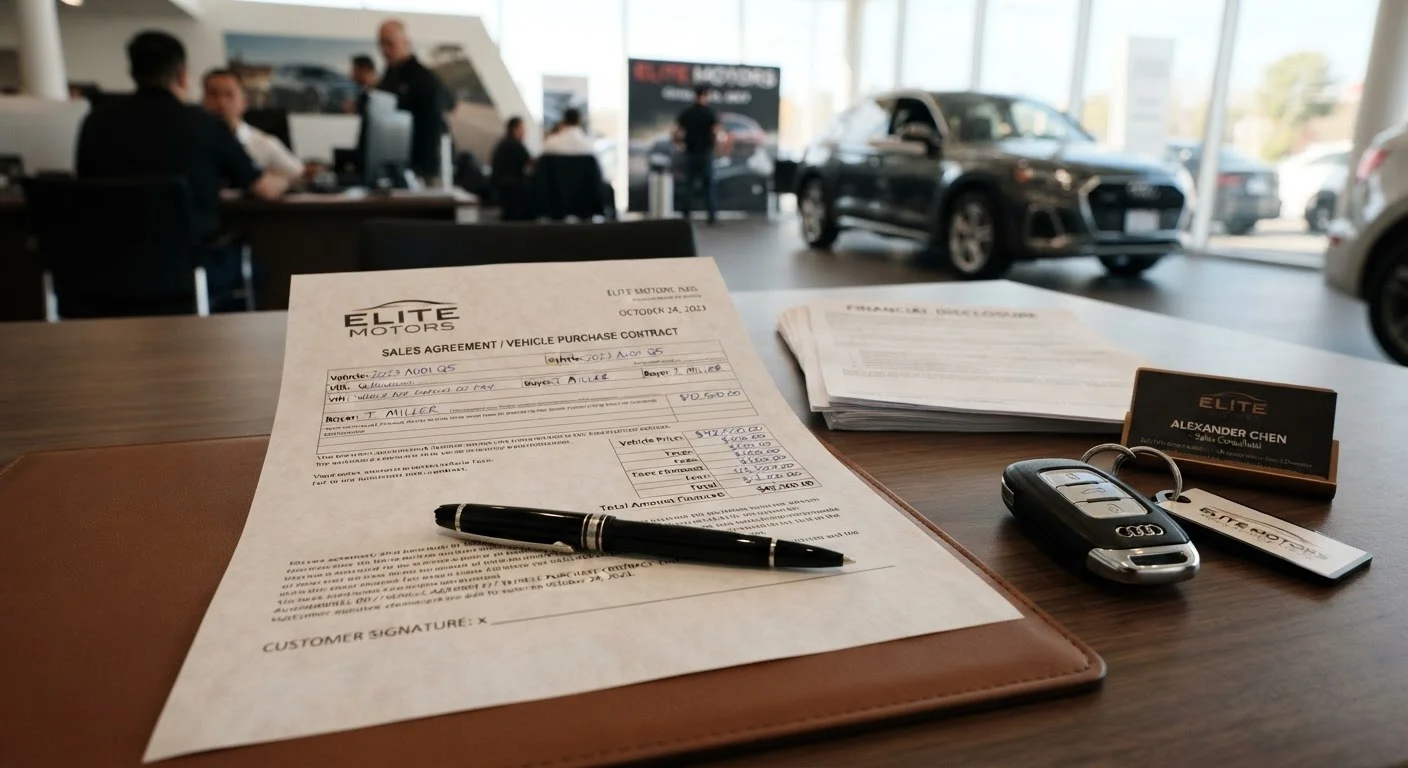
Photo credit: Wiseturt.com | Blogs Curated For You
In this article
From APR and invoice price to residual value and dealer reserve — concise definitions for the words you'll encounter buying a car.
Why Car-Buying Jargon Matters
Walk into a dealership unprepared and you'll hear a stream of abbreviations and financial terms - APR, money factor, dealer reserve, cap cost. None of it is explained. That information gap costs buyers money.
This glossary covers the terms you're most likely to encounter during a new or used car purchase, from the first price negotiation through financing and the final paperwork. Definitions are written for general reference; individual deals vary, and your specific numbers will depend on your credit profile, the lender, and the vehicle. For a full walkthrough of the process itself, see The Car-Buying Process, Start to Finish.
| Starting price reference | MSRP - not the final price |
| Total cost metric to negotiate | Out-the-door price |
| Financing cost expressed as | APR (Annual Percentage Rate) |
| Lease financing charge | Money factor (multiply by 2,400 for approx. APR) |
| Where add-ons are pitched | F&I (Finance and Insurance) office |
| Covers loan gap after total loss | GAP insurance |
Pricing Terms
Price is where most negotiations start - and where the most confusion lives.
MSRP
Manufacturer's Suggested Retail Price - the price the automaker recommends the vehicle be sold for. It's a starting point for negotiation, not a fixed price, and it does not include taxes, fees, or dealer add-ons.
Invoice Price
The price the dealer pays the manufacturer for the vehicle before any manufacturer incentives or holdback. Knowing the invoice price gives buyers a reference point below MSRP, though dealer profit can still exist below invoice due to holdback and incentives.
Dealer Holdback
A percentage of the vehicle's price (typically 1-3% of MSRP) that the manufacturer pays back to the dealer after the sale. This is why a dealer can sometimes sell at or near invoice and still be profitable.
Out-the-Door Price
The total amount you'll actually pay to drive the car home, including purchase price, taxes, title fees, registration, and any dealer documentation charges. Always negotiate to this number, not just the sticker price.
APR (Annual Percentage Rate)
The yearly cost of borrowing money, expressed as a percentage. A lower APR means you pay less interest over the life of the loan. APR differs from a simple interest rate in that it can account for certain fees included in the loan.
Money Factor
The financing charge used in lease contracts, equivalent to an interest rate. To convert money factor to an approximate APR, multiply it by 2,400. A money factor of 0.0025 translates to roughly 6% APR.
Residual Value
In a lease, the projected value of the vehicle at the end of the lease term. A higher residual value generally means lower monthly lease payments because you're financing less depreciation.
Capitalized Cost (Cap Cost)
The agreed-upon price of a leased vehicle before any down payment or trade-in credit. Negotiating the cap cost lower directly reduces your monthly lease payment.
Dealer Reserve
The markup a dealer adds to the interest rate secured from a lender. For example, a lender approves you at 5% APR, and the dealer quotes 7% - the 2% difference is dealer reserve, which the dealer keeps as profit.
F&I (Finance and Insurance)
The department - or the office visit - where financing is finalized and add-on products are offered, such as extended warranties, gap insurance, and paint protection. This stage often involves the highest-pressure upsells in the process.
GAP Insurance
Guaranteed Asset Protection insurance covers the difference between what you owe on a loan and what your car insurance pays out if the vehicle is totaled or stolen. It's most relevant when you finance a large portion of the car's value.
Documentation Fee (Doc Fee)
A dealer charge for processing paperwork, typically ranging from under $100 to several hundred dollars depending on the state. Some states cap this fee; others do not. It is often listed as non-negotiable, though the overall deal price can still be adjusted.
These figures appear on the window sticker and in every offer sheet. For a line-by-line breakdown of what's printed on that label, Decoding the Window Sticker walks through each section in detail.
Financing Terms
Once a purchase price is agreed upon, the conversation shifts to how you'll pay. Financing adds its own vocabulary layer.
~2%
Typical dealer reserve markup on loan APR
Dealers commonly mark up lender-approved rates by 1-2 percentage points as additional profit, according to general industry practice.
1-3%
Typical dealer holdback as share of MSRP
Manufacturer holdback programs vary, but most fall within this range, allowing dealers to profit even on near-invoice sales.
50-70%
Residual value range for common lease terms
A 36-month lease on a mainstream vehicle typically carries a residual value between 50% and 70% of MSRP, though this varies by model and lender.
Your credit score plays a direct role in the interest rate a lender offers. What Your Credit Score Actually Does to Your Car Loan explains how lenders use score ranges to set rates and what that means for your monthly payment.
Before you sign anything, review every financing line carefully. A practical checklist is available in Things to Verify Before Signing Any Car Purchase Agreement.
Dealer-Arranged Financing vs. Direct Lending
When a dealer arranges your loan through a partner lender, you may be quoted a rate higher than what the lender actually approved - that difference is dealer reserve. Getting pre-approved directly from a bank or credit union before visiting a dealership gives you a rate baseline to compare against. This article provides general information and is not personalized financial advice; consult a licensed financial professional about your specific borrowing situation.

Author
Auto Editorial Team
Auto Editorial Team is the collective byline for our editorial team and contributor network. Articles published under this byline or an editorial pen name are researched, written, and reviewed according to our editorial standards for clarity, consistency, and independence before publication.
View all articles →