
Things to Verify Before Signing Any Car Purchase Agreement
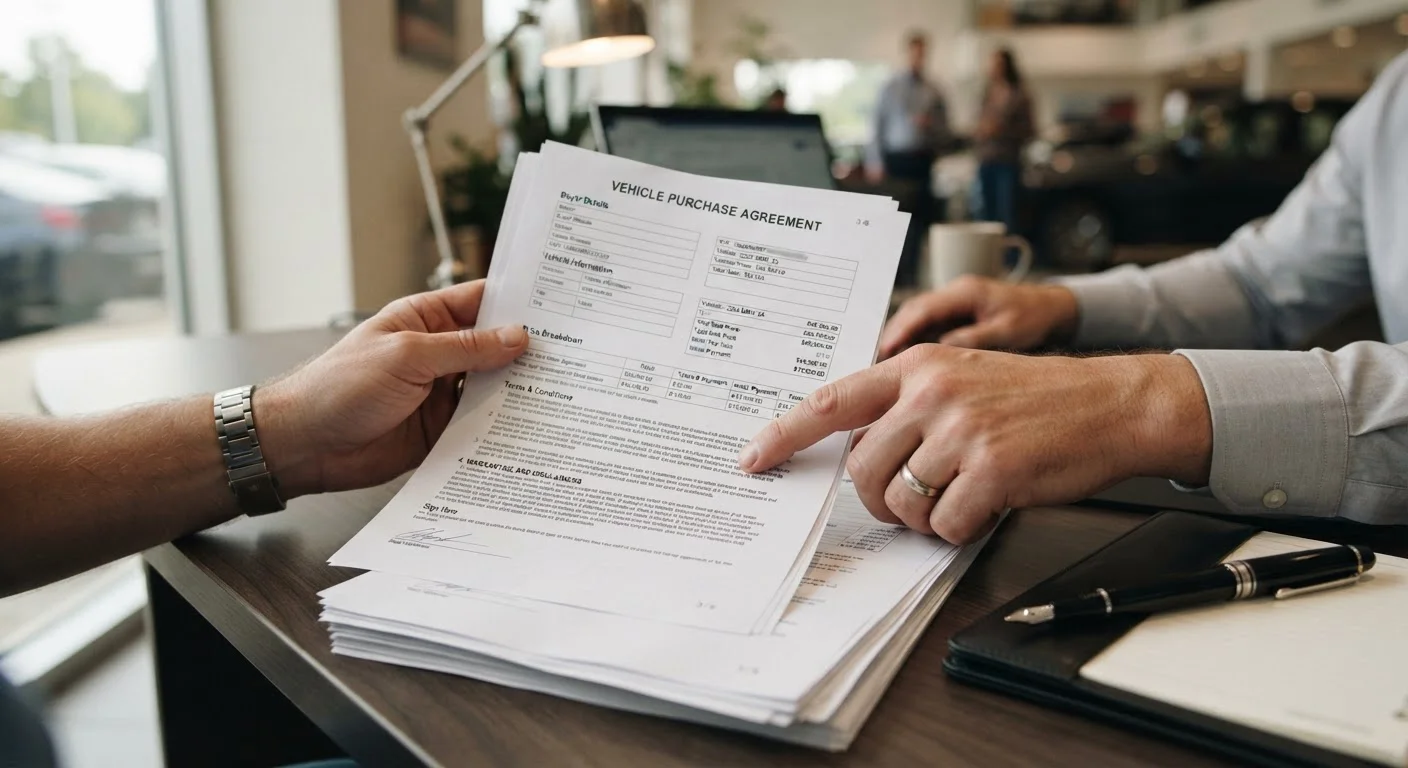
Photo credit: Wiseturt.com | Blogs Curated For You
In this article
A practical checklist covering fees, financing terms, add-ons, and title details to review before you put pen to paper.
Key Takeaways
- The purchase agreement is the legally binding document - errors are much harder to fix after signing.
- Fees, add-ons, and financing terms are common sources of unexpected charges.
- You have the right to ask questions and request time to review every line before signing.
- Vehicle identification numbers and title details must match exactly across all paperwork.
- Financing terms on the final contract should match any pre-approval or verbal quote you received.
Why the Purchase Agreement Deserves a Careful Read
The finance office at a dealership moves fast - by design. After hours of test drives and negotiations, the paperwork stage can feel like a formality. It isn't. The purchase agreement (sometimes called the retail installment sales contract) is the document that legally defines what you agreed to pay, what you're financing, and what extras you consented to. Once you sign, unwinding a mistake is difficult and sometimes impossible.
This checklist walks you through each area to inspect before you put pen to paper. If you want a broader overview of the entire buying journey, see The Car-Buying Process, Start to Finish. For plain-English definitions of any terms you encounter in the contract, Key Terms in Every Car Deal is a useful reference to keep open.
Don't Let Time Pressure Rush You
Finance managers are trained to move through paperwork quickly, and a busy showroom can make you feel like slowing down is rude. It isn't. You are entitled to read every page before signing. If anyone discourages you from reading the contract carefully, treat that as a red flag. There is no legitimate reason to prevent a buyer from reviewing what they're signing.
What to Check and the Tools You'll Need
You don't need legal training to verify a purchase agreement - you need time, a calculator, and the notes you took during negotiation. Bring any written quotes, financing pre-approvals, or email confirmations with you to the dealership. These are your benchmarks.
Written Negotiation Notes or Email Confirmations
Serve as your reference for the agreed price, trade-in value, and any promises made - compare these directly against the contract.
Financing Pre-Approval Letter
Lets you verify that the APR and loan terms on the contract match what your lender or credit union already quoted you.
Calculator (phone app is fine)
Use it to independently verify the total cost of the loan, monthly payment math, and that credits or down payments were applied correctly.
Government-Issued ID and Insurance Card
Required to finalize title and registration; having your insurance information ready also prevents delays at signing.
VIN Lookup Tool (free online services)
Allows you to independently verify the vehicle's history - ownership, accidents, and title status - against the VIN on the contract.
Work through the checklist groups below methodically. If a number doesn't match what you were quoted, stop and ask. A legitimate dealer will explain any discrepancy clearly.
Vehicle Details
Price and Fees
Financing Terms
Add-Ons and Extras
Title and Ownership
Final Review
This article is for general informational purposes only and does not constitute legal or financial advice. Contract terms, fees, and regulations vary by state and lender. Consult a licensed professional if you have questions about a specific document or transaction.
After You've Verified Everything
Once you're satisfied that every figure, fee, and term is accurate and matches what you agreed to, you can sign with confidence. Keep a full copy of all documents - including any cancellation or arbitration clauses - for your records.
After the purchase, two next priorities are coverage and upkeep. If you haven't lined up auto insurance yet, Insurance Basics explains how coverage decisions work. And to protect your investment going forward, the Car Maintenance hub covers what routine service your vehicle will need.
Errors Are Easier to Fix Before You Sign
Once a contract is executed, correcting even a simple mistake - a misspelled name, a wrong fee, an unwanted add-on - requires the dealer to issue a new contract and both parties to agree. Some errors may not be correctable at all. The time you spend reviewing the paperwork before signing is far less than the time and stress of trying to unwind a mistake afterward.

Author
Auto Editorial Team
Auto Editorial Team is the collective byline for our editorial team and contributor network. Articles published under this byline or an editorial pen name are researched, written, and reviewed according to our editorial standards for clarity, consistency, and independence before publication.
View all articles →