
The Myths Drivers Believe About Tire Pressure
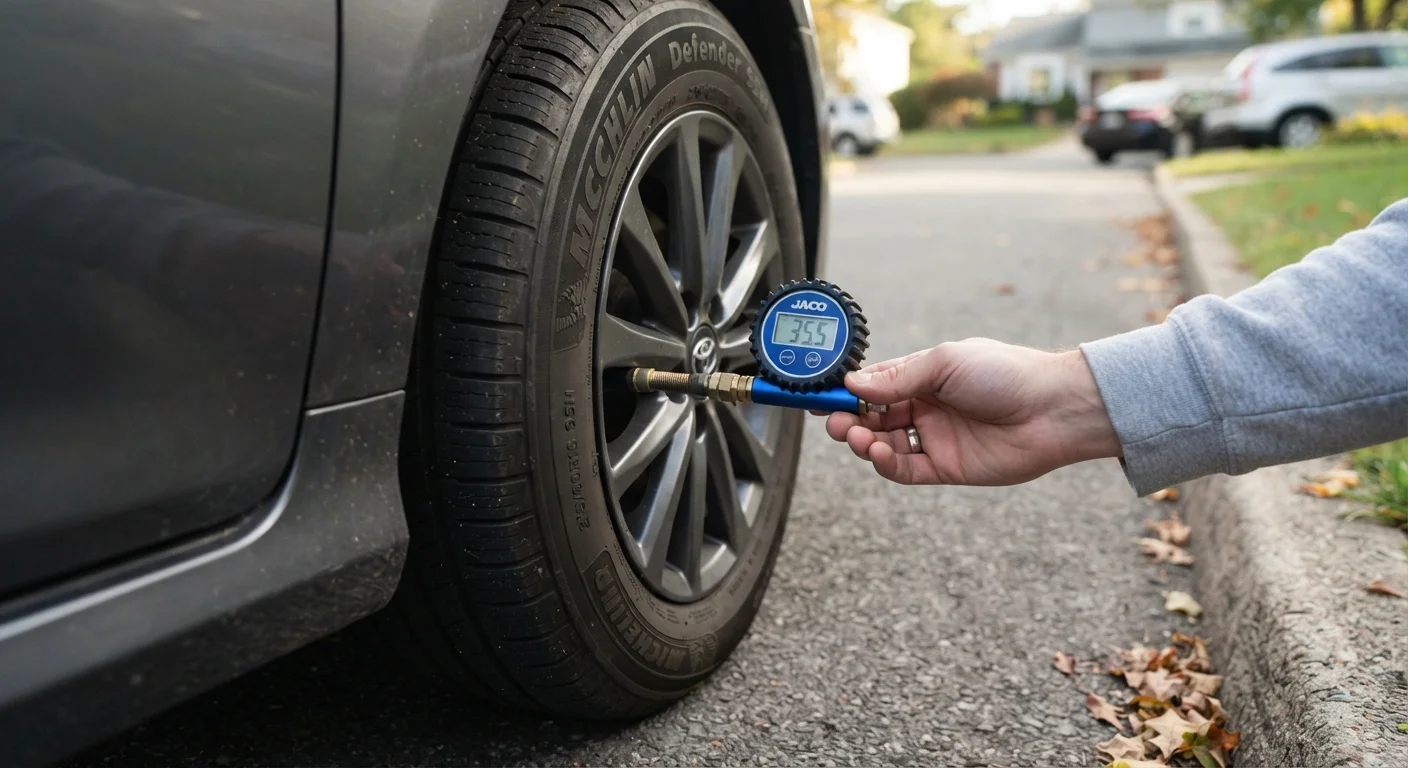
Photo credit: Wiseturt.com | Blogs Curated For You
In this article
Does the number on your tire's sidewall tell you how much air to put in? Spoiler: it doesn't. Get the facts on tire inflation.
Key Takeaways
- The correct inflation pressure for your tires is listed in your owner's manual or door jamb sticker, not on the tire sidewall.
- Tire pressure naturally drops in cold weather - roughly 1 PSI for every 10°F decrease in temperature.
- A tire can be dangerously underinflated without appearing visibly flat to the naked eye.
- Overinflating tires reduces traction and increases blowout risk, even if it temporarily improves fuel economy.
- Your TPMS warning light signals a problem, but it is not a substitute for routine manual pressure checks.
Why Tire Pressure Myths Are So Persistent
Tire pressure is one of those maintenance tasks most drivers know they should do but rarely think much about. It takes less than five minutes, costs nothing at most gas stations, and directly affects fuel economy, tire life, and handling safety. Yet a handful of stubborn myths keep many drivers from getting it right.
Some of these misconceptions come from misreading labels. Others stem from outdated advice passed down through generations of car owners. A few are partially true but dangerously incomplete. Below, we correct the most common ones with straightforward facts.
For a broader look at how maintenance needs shift throughout the year, see our seasonal car maintenance guide.
Myth
The number printed on the side of my tire is how much air I should put in.
Fact
That number is the maximum pressure the tire can handle - not the recommended operating pressure for your vehicle.
The figure molded into a tire's sidewall (often labeled Max. Press.) is an engineering limit set by the tire manufacturer. Inflating to that number ignores the weight, suspension design, and load distribution of your specific vehicle. The correct target pressure is found on a sticker inside the driver's door jamb or in your owner's manual - and it's often 10 to 15 PSI lower than the sidewall maximum. Using the sidewall number can cause a harsh ride, reduced traction, and accelerated center-tread wear.
Myth
If a tire looks fine from the outside, the pressure is probably okay.
Fact
A tire can be 10 or even 15 PSI underinflated and still appear fully inflated to the eye.
Modern radial tires are designed to hold their shape even when significantly low on air. The visible bulge at the bottom that people associate with a flat tire doesn't appear until pressure is critically low. This is why a visual check alone is unreliable. An underinflated tire generates excess heat through increased sidewall flexing, which degrades the rubber faster and raises the risk of a blowout - especially at highway speeds. The only way to know actual pressure is to measure it with a gauge.
Myth
Slightly overinflating tires improves fuel economy, so it's worth doing.
Fact
While overinflation does reduce rolling resistance slightly, it also reduces the contact patch, hurts braking performance, and increases blowout risk.
It's true that a harder tire rolls with less resistance, which can nudge fuel economy numbers upward marginally. But the trade-offs are real: less rubber in contact with the road means reduced grip during braking and cornering. The tire also wears faster in the center rather than evenly across its width. In extreme cases, overinflation makes a tire more vulnerable to impact damage from potholes or road debris. The manufacturer-specified pressure already reflects an engineered balance between efficiency and safety - deviation in either direction carries costs.
Myth
Cold weather doesn't affect tire pressure much.
Fact
Tire pressure drops approximately 1 PSI for every 10°F drop in ambient temperature.
This is basic physics: gases contract when cooled. A tire that was properly inflated during a mild fall day can be noticeably underinflated by January without anyone adding or releasing air. Drivers in northern states or at higher elevations are particularly vulnerable to this seasonal effect. Checking pressure at the start of winter - and rechecking after sharp cold snaps - is a straightforward habit that prevents unnecessary wear and preserves handling. For more on adjusting your maintenance routine around the seasons, see our seasonal maintenance overview.
Myth
My TPMS light means I need to check my pressure right now - and if it's off, I'm fine.
Fact
The TPMS light is a lagging indicator; it typically activates only after a tire is already 25% below recommended pressure.
TPMS is a valuable safety net, not a precision monitoring tool. By the time the light comes on, a tire may already be operating at a level that affects handling and accelerates wear. Conversely, a tire that's slightly low - say, 3 to 5 PSI under target - may not trigger the light at all, but that shortfall still adds up over thousands of miles. Monthly manual checks with a quality gauge are the standard recommendation from automotive safety organizations and are more informative than waiting for a dashboard alert.
Reading Pressure Correctly and Staying Consistent
Even once drivers know the correct target pressure, two practical mistakes trip them up: checking pressure when the tires are warm, and relying solely on the TPMS dashboard light.
Don't Check Pressure on Hot Tires
Driving heats the air inside your tires and temporarily raises pressure readings. If you check and adjust pressure right after driving, you risk releasing air that will be needed once the tires cool down. Always measure cold tire pressure - after the vehicle has been parked for at least three hours or driven less than a mile.
Tire pressure should be checked when the vehicle has been parked for at least three hours or driven fewer than a mile at low speed. Heat generated by driving temporarily increases pressure readings by several PSI, which can cause you to release air you actually need.
As for the TPMS light: federal regulations in the US have required tire pressure monitoring systems on all new passenger vehicles since 2008. That's genuinely useful technology - but the warning typically doesn't activate until a tire is 25% below its recommended pressure, which is already a significant and potentially unsafe deficit. Manual checks with an inexpensive gauge remain the more reliable habit.
Understanding how tires wear and how inflation interacts with alignment is also worth the time. Our article on tire rotation and wheel alignment explains how these services connect to overall tire health.
This article is for general informational purposes only. Always consult your vehicle's owner's manual and a qualified mechanic for maintenance decisions specific to your vehicle.

Author
Auto Editorial Team
Auto Editorial Team is the collective byline for our editorial team and contributor network. Articles published under this byline or an editorial pen name are researched, written, and reviewed according to our editorial standards for clarity, consistency, and independence before publication.
View all articles →