
Crossover vs. SUV: What Actually Makes Them Different
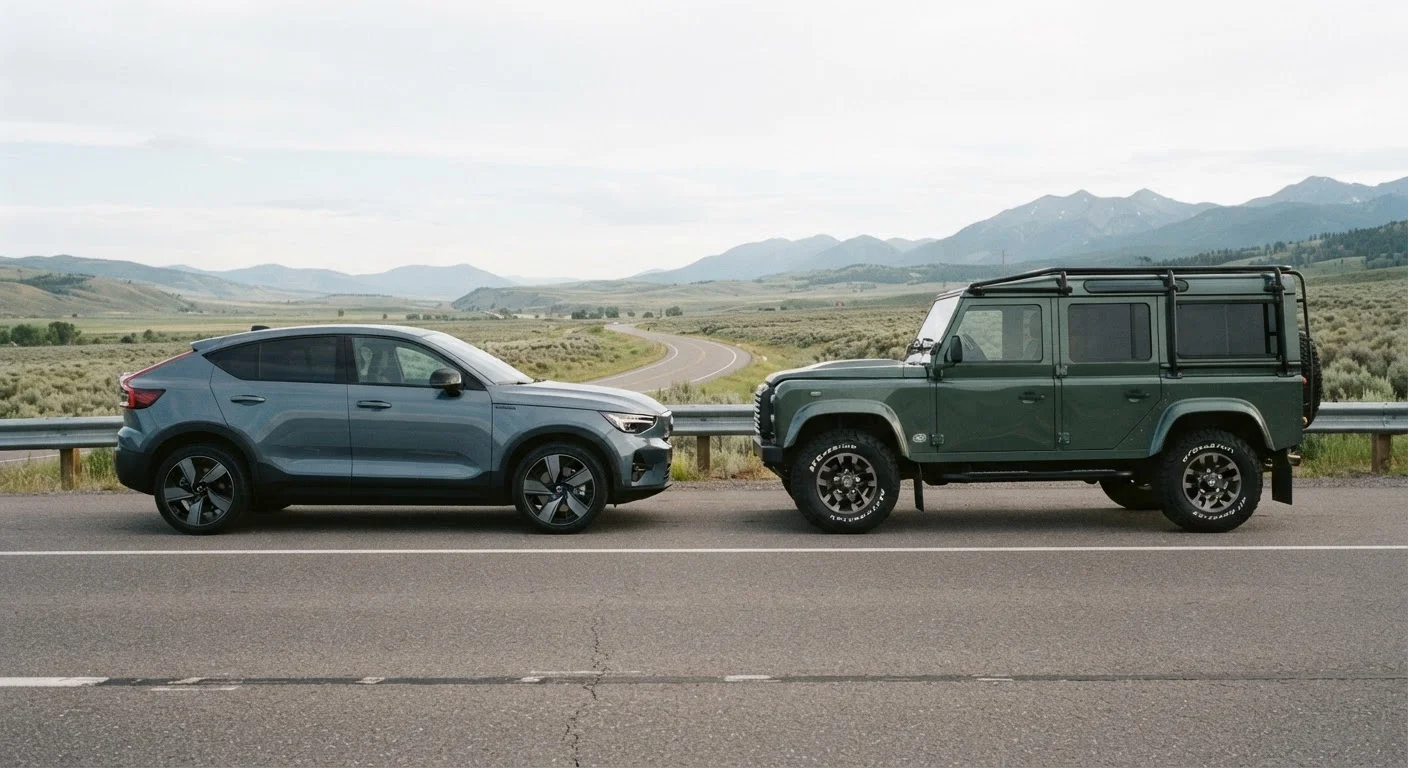
Photo credit: Wiseturt.com | Blogs Curated For You
In this article
Crossovers and SUVs look similar but are built differently. Here's what sets them apart in terms of platform, capability, and everyday use.
Key Takeaways
- Crossovers use a car-based unibody frame; traditional SUVs use a truck-derived body-on-frame construction.
- Crossovers generally deliver better fuel efficiency and a smoother on-road ride than body-on-frame SUVs.
- Traditional SUVs typically offer higher towing ratings and more capable off-road performance.
- Most vehicles marketed as SUVs in dealerships today are technically crossovers.
- Your choice should hinge on how you actually use the vehicle, not just how it looks.
The Core Difference: How They're Built
The biggest distinction between a crossover and a traditional SUV has nothing to do with size or styling - it's the underlying structure. A crossover (also called a CUV, or crossover utility vehicle) is built on a unibody platform, meaning the body and frame are a single welded structure - the same basic approach used in passenger cars and sedans. A traditional SUV uses a body-on-frame construction, where a separate steel body is bolted onto a ladder-style chassis - the same foundation found under most full-size pickup trucks.
This structural difference cascades into almost every other characteristic: ride quality, handling, towing capacity, weight, and off-road ability. Understanding which platform sits under a vehicle tells you far more than its name badge ever will. For a broader look at how vehicle body styles are categorized, see our guide to car body styles.
| Criterion | Crossover (CUV) | Traditional SUV |
|---|---|---|
| Frame construction | Unibody (car-based) | Body-on-frame (truck-based) |
| Ride quality | Smoother, car-like | Stiffer, truck-like |
| Fuel efficiency | Generally better | Generally lower |
| Typical tow capacity | 1,500-5,000 lbs | Up to 8,000+ lbs |
| Drivetrain type | Usually AWD | Often 4WD with low range |
| Off-road capability | Limited - light duty | Higher - trail-capable |
| On-road handling | Predictable, agile | More body roll, heavier |
| Typical vehicle weight | Lighter overall | Heavier overall |
Everyday Performance and Ride Quality
Because crossovers share their bones with passenger cars, they behave like passenger cars on the road. The suspension is tuned for comfort and cornering, road noise is typically well-managed, and fuel efficiency tends to be noticeably better than a body-on-frame equivalent of similar size. Most crossovers also sit lower to the ground, which makes them easier to step into and keeps handling more predictable at highway speeds.
Traditional SUVs, by contrast, can feel truck-like - particularly in older or more utilitarian configurations. The ride is often stiffer, body roll in turns is more pronounced, and the higher center of gravity requires more caution in emergency maneuvers. That said, modern full-size SUVs have closed much of this gap with independent rear suspensions and adaptive damping systems. Still, the physics of a heavy, truck-based frame don't disappear entirely.
~80%
Share of US "SUV" sales that are crossovers
Industry analysts broadly estimate that the large majority of vehicles sold under the SUV label in the US use unibody crossover platforms rather than traditional body-on-frame construction.
3-6 MPG
Typical fuel economy advantage crossovers hold
EPA combined ratings consistently show crossovers returning several more miles per gallon than body-on-frame SUVs of comparable size and powertrain type.
8,000+ lbs
Maximum tow rating for capable full-size SUVs
Some body-on-frame full-size SUVs are rated to tow over 8,000 pounds when properly equipped - a threshold most crossovers cannot approach.
Capability: Where Traditional SUVs Still Lead
If towing is a priority, the body-on-frame SUV holds a clear structural advantage. Ladder-frame vehicles are designed to handle the stress of towing heavy loads - ratings on capable full-size SUVs can exceed 8,000 pounds in some configurations. Most crossovers max out well below that figure, typically in the 1,500-5,000 pound range depending on size and powertrain. Exceeding a vehicle's tow rating stresses the drivetrain, brakes, and frame, so this isn't a difference you should paper over.
Off-road performance follows a similar pattern. True four-wheel-drive (4WD) systems with low-range gearing - common on body-on-frame SUVs - give drivers mechanical torque multiplication for steep grades and rock crawling. Many crossovers offer all-wheel drive (AWD), which improves traction on loose or slippery surfaces but is generally not designed for the sustained abuse of serious trail driving. AWD and 4WD are not interchangeable terms, and knowing the difference matters before you head off-pavement.
What Dealerships Actually Call an SUV
Here's where everyday consumers often get tripped up: the vast majority of vehicles marketed and sold as SUVs at dealerships in the US are technically crossovers. Automakers discovered that consumers associate the SUV label with space, safety, and versatility - so they apply it broadly, regardless of the underlying platform. Compact crossovers, midsize crossovers, and even some three-row vehicles all carry the SUV designation in marketing materials.
This isn't deceptive so much as imprecise. The practical takeaway is that when you're shopping, you should look past the label and ask about the platform and drivetrain specifics. Check the owner's manual or manufacturer's technical documentation for tow ratings and drivetrain type - those numbers don't lie. You may also want to understand how trim-level choices affect capability and equipment; trim levels can change far more than you'd expect on the same model.
AWD vs. 4WD: Not the Same Thing
All-wheel drive (AWD) automatically distributes power between wheels and is designed primarily for on-road traction in rain, snow, or light gravel. Four-wheel drive (4WD) systems - particularly those with a low-range gear setting - are engineered for sustained off-road use at slow speeds on rough terrain. Crossovers almost always offer AWD; traditional SUVs more commonly offer 4WD. If off-road use is your reason for buying, the drivetrain type matters more than the body style label.
Making the Right Call for Your Situation
For the majority of US drivers - commuting, grocery runs, family road trips on paved roads - a crossover covers all the practical bases with less fuel cost and a more comfortable daily experience. For drivers who genuinely tow, go off-road regularly, or need the durability of a truck-derived platform, a traditional body-on-frame SUV justifies its trade-offs.
When evaluating either type, also consider how powertrain choice intersects with your use case. electric, hybrid, and gas options are increasingly available across both crossover and SUV platforms, which adds another layer of decisions worth working through before you commit. If you're thinking about financing the purchase, our buying a car resource hub walks through key considerations from loan types to what to inspect before signing.
This article is for general informational purposes only. Vehicle specifications, tow ratings, and capabilities vary by make, model, trim, and year. Always verify specifications with the manufacturer or a qualified automotive professional before making a purchase decision.

Author
Auto Editorial Team
Auto Editorial Team is the collective byline for our editorial team and contributor network. Articles published under this byline or an editorial pen name are researched, written, and reviewed according to our editorial standards for clarity, consistency, and independence before publication.
View all articles →