
Electric, Hybrid, and Gas Vehicles: A Side-by-Side Look
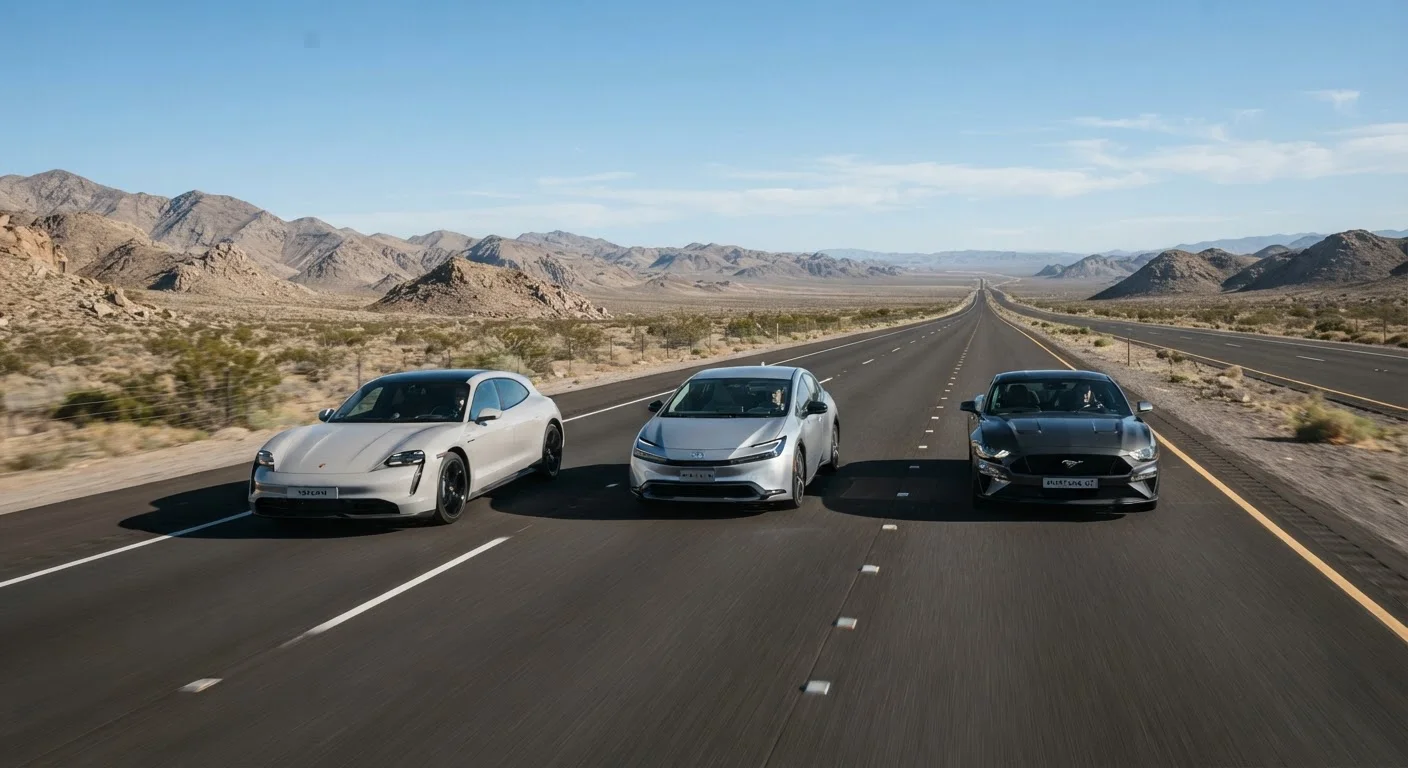
Photo credit: Wiseturt.com | Blogs Curated For You
In this article
Compare how EVs, hybrids, and traditional gas-powered cars differ in how they work, what they cost to run, and where each makes sense.
Key Takeaways
- Electric vehicles have the lowest fuel and routine maintenance costs but require access to reliable charging infrastructure.
- Hybrids offer a middle ground - better fuel economy than gas cars without the range anxiety of a pure EV.
- Gas-powered vehicles still have the widest model selection, cheapest upfront cost, and the most established refueling network.
- Your driving habits, home setup, and local infrastructure matter more than any single spec when choosing between these drivetrains.
- All three types involve ownership trade-offs; understanding them upfront saves frustration later.
How Each Powertrain Actually Works
Understanding what's under the hood - or where the hood used to be - helps clarify why these vehicles behave so differently in day-to-day use.
Gas vehicles use an internal combustion engine (ICE) that burns gasoline to generate power. The fuel tank refills in minutes at any of the country's roughly 145,000 gas stations. This is still the most familiar setup for most American drivers.
Hybrids pair a gas engine with an electric motor and a small battery. In a standard hybrid (sometimes called an HEV), the battery charges itself through a process called regenerative braking - capturing energy that would otherwise be lost as heat when you slow down. You never plug it in. A plug-in hybrid (PHEV) adds a larger battery that you can charge externally, giving it a short all-electric range before it falls back on gas. See our breakdown of PHEVs vs. standard hybrids if you want to dig into those distinctions further.
Electric vehicles (EVs) run entirely on electricity stored in a large battery pack. There's no gas engine, no exhaust pipe, and no oil to change. The electric motor delivers power almost instantly, which is why EVs tend to feel quick off the line even at modest power ratings.
Cost to Buy and Cost to Run
Sticker price is just the starting point. The real cost picture only emerges when you factor in fuel, maintenance, and how long you plan to keep the vehicle.
| Electric (EV) | Plug-In Hybrid (PHEV) | Standard Hybrid (HEV) | Gas (ICE) | |
|---|---|---|---|---|
| Typical upfront cost | Higher | Moderate to high | Moderate | Lower to moderate |
| Fuel/energy cost per mile | Lowest | Low (EV mode) / moderate (gas) | Moderate | Highest |
| Routine maintenance needs | Minimal | Moderate | Moderate | Most frequent |
| Refueling/recharging time | 20 min-several hours | 20 min-several hours + gas option | Minutes (gas only) | Minutes |
| Range flexibility | 200-300+ miles (charge needed) | EV range + gas backup | 500+ miles on gas | 400-600+ miles |
| Home charging required | Strongly recommended | Helpful but optional | Not needed | Not needed |
| Tailpipe emissions | None | None (EV mode) / low (gas) | Lower than gas | Highest |
Upfront cost: Gas vehicles generally carry the lowest purchase prices, followed by hybrids, with EVs typically costing more - though federal tax credits (subject to income and vehicle eligibility rules) can reduce that gap for qualifying buyers.
Fuel costs: Electricity is cheaper per mile than gasoline in most US regions, though exact savings depend on your local utility rates and how much you drive. Hybrids significantly cut gas consumption compared to a conventional ICE, especially in stop-and-go traffic where regenerative braking does the most work.
Maintenance: EVs have fewer moving parts - no oil changes, no transmission fluid, no spark plugs. Brake wear is also reduced because regenerative braking does much of the slowing. Gas vehicles require the most routine service. Hybrids fall in between. For a broader look at ongoing vehicle upkeep, the Car Maintenance hub covers what to expect across different drivetrains.
Calculate Your Real Cost of Ownership
Before focusing on sticker price alone, add up estimated fuel or charging costs, insurance, and expected maintenance over the years you plan to own the vehicle. For many drivers, an EV or hybrid's lower running costs offset a higher purchase price over time - but the math depends on your mileage and local energy rates.
Depreciation is harder to predict for EVs than for gas or hybrid vehicles, partly because battery technology is still evolving and used EV values have fluctuated more than traditional vehicles in recent years.
Range, Refueling, and Real-World Convenience
Range anxiety - the worry that you'll run out of charge before reaching a station - is a genuine concern for EV drivers in some situations, though it's often overstated for everyday use.
Most current EVs offer 200-300+ miles of EPA-rated range. For drivers who charge at home overnight, that's more than enough for typical daily driving. The challenge arises on long road trips, where charging stops (which take longer than gas fill-ups, even with fast chargers) require planning.
Gas vehicles and standard hybrids avoid this entirely - you refuel in minutes at any gas station. PHEVs occupy a useful middle ground: run on electricity for short trips, switch to gas for longer ones. This flexibility makes them appealing for drivers whose routines vary week to week.
Don't Assume Charging Is Always Convenient
Public fast-charging networks have grown rapidly, but coverage is still uneven across the US. Apartment and condo dwellers without dedicated parking may find home charging impractical. Factor in your living situation honestly before committing to a battery-electric vehicle.
Charging infrastructure varies significantly by region. Urban and suburban areas generally have better public charging coverage than rural zones. If you're considering an EV, it's worth researching the charger availability along your most frequent routes before committing.
For context on how drivetrain choice intersects with other vehicle decisions, our Buying a Car hub outlines the full range of factors worth considering before you sign anything.
Environmental and Practical Considerations
EVs produce zero tailpipe emissions, which matters for local air quality. Their overall environmental footprint depends on the electricity source in your region - a coal-heavy grid narrows the carbon advantage, while a renewables-heavy grid amplifies it.
Hybrids reduce emissions compared to gas vehicles, particularly in city driving. Gas vehicles produce the most tailpipe emissions per mile but have the least environmental cost tied to battery production.
From a purely practical standpoint, the right choice depends heavily on where you live, how far you drive, and what infrastructure you have access to. Someone with a garage and a short commute is a very different buyer than someone in an apartment building in a rural county.
If you're also weighing body style - since EVs, hybrids, and gas engines are all available across sedans, SUVs, trucks, and crossovers - see our comparison of crossovers and SUVs or the real trade-offs of pickup trucks as daily drivers for guidance on narrowing down the vehicle type itself.
Once you've settled on a powertrain direction, questions about new versus used and leasing versus buying become the next layer. Our articles on what changes beyond the price tag with new vs. used and leasing vs. buying trade-offs can help you think through those decisions clearly.
This article provides general informational comparisons and is not personalized financial or purchasing advice. Vehicle costs, tax credits, and infrastructure availability vary by location and circumstance. Verify current incentive eligibility with official sources before making a purchase decision.

Author
Auto Editorial Team
Auto Editorial Team is the collective byline for our editorial team and contributor network. Articles published under this byline or an editorial pen name are researched, written, and reviewed according to our editorial standards for clarity, consistency, and independence before publication.
View all articles →