
Exercise and the Human Body: A Complete Guide to How Physical Activity Works
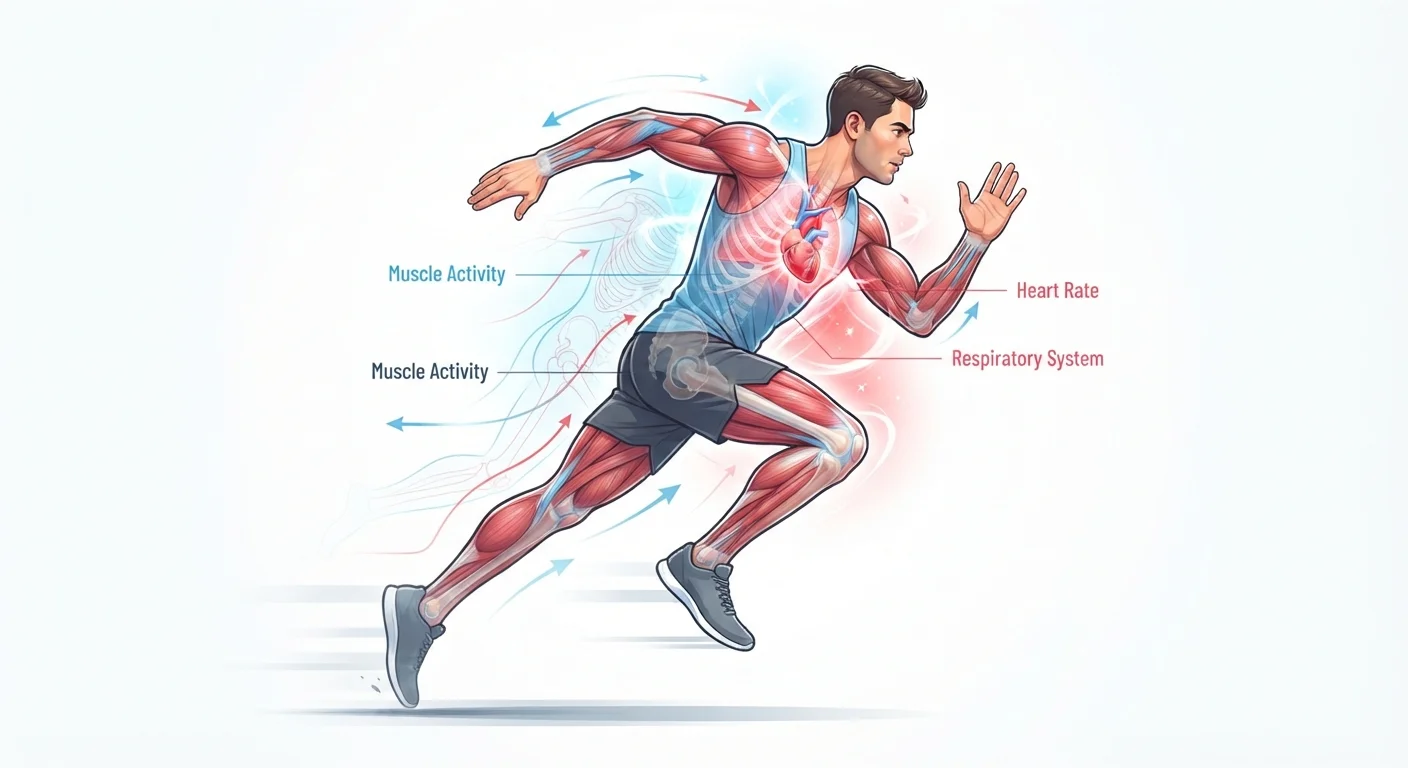
Photo credit: Wiseturt.com | Blogs Curated For You
In this article
From muscle fiber types to cardiovascular adaptation, this comprehensive guide explains the physiology behind fitness gains in accessible, everyday language.
Key Takeaways
- Muscle growth occurs during recovery, not during the workout itself.
- Your cardiovascular system adapts measurably within weeks of consistent aerobic exercise.
- Three distinct energy systems power movement depending on intensity and duration.
- Progressive overload - gradually increasing challenge - is the core driver of fitness gains.
- Nutrition and sleep directly determine how well your body converts exercise into adaptation.
Why Exercise Physiology Matters for Everyday People
Most people approach exercise by following instructions - run for 30 minutes, do three sets, stretch afterward - without understanding why those instructions work. That knowledge gap matters because it often leads to frustration when results stall, or to skipping rest days out of guilt, or to abandoning a routine after a few weeks.
Exercise physiology, the study of how the body responds to physical activity, doesn't need to stay locked in academic journals. When you understand the basic mechanisms driving fitness gains, you can make smarter choices, avoid common errors, and build habits that actually hold. See our plain-English fitness glossary if any terminology in this guide feels unfamiliar.
This guide covers the major physiological systems involved in exercise - muscles, the cardiovascular system, and energy production - and explains how they work together to produce the changes you're working toward.
This article provides general health information and education. It is not medical advice. Consult a qualified healthcare professional before beginning a new exercise program, especially if you have an existing health condition.
How Muscles Respond to Physical Stress
Skeletal muscle is made up of two primary fiber types. Type I fibers (slow-twitch) are highly resistant to fatigue and rely on oxygen for sustained, lower-intensity effort - think distance running or cycling. Type II fibers (fast-twitch) generate more force and speed but fatigue faster, making them central to strength and power activities like sprinting or heavy lifting.
When you lift a weight or sprint up a hill, you create microscopic damage in muscle fibers. This sounds alarming, but it's the intended stimulus. The body responds by repairing those fibers and, over time, reinforcing them to handle the same load more easily. This process, driven by protein synthesis, is what produces increased strength and, when sufficient stimulus and nutrition are present, increased muscle size (hypertrophy).
The key variable here is progressive overload - systematically increasing the challenge on your muscles over time. Without it, adaptation plateaus because the body has already optimized for the current workload. This can mean adding weight, increasing repetitions, reducing rest intervals, or changing movement patterns.
When you stop seeing progress, check whether you've actually increased the challenge recently - most plateaus are simply a sign that progressive overload has stalled, not that training has stopped working.
Progressive overload is the primary driver of continued adaptation in trained individuals; without it, the body has no reason to change further.
Don't judge a new routine by how sore you feel. Muscle soreness (DOMS) is a sign of an unfamiliar stimulus - it decreases as your body adapts, but that adaptation is still happening.
Delayed onset muscle soreness (DOMS) is not a reliable indicator of workout effectiveness; it reflects novelty, not necessarily productive stress.
If you can only do one type of exercise, research consistently supports resistance training as the modality with the broadest range of health benefits across age groups.
Meta-analyses in exercise science show that resistance training improves cardiovascular markers, metabolic health, bone density, and body composition alongside muscle strength.
Research published in sports science literature consistently shows that beginners respond to almost any resistance stimulus, while more trained individuals require more specific and progressive programming to continue adapting. This is why programs that work well for someone new to the gym may not produce the same results six months later.
Cardiovascular Adaptation: What Happens to Your Heart and Lungs
Aerobic exercise - any sustained activity that elevates your heart rate - triggers a cascade of adaptations in your heart, blood vessels, and lungs. Over weeks of consistent training, the heart becomes more efficient: it pumps more blood per beat (a measure called stroke volume), which is why trained athletes often have notably lower resting heart rates.
2-4 weeks
Time for initial cardiovascular adaptation
Exercise physiology research consistently documents measurable cardiovascular improvements within the first two to four weeks of regular aerobic training.
~50%
Adults meeting aerobic activity guidelines
According to the CDC, roughly half of U.S. adults meet the federal physical activity guidelines for aerobic activity.
2x/week
Minimum training frequency per muscle group
Published resistance training guidelines generally recommend training each major muscle group at least twice per week for optimal strength and hypertrophy gains.
Your body also increases its density of capillaries (tiny blood vessels) within muscle tissue, improving oxygen delivery during exercise. The lungs don't grow, but the muscles involved in breathing become stronger and more efficient, and the body improves its ability to extract and use oxygen from each breath - a capacity measured as VO2 max.
These cardiovascular changes begin appearing within two to four weeks of regular aerobic activity for most people. They also partially reverse with prolonged inactivity, which underscores why consistency over months matters more than any single intense workout. For a deeper understanding of how exercise intersects with mental and physiological stress, see our companion article on the mind-body connection.
Energy Systems: How Your Body Fuels Movement
Your body uses three overlapping energy systems, each suited to different durations and intensities of activity. Understanding them explains why a 100-meter sprinter and a marathon runner train so differently.
- Phosphocreatine system: Powers very high-intensity effort lasting roughly 10 seconds or less. Fuel stores are limited but replenish quickly with rest - relevant to explosive movements like a heavy deadlift or a short sprint.
- Glycolytic system: Takes over for efforts lasting roughly 10 seconds to 2 minutes, breaking down glucose (from carbohydrates) for energy. This is the dominant system in activities like a 400-meter run or a high-rep set of squats.
- Oxidative system: Powers sustained activity beyond about 2 minutes by burning carbohydrates and fats in the presence of oxygen. This system supports everything from a brisk walk to a long bike ride.
In practice, all three systems are always active to some degree - intensity determines which is dominant. This is also why carbohydrates, protein, and fat each play a distinct role in supporting exercise: different activities draw on different fuel sources.
Don't Ignore Fatigue as a Signal
Feeling persistently tired, unusually weak, or unmotivated to train can be a sign that recovery is insufficient - not a reason to push harder. Chronic under-recovery can lead to overtraining syndrome, which requires extended rest to resolve. If these symptoms persist, consult a healthcare professional.
Recovery: The Phase Where Gains Actually Happen
A common misconception is that the workout is where fitness is built. The workout is actually the stimulus - the actual adaptation occurs during recovery. When you sleep, eat adequately, and give muscles time to repair, your body rebuilds slightly stronger and more capable than before.
Inadequate recovery leads to a state called overreaching - short-term performance decline from insufficient rest. Pushed further, this can progress to overtraining syndrome, a more serious condition marked by persistent fatigue, mood disruption, and reduced performance that may take weeks or months to resolve.
Protein Needs Vary by Individual
General guidelines for protein intake during regular training exist, but individual needs differ based on age, body composition, health status, and training goals. A registered dietitian can provide guidance tailored to your specific situation rather than population-level estimates.
Practical recovery habits backed by research include: prioritizing 7-9 hours of sleep per night, consuming adequate protein (general population guidelines suggest roughly 0.7-1 gram per pound of bodyweight for those training regularly, though individual needs vary - consult a registered dietitian for personalized guidance), and including rest days or lower-intensity sessions between harder workouts.
Active recovery - light movement on rest days, such as walking or gentle stretching - can improve circulation and reduce muscle soreness without impeding adaptation.
Putting the Science to Work in a Real Routine
Understanding the physiology is useful only if it translates into practical decisions. A few principles follow directly from the science above:
- Train each major muscle group with adequate frequency. Research generally supports training each muscle group at least twice per week for ongoing strength and hypertrophy gains in most adults.
- Include both aerobic and resistance work. The two types of training produce complementary adaptations and together support cardiovascular health, metabolic function, body composition, and long-term mobility.
- Plan for progression. Without a deliberate mechanism to increase challenge over time, results plateau. Even simple tracking - noting weights used or distances covered - helps apply progressive overload intentionally.
- Protect recovery. Sleep, nutrition, and rest days are not optional extras; they are where the physiology of adaptation actually occurs.
If you're ready to apply these concepts to a real schedule, our guide to building a weekly exercise routine from scratch walks through the practical structure step by step. For those just starting out, exercise for complete beginners covers foundational concepts before you set foot in a gym. And for evidence-based guidance on keeping any program sustainable over the long term, see structuring workouts for long-term consistency.
This article is for general informational and educational purposes only and does not constitute medical advice. Always consult a qualified healthcare professional before starting or changing an exercise program.

Author
Health & Nutrition Editorial Team
Health & Nutrition Editorial Team is the collective byline for our editorial team and contributor network. Articles published under this byline or an editorial pen name are researched, written, and reviewed according to our editorial standards for clarity, consistency, and independence before publication.
View all articles →