
DIY Maintenance Tasks vs. Jobs That Belong to a Licensed Professional
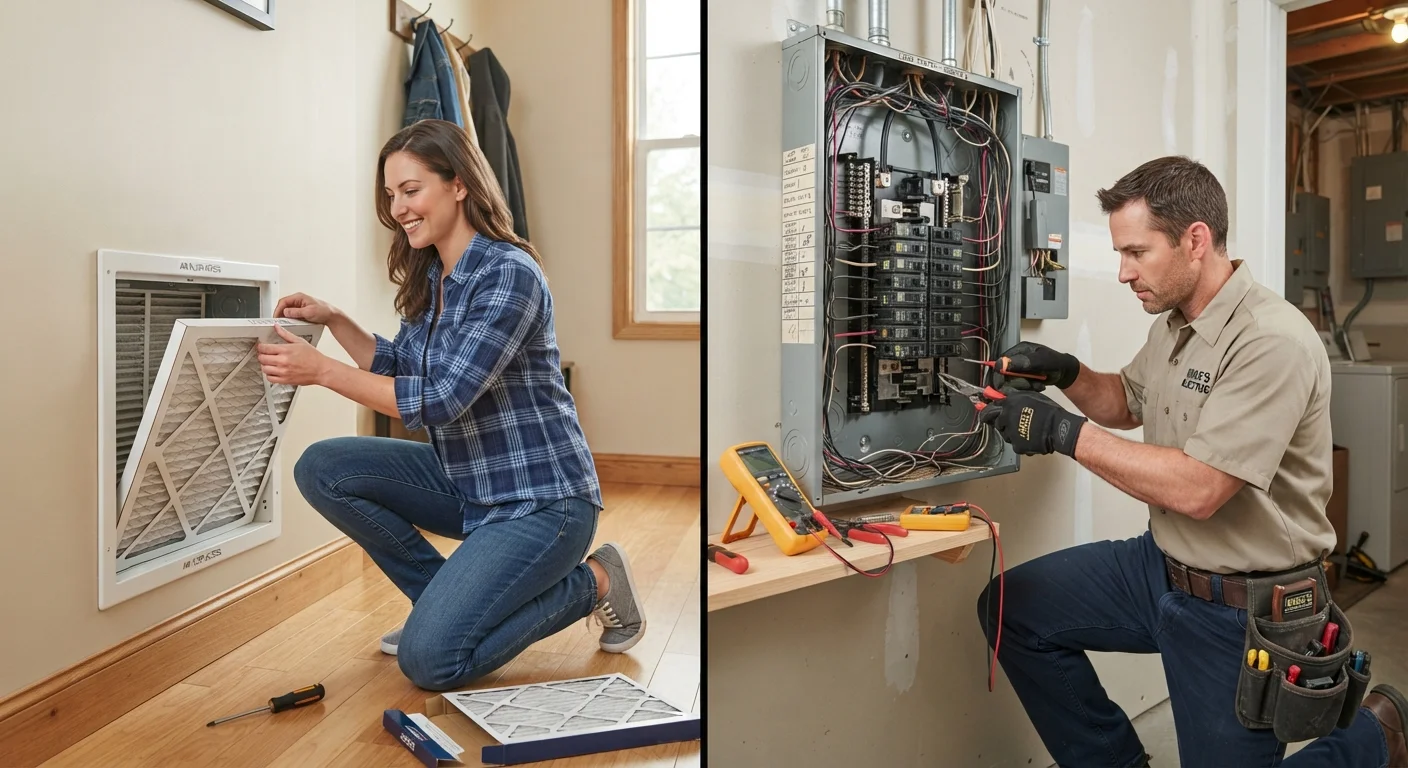
Photo credit: Wiseturt.com | Blogs Curated For You
In this article
Not every repair is safe or legal to DIY. This guide helps homeowners understand where to draw the line and why it matters.
Key Takeaways
- Many routine maintenance tasks - like replacing filters, caulking, and cleaning gutters - are safe and legal for homeowners to handle.
- Electrical, gas, structural, and plumbing-into-mains work typically requires a licensed professional and often a permit.
- Unpermitted or improperly completed work can void homeowner's insurance, fail home inspections, and create safety hazards.
- The cost of hiring a professional is often lower than correcting dangerous DIY mistakes.
- Local building codes and permit requirements vary - always verify with your municipality before starting any significant project.
What Makes a Task DIY-Appropriate
Not every home repair demands a contractor. A wide range of upkeep tasks are designed with the average homeowner in mind - they require common tools, carry minimal risk if done imperfectly, and don't involve systems governed by building codes or safety regulations.
Tasks that generally fall into the safe-to-DIY category include:
- HVAC filter replacement - Monthly or quarterly, depending on filter type and household conditions.
- Caulking around tubs, sinks, and windows - Prevents moisture intrusion without requiring any trade license.
- Cleaning gutters and downspouts - Seasonal clearing reduces the risk of water damage and foundation issues.
- Patching small drywall holes - Cosmetic repairs under a few inches typically need only a patch kit and some sanding.
- Painting interior or exterior surfaces - Prep work matters, but no permit is required for standard painting.
- Replacing outlet covers, switch plates, or light fixtures - Provided the circuit is shut off at the breaker and no wiring is being altered.
See our seasonal home maintenance calendar for a structured breakdown of when to tackle these tasks throughout the year.
Start Small to Build Confidence
If you're new to home maintenance, begin with the lowest-stakes tasks: replacing air filters, testing smoke detectors, and cleaning dryer vents. These build familiarity with your home's systems without meaningful risk. Document what you do and when - a simple maintenance log makes future decisions (and home sales) much easier.
Where DIY Ends: Work That Requires a Licensed Professional
Certain categories of home work are regulated for a clear reason - errors in these systems can cause fires, gas leaks, structural failure, or contaminated water. In most US jurisdictions, performing this work without a license is illegal, and homeowner's insurance may not cover losses from unpermitted repairs.
| Task Category | DIY-Appropriate | Requires Licensed Pro | |
|---|---|---|---|
| HVAC filter replacement | Task Category | Yes - no tools or permits needed | No |
| Electrical panel work / new circuits | Task Category | No | Yes - permit typically required |
| Caulking & weatherstripping | Task Category | Yes - low risk, no permit | No |
| Gas line repair or appliance hookup | Task Category | No | Yes - licensed in virtually all states |
| Interior painting | Task Category | Yes - no permit required | No |
| Structural wall removal | Task Category | No | Yes - engineer review and permit needed |
| Gutter cleaning | Task Category | Yes - seasonal DIY task | No |
| Water heater installation | Task Category | Often not - permit usually required | Yes in most jurisdictions |
The categories that almost always require a licensed contractor include:
- Electrical panel upgrades or new circuit installation - This is one of the leading causes of house fires when done incorrectly.
- Gas line installation, repair, or appliance connection - Gas work requires licensed plumbers or gas fitters in virtually every state.
- Structural modifications - Removing walls (especially load-bearing ones), adding rooms, or altering roof lines typically require both a licensed contractor and a building permit.
- Plumbing connections to municipal supply or sewer lines - Tying into main water lines or sewer systems is regulated and inspected in most localities.
- HVAC system installation or refrigerant handling - Federal law (Section 608 of the Clean Air Act) restricts who may handle refrigerants to certified technicians.
Skipping professional help on these projects isn't just a safety risk - it can create complications during a home sale. Deferred and improperly completed maintenance has a way of surfacing at the worst possible moment.
DIY Electrical Work Can Void Your Insurance
Many homeowner's insurance policies exclude coverage for damage caused by unpermitted or unlicensed work. If a fire is traced to DIY electrical repairs done without a permit, your insurer may deny the claim. Review your policy and consult a licensed electrician before touching anything beyond a simple fixture swap.
The Permit Question: Why It Matters More Than You Think
Many homeowners are surprised to learn that certain improvements - even ones they complete correctly - can create legal and financial problems if a permit wasn't pulled first. Permits exist to trigger inspections, which verify that work meets local building codes designed to protect occupants and future buyers.
Common projects that typically require a permit in most US localities include:
- Adding or moving electrical circuits
- Installing a water heater
- Replacing a roof (in many jurisdictions)
- Constructing a deck or adding a fence over a certain height
- Converting a garage to living space
Requirements vary significantly by city and county. Always contact your local building department - or your municipality's website - before starting any project you're unsure about. A contractor you hire should also be able to advise on and pull the necessary permits on your behalf.
For tasks that stay firmly in DIY territory, our guide on lesser-known maintenance tasks covers upkeep most homeowners overlook, from grading to attic ventilation.
Making the Call: A Practical Decision Framework
When you're standing in front of a problem and aren't sure which path to take, run through these questions:
- Does this work involve gas, electricity beyond a simple swap, or load-bearing structure? If yes, call a licensed professional.
- Is a permit likely required in my area? Check before starting - not after.
- What's the consequence of an error? A badly caulked tub is inconvenient. A badly connected gas line is dangerous. Weight the risk accordingly.
- Do I have the right tools and a clear, reliable process? Improvising with wrong tools on a plumbing or electrical project increases risk substantially.
- Will this affect my homeowner's insurance coverage or a future home inspection? Unpermitted work and DIY electrical or plumbing repairs can complicate both.
The goal isn't to outsource everything - confident, informed DIY work saves money and builds genuine home literacy. But knowing the boundaries is what separates smart self-reliance from avoidable risk. The pressure washing guide is a good example of a task that's DIY-friendly but has real technique requirements worth understanding first.
This article provides general home maintenance education and is not a substitute for advice from a licensed contractor, electrician, plumber, or your local building authority. Always verify permit and licensing requirements with your local municipality before beginning any home project.

Author
Home & Appliances Editorial Team
Home & Appliances Editorial Team is the collective byline for our editorial team and contributor network. Articles published under this byline or an editorial pen name are researched, written, and reviewed according to our editorial standards for clarity, consistency, and independence before publication.
View all articles →