
Psychological Pricing Tricks Retailers Use - and How to Recognize Them
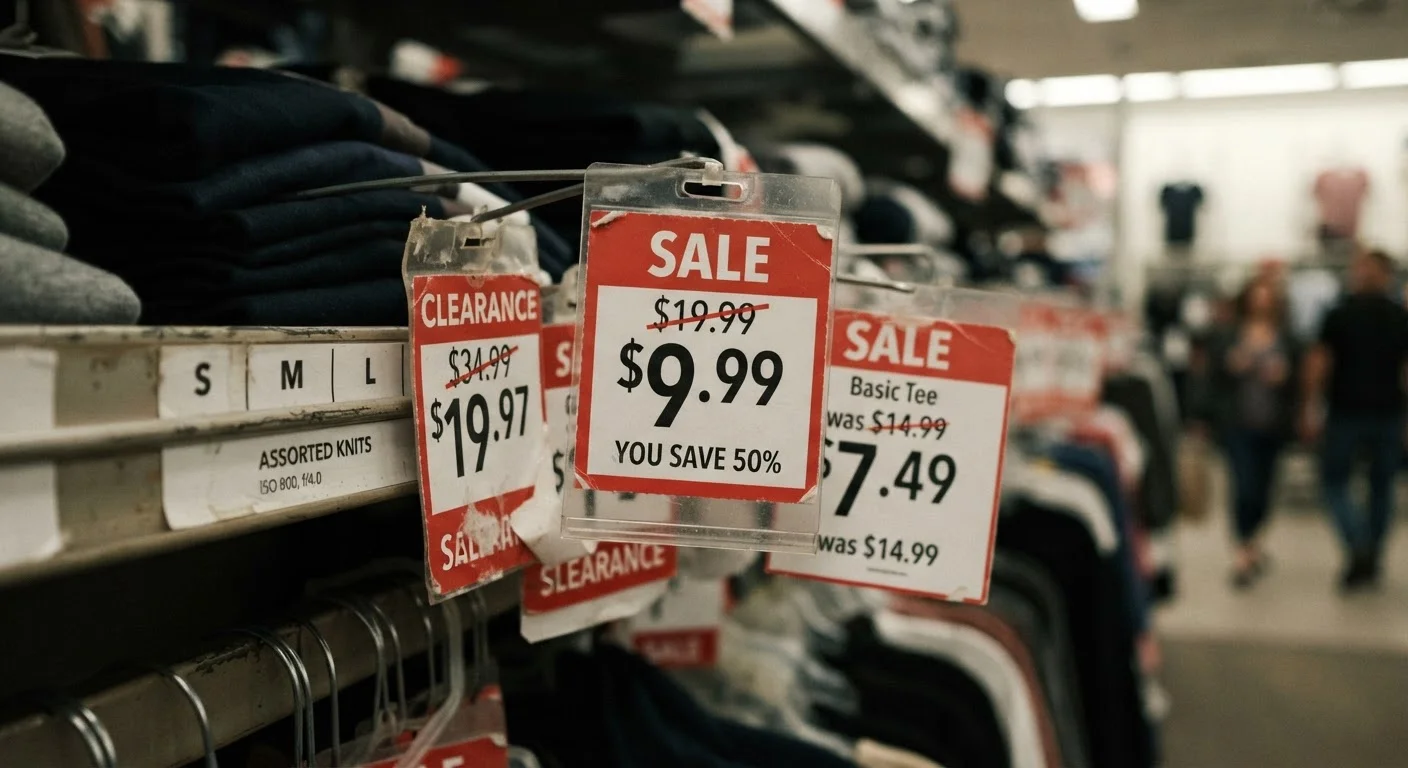
Photo credit: Wiseturt.com | Blogs Curated For You
In this article
From charm pricing to bundle inflation, retailers have a playbook. Knowing the moves helps you shop on your own terms.
Key Takeaways
- Charm pricing ($9.99 instead of $10) exploits a cognitive bias that makes prices feel meaningfully lower than they are.
- Anchor pricing uses an inflated 'original' price to make the sale price seem like a better deal than it may be.
- Bundle pricing can obscure per-unit costs, sometimes making you pay more for items you wouldn't have chosen alone.
- Urgency cues like countdown timers and 'only 3 left' warnings are often scripted, not real inventory signals.
- Decoy pricing steers you toward a mid-tier option by making a cheaper choice seem inadequate by comparison.
- Price awareness - knowing a product's typical price history - is the most reliable defense against these tactics.
Why Retailers Engineer Their Numbers
Retail pricing is rarely a neutral exercise in math. Most prices are deliberately constructed to shape perception, trigger emotion, and nudge you toward spending more than you planned. These tactics are well-documented in consumer psychology research and widely deployed - across grocery stores, clothing chains, subscription services, and e-commerce platforms alike.
None of this is illegal, and some of it can even be genuinely useful to shoppers. But understanding the mechanics puts you in a stronger position. When you can name what a retailer is doing, you can evaluate it on your own terms instead of reacting to it instinctively. This is general consumer information - not personalized financial advice - but it's grounded in established research on pricing behavior. For a broader look at how discounts are structured, see The Complete Guide to Spotting Real Deals and Avoiding Pricing Illusions.
Charm Pricing
Prices ending in .99, .97, or .95 are called charm prices. Research in consumer psychology consistently shows that buyers process $9.99 as meaningfully cheaper than $10.00, even though the difference is a single cent. The effect is strongest when the left digit changes - $19.99 feels much less than $20, while $19.49 vs. $19.50 has almost no impact.
The counter-move: round up mentally. If a price ends in .99, treat it as the next whole dollar. That small reframe tends to produce clearer spending decisions.
Round up mentally - $9.99 is $10, and treating it that way produces clearer decisions.
Anchor Pricing and Inflated 'Originals'
Anchor pricing works by presenting a high reference price - often labeled 'Original,' 'Compare At,' or 'MSRP' - alongside the sale price. The higher number anchors your perception, making the discount look substantial. The problem is that the anchor is sometimes a price the item was never meaningfully sold at.
Consumer protection regulators in the US have guidelines requiring that reference prices reflect actual prior selling prices for a reasonable period, but enforcement varies. Your practical defense: look up the item's actual price history before accepting the anchor as legitimate. Flash sale versus everyday-low-price retailers use anchors very differently, which is useful context here.
An anchor is only useful if it reflects a real price - verify it independently before measuring a 'discount.'
Bundle Inflation
Bundles can offer genuine savings, but they can also obscure costs. When a retailer packages three items together and presents a single bundle price, it becomes harder to judge whether you're saving anything - especially if you only needed one of the three items.
The math to run: find the individual price of each item in the bundle (not always easy by design), add them up, and compare. If you wouldn't buy two of the three items independently, the 'savings' on the bundle may not apply to you. For a deeper look at how low upfront prices can inflate total spending, see why great deals sometimes cost more in the long run.
If you wouldn't buy each item separately, a bundle's savings math likely doesn't apply to you.
Artificial Urgency Cues
Countdown timers, 'Only 2 left in stock,' and 'Sale ends tonight' messages are designed to trigger a fear of missing out. Some of these signals are genuine - clearance items do run out. But many are scripted: timers reset, stock warnings appear regardless of real inventory levels, and sales extend automatically.
A useful test: check back in 24 hours. If a countdown timer has simply restarted, or the 'low stock' warning persists across days without depletion, the urgency was manufactured. Slowing down your decision-making is the most effective counter to engineered scarcity.
Slowing down your decision is the most effective counter to engineered scarcity cues.
Decoy Pricing
Decoy pricing (also called the asymmetric dominance effect) involves introducing a third option that makes one of the other two look more attractive. A classic structure: a small size for $5, a large for $9, and a medium - added as a decoy - for $8. Suddenly the large looks like great value, even though without the decoy you might have been fine with the small.
Subscription tiers, streaming plans, and software pricing are particularly prone to this tactic. When you see three pricing options, ask yourself: would the middle or top tier still make sense if the other options weren't visible? That reframe often reveals the intended nudge.
Ask whether the mid or top option would still make sense if other tiers weren't shown alongside it.
Price Framing and Unit Confusion
How a price is expressed changes how it's perceived. '$1.50 per day' sounds minimal; '$547 per year' for the same product sounds substantial. Retailers and subscription services often use the smallest meaningful unit - per day, per week, per serving - to minimize the apparent cost.
Similarly, unit pricing on grocery shelves (price per ounce, price per count) can be listed in inconsistent units across comparable products, making direct comparison difficult. When the units differ, convert them yourself before judging value. Some states require consistent unit pricing labeling, but the rules vary. Knowing typical price ranges by category and season also helps you judge whether any framing reflects genuine value.
Convert any per-unit framing to annual or total cost before judging whether it's genuinely affordable.
Staying One Step Ahead
Recognizing these tactics doesn't require cynicism - it requires a habit of pausing before you react. A few practical questions help: What would I pay for this item at a neutral moment, without the promotional framing? Can I verify the original price independently? Do I actually need each item in this bundle, or just one of them?
Use Price History Before You Decide
Browser extensions that track pricing history on major retail platforms let you see whether a 'sale' price is actually lower than the item's typical selling price. They're free, take seconds to check, and cut through anchor pricing and urgency tactics more reliably than any other tool. Make checking price history a standard step before adding anything significant to your cart.
Price history tools - browser extensions that track how an item's price has changed over weeks or months - are especially useful for cutting through anchor pricing and fake urgency. They won't tell you what to buy, but they will tell you whether a price drop is real. The gap between in-store and online pricing is also worth understanding before deciding where to shop. And if you're curious about what really drives the urge to grab a deal immediately, impulse buying mechanics are worth a look - awareness alone can shift behavior meaningfully.

Author
Smart Shopping Editorial Team
Smart Shopping Editorial Team is the collective byline for our editorial team and contributor network. Articles published under this byline or an editorial pen name are researched, written, and reviewed according to our editorial standards for clarity, consistency, and independence before publication.
View all articles →