
The Add-Ons Dealers Offer at Signing - and What They Actually Cover
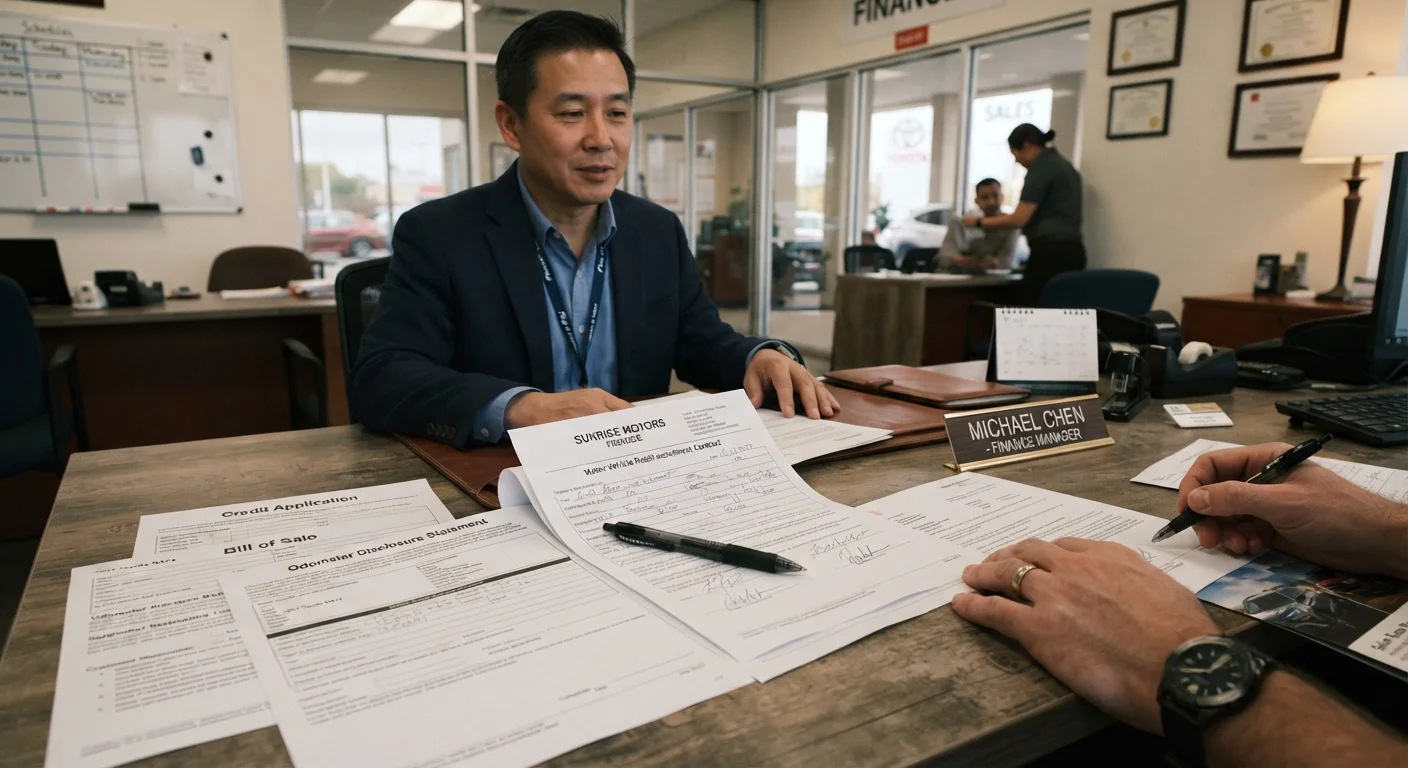
Photo credit: Wiseturt.com | Blogs Curated For You
In this article
Extended warranties, GAP insurance, paint protection — a factual look at what these products do, what they exclude, and questions worth asking.
What's Actually Being Offered in the Finance Office
After you agree on a vehicle price, a dealership's finance and insurance (F&I) manager walks you through a stack of paperwork - and typically presents several optional products. These add-ons can be legitimate, useful tools for some buyers, or unnecessary expenses for others. The key is understanding what each one does before you agree to include it in your contract.
Because these products are often presented quickly and bundled into monthly payments, their true cost and scope can be easy to miss. For a broader look at every line item to review before signing, see our pre-signing checklist.
| Extended service contract | Covers mechanical/electrical failures after factory warranty - not wear items or cosmetic damage |
| GAP insurance | Pays the difference between loan balance and insurance payout if the vehicle is totaled or stolen |
| Paint/fabric protection | Applied treatment with a warranty against staining or fading - terms vary widely by provider |
| Tire and wheel protection | Covers road hazard damage to tires and wheels; excludes accident damage and off-road use |
| Credit insurance / DCA | Covers loan payments or balance under specific hardship events; may overlap with existing coverage |
| All products | Generally optional - declining does not typically affect financing approval |
Common Add-On Products: What They Cover and What They Don't
Here's a factual breakdown of the products most frequently offered at signing.
Extended Service Contract (often called an "Extended Warranty")
Despite the name, most of these are service contracts, not manufacturer warranties - an important legal distinction. They cover repair costs for mechanical or electrical failures after the factory warranty expires. Coverage tiers vary widely: a basic "powertrain" plan covers the engine and transmission; a more comprehensive "bumper-to-bumper" style plan covers a broader set of components. What's typically not covered includes wear items (brakes, tires, wiper blades), cosmetic damage, and any pre-existing condition. Always ask for the specific list of covered and excluded components in writing. For context on how warranty language works across products, this guide to appliance warranty terms explains exclusions that appear across many product categories.
GAP Insurance (Guaranteed Asset Protection)
If your vehicle is totaled or stolen, your auto insurer pays its current market value - not what you owe on the loan. GAP insurance covers the difference between those two figures. It is most relevant when you financed with a low down payment, took a long loan term, or bought a vehicle that depreciates quickly. GAP is not useful once your loan balance drops below the car's market value. Note that GAP coverage is also sometimes available through your auto insurer, potentially at a lower cost than the dealership version - compare before agreeing. See what standard auto policies often don't cover for related context.
Paint and Fabric Protection
These are coatings or treatments applied to the vehicle's exterior paint or interior upholstery, sold with a warranty against fading, staining, or damage. Coverage terms vary significantly by provider. Ask specifically what the claims process looks like - some plans require you to return to the dealership for any warranty service, and documentation requirements can be strict.
Tire and Wheel Protection
Covers repair or replacement costs for tires and wheels damaged by road hazards - potholes, nails, debris. This is separate from your auto insurance. It tends to be more relevant in areas with poor road conditions. Exclusions typically include damage from accidents, improper inflation, or off-road use.
Credit Insurance and Debt Cancellation Addendums
Credit life insurance pays off your loan balance if you die; credit disability insurance makes payments if you become disabled. A debt cancellation addendum (DCA) is a contractual alternative to GAP. These products overlap with coverage you may already have through life or disability insurance. Understanding how riders and add-ons work across insurance types can help you spot redundancy.
F&I (Finance and Insurance)
The dealership department that handles financing paperwork and presents optional add-on products after a vehicle price is agreed upon.
Service Contract
A contractual agreement to cover certain repair costs for a set period or mileage. Often marketed as an 'extended warranty,' but legally distinct - it is a separate contract, not a continuation of the manufacturer's warranty.
GAP Insurance
Guaranteed Asset Protection. Covers the gap between what you owe on a vehicle loan and what your auto insurer pays if the vehicle is declared a total loss.
Debt Cancellation Addendum (DCA)
A contractual add-on to a loan that cancels some or all of the outstanding balance under qualifying circumstances such as total loss. Functions similarly to GAP insurance but is structured as part of the loan contract.
Powertrain Coverage
A service contract tier that covers the core mechanical components - typically the engine, transmission, and drivetrain - but excludes most other vehicle systems.
Exclusion
A specific condition, part, or event that a contract explicitly does not cover. Exclusions define the practical limits of any warranty or service contract.
Questions Worth Asking Before You Agree
You are not obligated to decide on any add-on product in the moment. These are generally optional, and in most cases they can be declined without affecting your financing approval. Before agreeing to any product, consider asking:
- What exactly is covered? Request the full list of covered components or events, not just a summary description.
- What is excluded? Exclusions define the real value of a product. Ask for them explicitly.
- Who administers the contract? Extended service contracts are often backed by a third-party company, not the dealer or manufacturer. Research that company's reputation and financial stability independently.
- Is this transferable? Some products transfer to a new owner if you sell the vehicle; others don't.
- Can I buy this later? Some products (especially extended service contracts) can be purchased after the sale - sometimes at a lower price - so there's rarely pressure to decide at signing.
- What's the cancellation policy? Many add-on products can be cancelled for a prorated refund. Ask about the process in writing.
For definitions of any unfamiliar terms in your contract - including terms like "dealer reserve," "APR," or "residual value" - a plain-language car-deal glossary can help you decode the paperwork.
This article is for general informational purposes only and does not constitute financial, legal, or insurance advice. Terms and availability of all products vary by dealer, provider, and state. Review all contract documents carefully and consult a licensed professional for advice specific to your situation.

Author
Auto Editorial Team
Auto Editorial Team is the collective byline for our editorial team and contributor network. Articles published under this byline or an editorial pen name are researched, written, and reviewed according to our editorial standards for clarity, consistency, and independence before publication.
View all articles →