
Whole Foods vs. Processed Foods: What the Difference Really Means
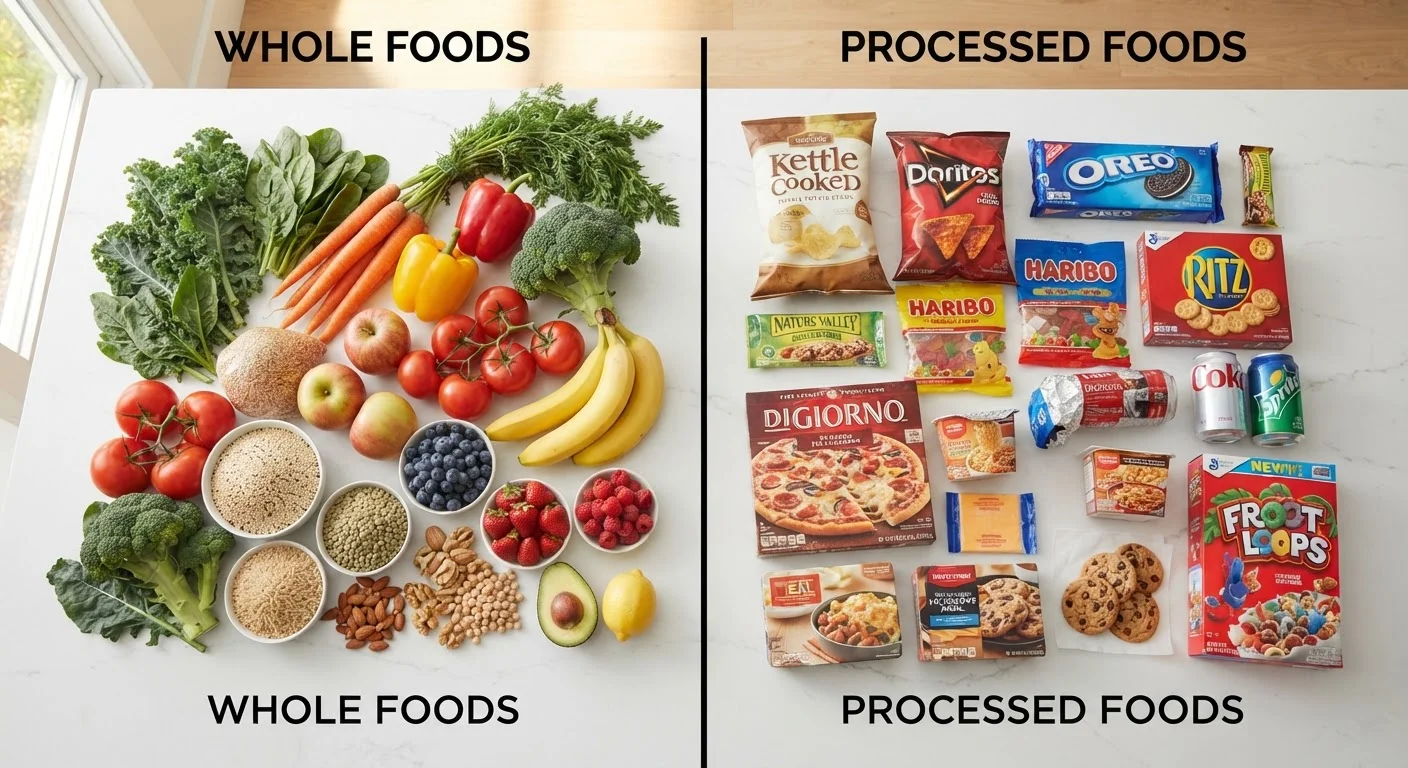
Photo credit: Wiseturt.com | Blogs Curated For You
In this article
Understand the spectrum from minimally processed to ultra-processed foods and what it means for your daily diet.
Key Takeaways
- Processed food is a spectrum - most foods we eat have undergone some form of processing.
- Ultra-processed foods, not all processed foods, are most consistently linked to poorer diet quality.
- Whole foods retain their natural nutrient profile, including fiber, vitamins, and beneficial compounds.
- Reading ingredient lists alongside nutrition labels helps you navigate processing levels more accurately.
- A practical diet doesn't require eliminating all processed foods - it requires knowing which to limit.
Defining the Terms: It's a Spectrum, Not a Binary
The phrase "processed food" is one of the most misunderstood in everyday nutrition conversations. Technically, almost every food we eat has been processed in some way - washed, cut, cooked, fermented, or packaged. The meaningful distinction isn't processed versus unprocessed; it's where on the processing spectrum a food sits.
Researchers and dietitians commonly use the NOVA classification framework, developed by researchers at the University of São Paulo, to sort foods into four groups based on the nature and extent of processing:
- Unprocessed or minimally processed foods - fresh fruits, vegetables, plain meats, eggs, legumes, and plain grains. These are foods in or close to their natural state.
- Processed culinary ingredients - oils, butter, flour, salt, and sugar. Used to prepare food, not typically eaten alone.
- Processed foods - items made by adding salt, oil, sugar, or vinegar to whole foods; examples include canned tomatoes, smoked fish, and simple cheeses.
- Ultra-processed foods - industrially formulated products containing many additives, flavor enhancers, emulsifiers, and ingredients rarely found in a home kitchen. Think packaged snack cakes, flavored chips, and many fast-food items.
Understanding this spectrum helps you make more targeted choices rather than applying a blanket rule about all packaged food.
What Whole Foods Actually Offer Nutritionally
Whole foods - fruits, vegetables, whole grains, legumes, nuts, seeds, and minimally processed proteins - deliver nutrients largely as nature arranged them. That matters because nutrients in food don't work in isolation. Fiber in an apple, for instance, slows sugar absorption; the phytonutrients in dark leafy greens work alongside vitamins to support cellular function.
| Criterion | Whole Foods | Ultra-Processed Foods |
|---|---|---|
| Ingredient complexity | Single ingredient or very few | Long list, many additives |
| Fiber content | Naturally intact | Often reduced or absent |
| Added sugar | None | Frequently high |
| Sodium levels | Naturally low | Often very high |
| Vitamin & mineral retention | High | Variable; often fortified |
| Shelf stability | Generally low | High |
| Cost per serving | Varies; can be affordable | Varies; convenience premium |
Processing at the ultra end of the spectrum can strip away fiber, reduce vitamin content through heat exposure, and add substantial sodium and sugar to compensate for flavors lost in manufacturing. A plain oat is nutritionally different from an oat-based cereal bar with 12 grams of added sugar and artificial flavoring - even though both technically contain oats.
This is why ingredient lists matter as much as nutrition panels. Our guide on reading a Nutrition Facts label walks through exactly what to look for, section by section.
Why Ultra-Processed Is the Category to Watch
Public health research has increasingly focused on ultra-processed foods specifically - not on processed foods as a whole. Large-scale observational studies, including research published in journals such as The BMJ and JAMA Internal Medicine, have associated high ultra-processed food consumption with higher rates of cardiovascular disease, obesity, and certain metabolic conditions. Researchers note, however, that these are associations, not proven direct causes, and that diet quality overall plays a role.
57%
Share of US calories from ultra-processed foods
Research published in BMJ Open estimated that ultra-processed foods account for more than half of total daily calorie intake among US adults.
4 groups
NOVA food classification levels
The NOVA system, developed at the University of São Paulo, categorizes all foods into four groups based on the extent and purpose of industrial processing.
~2x
Fiber intake gap in ultra-processed diets
Studies have found diets dominated by ultra-processed foods tend to provide significantly less dietary fiber than diets centered on whole and minimally processed foods.
The practical takeaway isn't to fear every packaged item. Frozen plain vegetables, canned beans in water, plain Greek yogurt, and whole-grain bread are all processed to varying degrees - yet they contribute meaningfully to a balanced diet. The concern centers on foods whose ingredient lists read more like a chemistry text than a recipe.
It's also worth noting that ultra-processed foods are often engineered to be highly palatable, which can make it harder to eat them in moderate amounts. That's a behavioral consideration separate from the nutrient content alone.
For shoppers navigating label language, misleading nutrition label terms like "multigrain" or "natural" are worth understanding before assuming a product is minimally processed.
Building a Practical Approach Without Strict Rules
No diet needs to be entirely whole foods to be healthy, and perfection isn't a realistic standard for most households. A more sustainable approach focuses on shifting proportions rather than imposing absolute limits.
Practical starting points include:
- Make whole or minimally processed foods the default - produce, legumes, plain proteins, and whole grains as the base of most meals.
- Use processed staples strategically - canned fish, frozen vegetables, and plain dairy products offer convenience without significant nutritional compromise.
- Reserve ultra-processed foods for occasional consumption rather than treating them as daily staples.
- Check ingredient lists for added sugars, sodium levels, and lengthy additive lists as quick signals of processing intensity.
If you're looking to put this into practice at the grocery store, our weekly grocery shopping checklist offers a concrete framework for stocking a nutritionally balanced kitchen.
Not All Fats Are Equally Affected by Processing
The type of fat in a food can also shift with processing. Ultra-processed products have historically contained higher levels of trans fats through partial hydrogenation, though regulatory changes in the US have reduced this. Saturated and unsaturated fat profiles can still differ significantly between whole food sources and their processed counterparts. For a deeper look at dietary fats, see our guide on saturated, unsaturated, and trans fats.
For those exploring plant-forward eating, knowing the nutritional profile of whole plant proteins is equally useful - plant-based protein sources like lentils, edamame, and tofu sit firmly at the minimally processed end of the spectrum.
This article is for general informational and educational purposes only and is not a substitute for professional medical or nutritional advice. Consult a qualified healthcare provider or registered dietitian for guidance tailored to your individual health needs.

Author
Health & Nutrition Editorial Team
Health & Nutrition Editorial Team is the collective byline for our editorial team and contributor network. Articles published under this byline or an editorial pen name are researched, written, and reviewed according to our editorial standards for clarity, consistency, and independence before publication.
View all articles →